
International
Donald Trump pulls on economics and geopolitics to reverse his negative trend in the polls
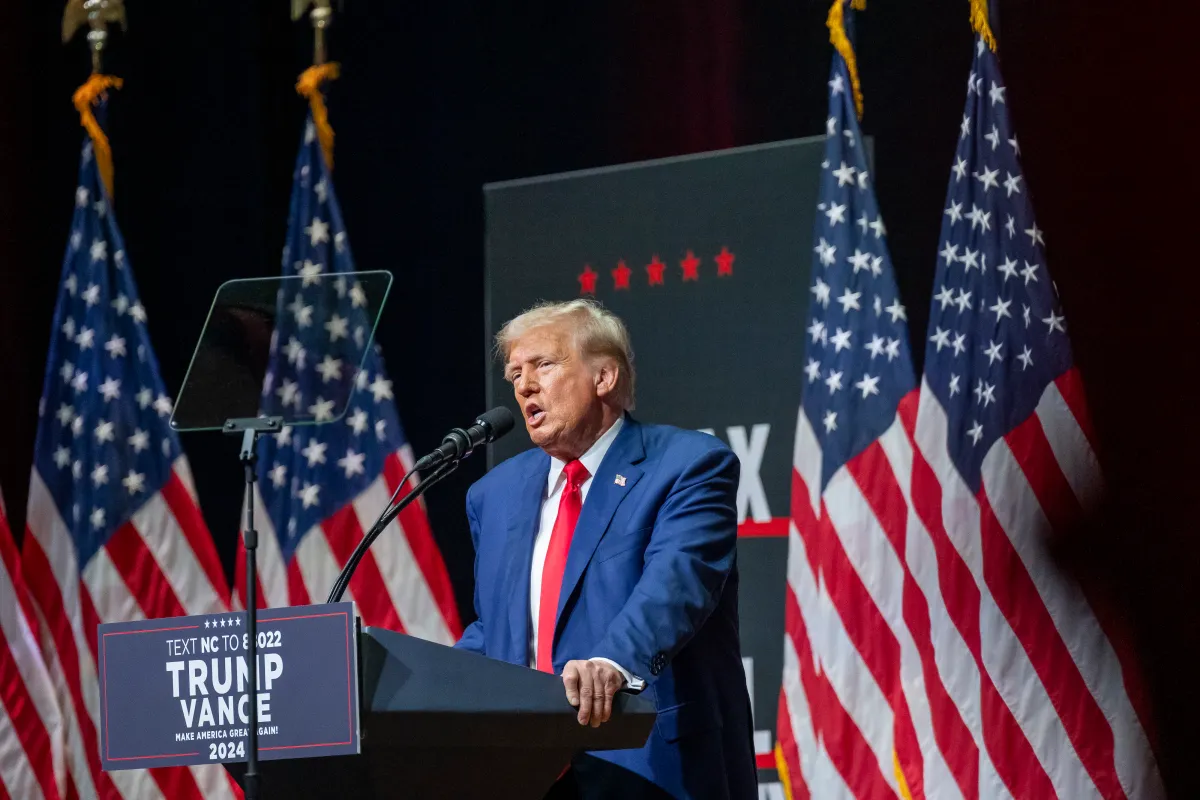
Former American President Donald Trump (2017-2021) bet this Thursday for a speech with a slow tone, a “amiable” mood in geopolitical terms and a content deeply focused on the economy at a crucial moment for the future of the November elections.
“Harris is a communist, he destroys everything he touches. If he takes office, his finances will suffer. Inflation will be our priority from day one,” Trump said in the first minute of a press conference from his private golf club in Bedminster (New Jersey).
The latest polls show that, since the Democratic Party named Vice President Kamala Harris as its candidate for the presidential elections, support for the former president has fallen and the notable advantage that distanced him from Joe Biden has almost vanished.
The latest update of the FiveThirtyEight poll average, carried out today, gives Harris approximately 46.4% of the national vote, compared to Trump’s 43.4%.
From the same golf club in which he took refuge after his assassination attempt last month, Trump appeared flanked by four shelves with basic food products and several dozen followers who enthusiastically applauded his proclamations.











“We had mortgages at 2% and now they are at 10%. Every month, inflation costs Americans thousands of dollars. Only in food they are paying 148 dollars each month,” said the Republican candidate between cans of Campbell’s tomatoes, Cheerios cereals and packaged meat.
Trump described as “Kamala’s crash” the black day for the international stock exchanges on August 5 but, once the market was stabilized, he could not recycle the argument and limited himself to qualifying his hypothetical financial management as “a disaster for the United States.”
In addition, immigration was once again the origin of the main evils of the United States in a shrewed argument already for Trump, who said that “while this happens, millions of people cross the border and we don’t even know who they are.”
“Criminals, rapists and people with mental problems,” repeated the former president, claiming that many of them come from Latin America.
Trump referred to this region, and more specifically Venezuela, when he said that if Kamala Harris arrives at the White House he will apply what he called the “Maduro Plan” to impose economic policies “of Venezuela or the Soviet Union” in the United States “with disastrous consequences.”
It was not the only foreign nation to which the tycoon alluded: he said that he will be “amiable” with Iran if he returns to the Oval Office and reiterated that during his mandate there was no open conflict in the Gaza Strip or a war in Ukraine because the international community “respected” it.
“I don’t want to misbehave with Iran. We are going to be friendly (…) I hope we are friendly, but they can’t have a nuclear weapon because once they have it, it’s a totally different world,” he said.
Shortly after, he explained that in his meeting with Israeli Prime Minister Benjamin Netanyahu in July he urged him to end the war in Gaza, also corroborating that he has not had any recent conversation with him.
“I encounted him to end this. It has to end quickly. Get your victory and finish it. The massacre has to stop,” he said, about the meeting they held on July 26 in their mansion in Mar-a-Lago (Florida).
Trump tried to convey tranquility and confidence in defeating Harris, something that he said will be “easier than defeating Biden” but that does not agree with the nervousness and the way of proceeding of his campaign in recent days.
The ambiguous label of “weird” about his running mate JD Vance has been one of the slabs that has fallen with the most weight, to which Trump responded today that the Democratic bench is “radical” and is “sick.”
“He is a great Yale student, a self-made man. I don’t know what it’s like to be weird for them,” he said.
Trump lavished himself for an hour and a half and then admitted several questions from the press, on the same day that Harris made his first joint public appearance with Joe Biden since he gave him the witness, celebrating a price control measure for patients in the Medicare health system.










International
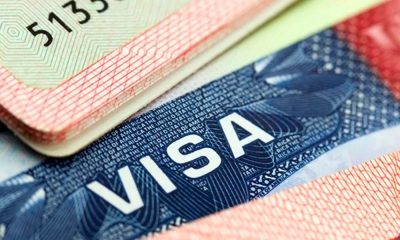
U.S. Revokes Nearly 900 Visas in Crackdown on ‘Birth Tourism’
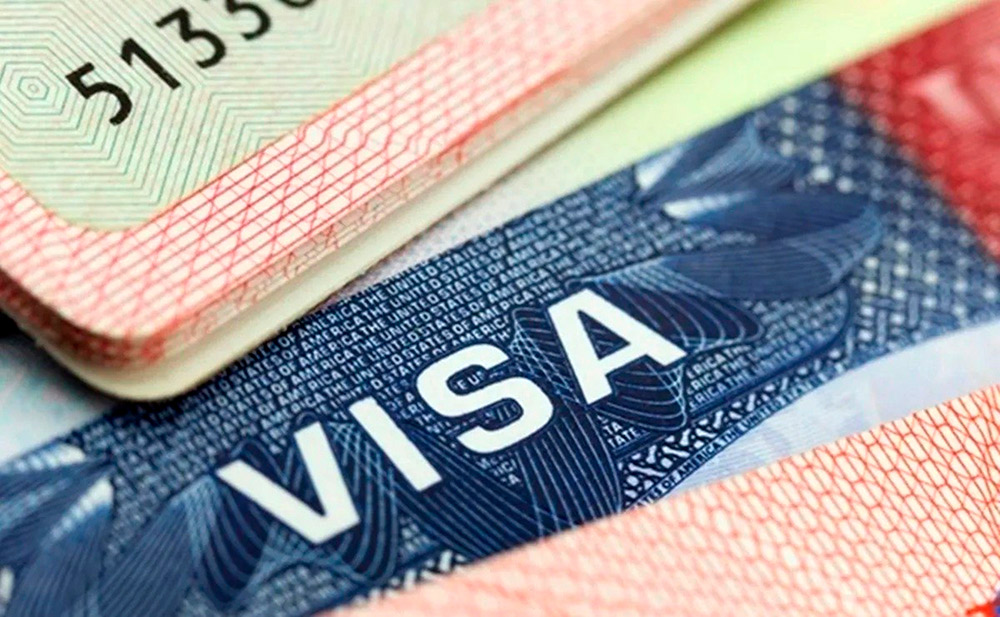
The United States has revoked nearly 900 temporary visas as part of measures promoted by President Donald Trump’s administration against so-called “birth tourism,” State Department spokesperson Tommy Pigott said.
“Nearly 900 visas have already been revoked just since this task force was established. And that is in addition to the actions we have taken since the beginning of this administration to dismantle birth tourism networks around the world,” Pigott said in an interview with Newsmax.
The visa revocations are the result of coordinated efforts between the State Department and the Department of Homeland Security (DHS) to identify people who allegedly use tourist visas to enter the United States with the intention of giving birth there.
The measures are part of Trump’s broader immigration policies. In January, the president signed an executive order describing birth tourism as a practice that undermines the integrity of the U.S. immigration system in an effort to obtain what the administration considers permanent immigration benefits.
The directive stated that some people enter the country through temporary visas issued for tourism, education, cultural exchanges or temporary employment, and later seek to benefit from the U.S. citizenship their children acquire by being born on American soil.
Trump targets birthright citizenship
The latest actions are also part of Trump’s broader efforts to restrict birthright citizenship in the United States.
The country has traditionally followed the principle of jus soli, under which citizenship is generally granted based on birth within U.S. territory, rather than solely on parental nationality, as is the case in other legal systems.
The administrative measures come after the U.S. Supreme Court blocked Trump’s attempt to end birthright citizenship through executive action, ruling that the policy raised constitutional issues involving the Fourteenth Amendment.
The visa crackdown represents another step by the administration to target practices it associates with the use of temporary immigration permits to obtain long-term immigration benefits.
International
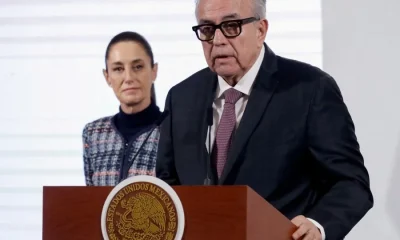
Sinaloa Governor Returns to Office Amid Political Backlash and Cartel Allegations
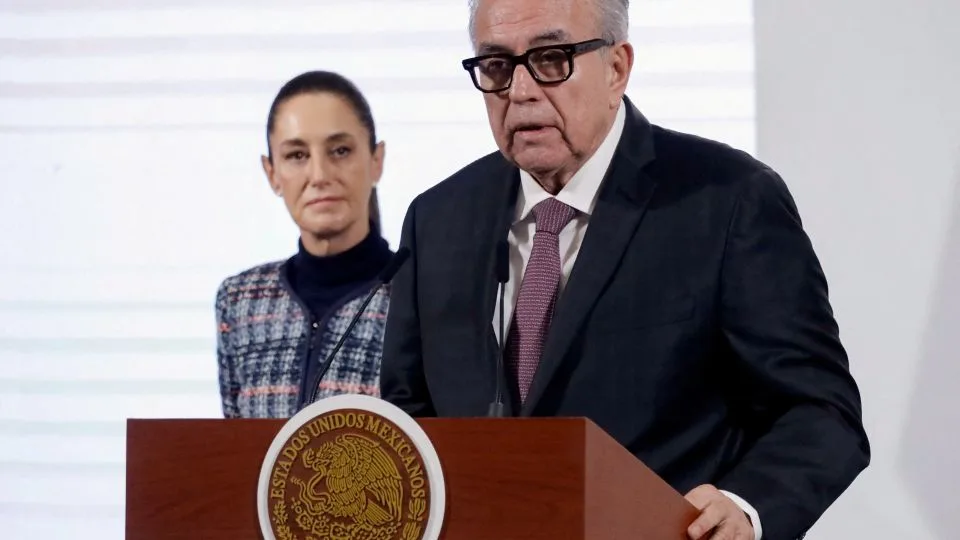
Sinaloa Governor Rubén Rocha Moya returned to office on Friday after taking more than three months of leave while facing an investigation into allegations by the U.S. government that he has ties to the Sinaloa Cartel. Rocha has denied the accusations.
His return has drawn criticism from Mexico’s federal government and the ruling Morena party, which have accused the governor of putting personal interests ahead of the public good.
Although she did not mention Rocha by name, Mexican President Claudia Sheinbaum addressed the situation Saturday in a post on X, warning about the dangers of placing personal ambitions above the interests of the country.
“Power without principles becomes arrogance,” Sheinbaum wrote.
The president stressed that no personal interest should take precedence over the interests of the Mexican people and the nation, particularly when the objective is not public well-being but the pursuit of power for its own sake.
“Mexico deserves public servants who understand that positions are temporary, but responsibility before the nation is eternal,” Sheinbaum said.
She added that public officials should prioritize the dignity, future and hopes of the Mexican people over individual names, political groups or personal interests.
Later Saturday, while attending the inauguration of new agricultural services facilities in Mexico City, Sheinbaum told reporters that she learned of Rocha’s return through the governor’s social media post.
The president said she would provide further comments on the matter during her daily press conference on Monday.
International
Pilot killed and two Pennsylvania state troopers injured in mid-air collision

A pilot was killed and two Pennsylvania state police officers were injured when a Cessna 150 airplane collided with the helicopter they were traveling in during a routine training exercise at a regional airport in the state.
Pennsylvania Governor Josh Shapiro identified the officers as Corporal Bryce Corman and Trooper Jason Mills, members of the Pennsylvania State Police aviation unit. Both are expected to recover from their injuries, according to ABC.
The county coroner’s office identified the pilot as 57-year-old Paul Sokoloski.
George Bivens, acting commissioner of the Pennsylvania State Police, said the collision occurred at around 6:50 p.m. Wednesday. The helicopter was flying several feet above a grassy area near a runway at Carlisle Regional Airport when the small plane approached from behind.
According to investigators, the Cessna suddenly veered to the right moments before the collision, striking the helicopter’s tail rotor before also hitting its main rotor.
The airplane crashed a short distance away and broke into several pieces, while the helicopter lost its tail and other components before crashing on its side.
Police said Corporal Corman opened a window and helped Trooper Mills escape from the helicopter because they feared the aircraft could catch fire.
The Federal Aviation Administration and the National Transportation Safety Board are investigating the circumstances surrounding the crash.

U.S. Revokes Nearly 900 Visas in Crackdown on ‘Birth Tourism’

Sinaloa Governor Returns to Office Amid Political Backlash and Cartel Allegations

Panama’s Geisha Coffee Retains Pure Ethiopian Genetics, Studies Find

Pilot killed and two Pennsylvania state troopers injured in mid-air collision

Argentina’s Milei Links Low Birth Rates to Abortion and Feminism

Virginia Police Arrest Salvadoran Man in Great Falls Woman’s Killing

Honduran Lawyer and Protected Witness in Angie Peña Case Shot Dead

Mexico and Guatemala Agree on Five-Point Binational Plan for 2027

France to Expel Two Iranian Diplomats Over Alleged Attack on French Officials
Honduran Lawyer and Protected Witness in Angie Peña Case Shot Dead
Virginia Police Arrest Salvadoran Man in Great Falls Woman’s Killing
Argentina’s Milei Links Low Birth Rates to Abortion and Feminism
Pilot killed and two Pennsylvania state troopers injured in mid-air collision
Mexico and Guatemala Agree on Five-Point Binational Plan for 2027
Panama’s Geisha Coffee Retains Pure Ethiopian Genetics, Studies Find
U.S. Revokes Nearly 900 Visas in Crackdown on ‘Birth Tourism’
-
 International5 days ago
France to Expel Two Iranian Diplomats Over Alleged Attack on French Officials
-
 Central America4 days ago
Honduran Lawyer and Protected Witness in Angie Peña Case Shot Dead
-
 International4 days ago
Virginia Police Arrest Salvadoran Man in Great Falls Woman’s Killing
-
 International3 days ago
Argentina’s Milei Links Low Birth Rates to Abortion and Feminism
-
 International3 days ago
Pilot killed and two Pennsylvania state troopers injured in mid-air collision
-
 International5 days ago
Mexico and Guatemala Agree on Five-Point Binational Plan for 2027
-
 Central America3 days ago
Panama’s Geisha Coffee Retains Pure Ethiopian Genetics, Studies Find
-
 International7 hours ago
U.S. Revokes Nearly 900 Visas in Crackdown on ‘Birth Tourism’
-
 International22 hours ago
Sinaloa Governor Returns to Office Amid Political Backlash and Cartel Allegations