
International
New Israeli attacks in the Gaza Strip leave at least 48 dead in the last few hours
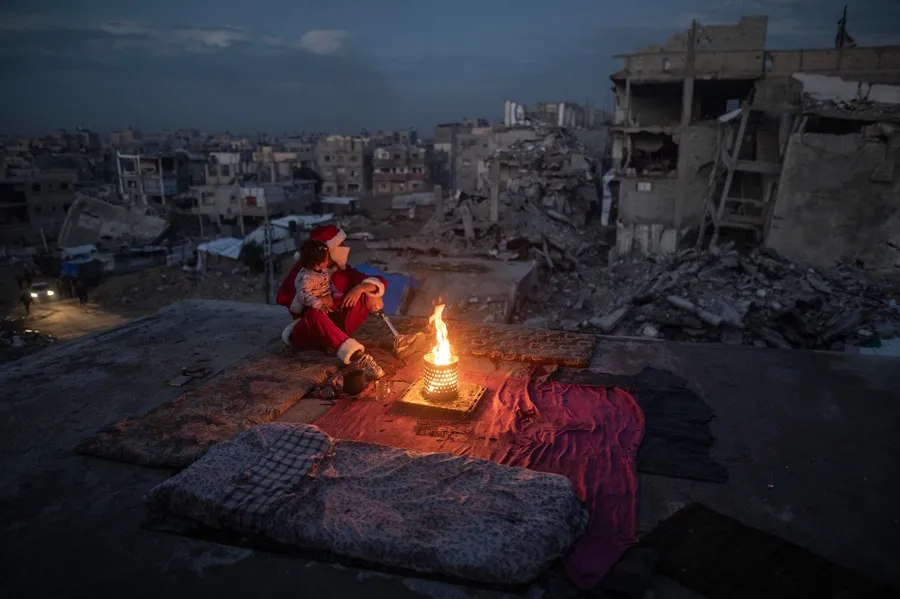
At least 48 Palestinians have died in the Gaza Strip in the last 24 hours from Israeli attacks, bringing the total number of fatalities in the last fifteen months to 45,854, including almost 18,000 children, according to data from the Ministry of Health of the enclave.
On the other hand, the injured are 109,139, after adding the 75 that arrived at the Gaza hospitals on the last day.
In addition, the Ministry controlled by Hamas figures at 11,000 missing under the rubble who have not yet been rescued.
Palestinian medical sources confirmed that they had received six deaths in the hospitals of Jan Yunis, in the southern Strip, as a result of bombings in the nearby city of Rafah, including two children attacked by a quadcopter drone.
Israeli attacks on the Nuseirat refugee camp
Shooting and artillery attacks have also been reported in the last few hours in the Nuseirat refugee camp, in the center of the enclave, where last night a drone attack in the middle of the camp against a meeting of citizens caused 19 injuries who were treated at the Al Awda hospital.









That same hospital received seven injuries as a result of another attack in the nearby Bureij refugee camp, in which three people from the same family, a child and his parents also died on the spot.
There are also reports of attacks within Gaza City, where a woman and her son were killed by a bombing on the Al Omari mosque in Al Daraj, a neighborhood in downtown Gaza City, where attacks were also recorded in the neighborhoods of Sheikh Radwan, Sabra and Zaytun.
Another baby dies of hypothermia and there are already 8 victims of the cold
The baby Yousef Anwar Klubb, who was only 35 days old, died last night of hypothermia in the fenced Gaza Strip, the eighth fatal victim of the cold in recent weeks, which has already claimed the lives of six other babies and a young man.
The baby died “as a result of harsh weather conditions and extreme cold,” confirmed the Ministry of Health in Gaza, which indicated that the victims due to low temperatures in the enclave have risen to eight.
All these deaths have occurred among displaced people in the Mawasi area, in the south of the Strip, who live in precarious tents, many of them damaged by inclement weather, so they do not protect well from the cold in the area, where many Gazans were forcibly forced to flee in the summer months, so they do not have the appropriate warm clothes to face the winter.
“We have repeatedly warned about the dangers of imminent climate depressions, the winter season and the frost waves, which coincide with the catastrophic reality that our Palestinian people live, who face murders, genocide, destruction of homes and vital sectors, as well as displacement and forced migration,” denounced the Gaza Government.
The Government warned that in the coming days “heavy rains and frosts” are expected, which poses a real threat to the lives of the displaced who have already been victims of “war crimes”; and demanded that the United States, Great Britain, France and Germany, countries that support Israel, intercede to “stop the genocide”.
The cold and lack of shelter causes the death of newborns
“The cold climate and lack of shelter are causing the death of newborns in Gaza, while 7,700 newborns lack care to save their lives,” the UN Agency for Palestinian Refugees (UNRWA) denounced today.
The UNRWA also denounced the attacks against the health system of the Strip and recalled that the Kamal Adwan hospital in Beit Lahia, the largest in the north of the enclave, has been out of service after being assaulted last week by the Israeli Army, which arrested about 200 people including part of the medical staff and its director, Dr. Husam Abu Safiya, who is in unknown.
“Up to 50 attacks in the vicinity of the hospital have been verified since October 2024,” the UN agency said. Israel launched a harsh “slamed earth” military offensive that month throughout the north of the enclave, which has caused at least 3,000 deaths and a thousand missing, although those figures have not been updated for weeks due to the lack of access to rescue services.






International
Salvadoran National Arrested in New Jersey with Over 70 Machine Gun Conversion Devices
The U.S. Department of Justice announced the arrest of 21-year-old Salvadoran national Erick Márquez Cruz after authorities allegedly discovered more than 70 machine gun conversion devices and other firearm-related components during a search of his residence in North Bergen, New Jersey.
According to the Justice Department, law enforcement officers executed a search warrant on June 25 at Cruz’s home, where they recovered a 3D printer that was allegedly being used to manufacture firearm components. Investigators also seized 17 3D-printed firearm frames, magazines, and more than 70 machine gun conversion devices (MCDs).
Federal authorities explained that the conversion devices, which are classified as machine guns under U.S. law, are designed to convert semiautomatic firearms into fully automatic weapons capable of firing multiple rounds with a single pull of the trigger.
Cruz has been charged with unlawful possession of a machine gun. If convicted, he faces a maximum sentence of 10 years in federal prison and a fine of up to $250,000, or twice the gross financial gain resulting from the offense, whichever is greater.
International
Venezuela Earthquakes Spark Diplomatic Thaw With Former Critics
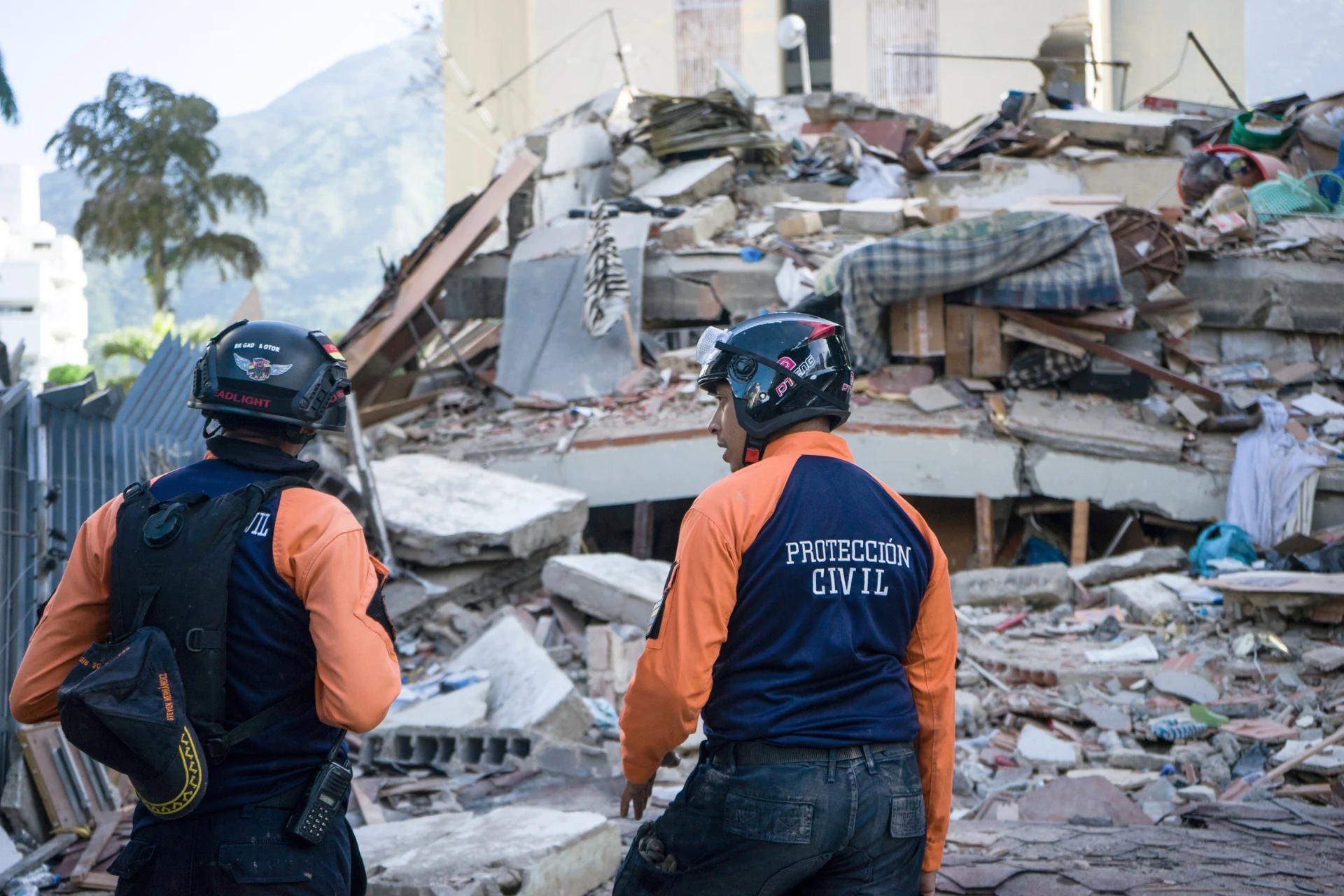
The devastating earthquakes that struck Venezuela have triggered an unprecedented diplomatic thaw between Caracas and several governments that had maintained strained relations with the country, raising hopes that the humanitarian response could pave the way for broader international engagement under the administration of U.S. President Donald Trump.
The United States, Chile, Argentina, El Salvador and Israel were among the first countries to announce humanitarian assistance, deploy search-and-rescue teams or establish direct contact with acting President Delcy Rodríguez to coordinate relief efforts in the hardest-hit areas.
Canada also joined the international response by announcing humanitarian aid while opening a domestic debate over the importance of maintaining diplomatic representation in countries such as Venezuela to better respond to emergencies and assist its citizens abroad.
The wave of international cooperation marks a sharp contrast to the diplomatic tensions that followed Venezuela’s disputed presidential election on July 28, 2024, in which Nicolás Maduro was declared the winner.
In the aftermath of that vote, the governments of Argentina, Chile, Costa Rica, Panama, Peru, the Dominican Republic and Uruguay publicly questioned the official election results, triggering one of the region’s most significant diplomatic crises in recent years.
The Venezuelan government responded by withdrawing its diplomatic personnel from several of those countries and demanding the departure of their representatives, further deepening the country’s international isolation.
The humanitarian emergency created by the twin earthquakes has now prompted renewed communication between Caracas and governments that had previously suspended or significantly reduced diplomatic engagement, underscoring how major natural disasters can temporarily reshape international relations despite longstanding political disagreements.
International
Venezuela Earthquake Death Toll Surpasses 1,700 as Search for Survivors Continues
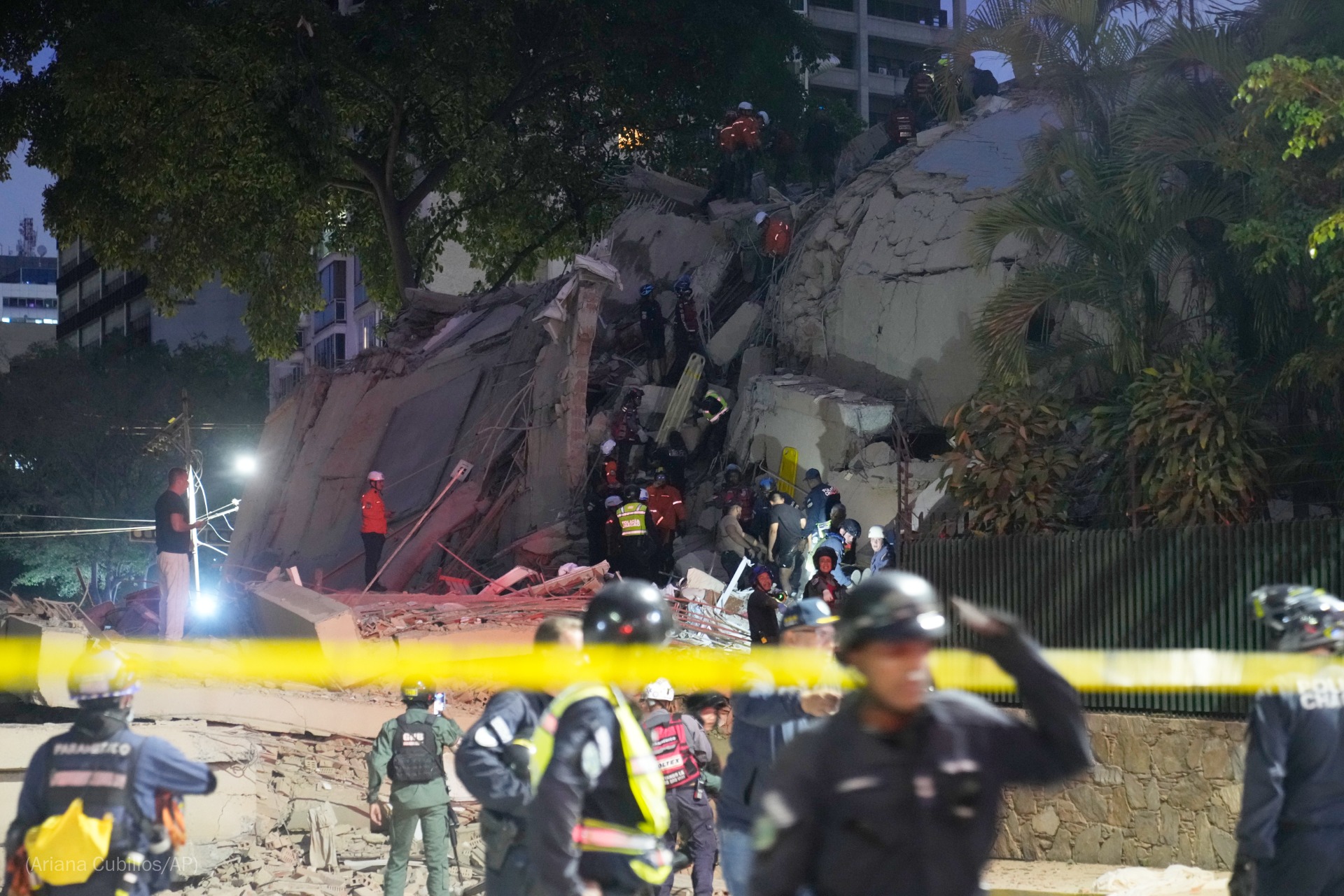
Venezuelan authorities have raised the death toll from last week’s twin earthquakes to more than 1,700, as rescue teams continue searching for survivors in the country’s hardest-hit coastal region.
According to the latest official report released on Sunday, the powerful earthquakes, measuring magnitudes 7.2 and 7.5, have claimed at least 1,719 lives. National Assembly President Jorge Rodríguez also reported that 5,034 people were injured, while 15,866 have been displaced and another 22,619 are receiving medical care.
The United Nations has expressed growing concern over the scale of the disaster, estimating that as many as 68,000 people could still be missing.
La Guaira bears the brunt of the disaster
The coastal state of La Guaira has suffered the greatest loss of life and the most extensive damage. The Venezuelan government has declared the area a disaster zone and placed it under military control as emergency operations continue.
Five days after the earthquakes struck, search-and-rescue teams remain on the ground, supported by additional heavy equipment and international rescue crews. However, hopes of finding more survivors beneath the rubble continue to diminish with each passing day.
One of the most dramatic rescue operations unfolded Monday in Catia La Mar, where emergency teams from El Salvador, Mexico, and Venezuela worked together to reach a 21-year-old man who has remained trapped inside a collapsed building since the earthquakes struck.
The twin earthquakes hit Venezuela on June 24, with the epicenter located between San Felipe and Yumare in the country’s northern region. The first quake, measuring magnitude 7.2, struck at 6:04 p.m. local time. Just 39 seconds later, a second and stronger magnitude 7.5 earthquake occurred farther to the southeast. Combined, the seismic activity lasted nearly three minutes, causing widespread devastation across several regions of the country.

Salvadoran National Arrested in New Jersey with Over 70 Machine Gun Conversion Devices

Venezuela Earthquakes Spark Diplomatic Thaw With Former Critics

Venezuela Earthquake Death Toll Surpasses 1,700 as Search for Survivors Continues
Tec de Monterrey honors one of its students for his contribution to nanotechnology in medicine

Defense Minister commends salvadoran soldier for Central American Cross Country victory

Extension of the state of emergency approved in southern Chile
-
 International2 days ago
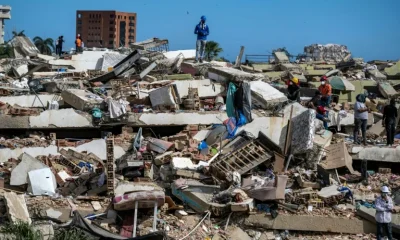
Looting Spreads in Venezuela’s Hardest-Hit Areas After Deadly Earthquakes
-
 International14 hours ago
Salvadoran National Arrested in New Jersey with Over 70 Machine Gun Conversion Devices
-
 International2 days ago
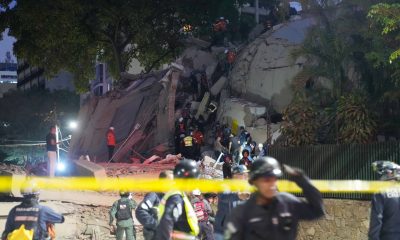
Venezuela Earthquake Death Toll Surpasses 1,700 as Search for Survivors Continues
-
 International2 days ago
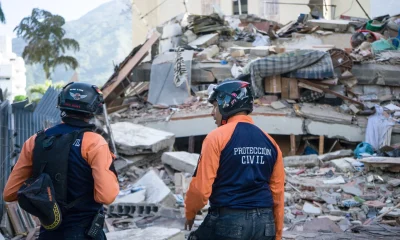
Venezuela Earthquakes Spark Diplomatic Thaw With Former Critics
-
 International4 days ago
UN warns Venezuela earthquakes could affect up to 6.76 million people