
International
NASA marks a new era of space flight

NASA successfully put the Crew Dragon Capsule into orbit and astronauts Bob Behnken and Doug Hurley on the International Space Station (ISS), after nine years of not sending humans into space.
On Saturday, SpaceX proceeded with its plans for a historic attempt to launch astronauts for NASA, for the first time for a private company.
NASA hired SpaceX and Boeing in 2014, to create capsules to transport its astronauts to the space station. The agency wants to reduce its dependence on the Russian Space Agency, the only way to send astronauts at this time since the withdrawal of the shuttle program.










International
Iran Faces Mounting Economic Pressure as US Prepares ‘Toughest Sanctions in History’
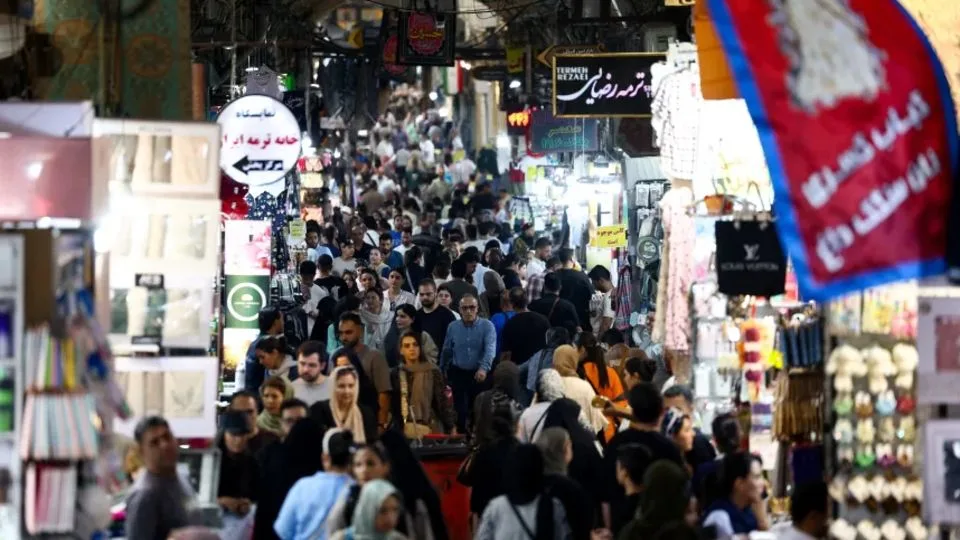
Iran, already weakened by years of sanctions and a devastating military campaign by the United States and Israel, is facing another major challenge as President Donald Trump moves to intensify economic pressure on the Islamic Republic.
The United States is preparing a new package of measures that Treasury Secretary Scott Bessent has described as “the toughest sanctions in history.” The measures are expected to be unveiled at a news conference Monday, as negotiations aimed at ending the six-month war remain stalled and Iran continues to disrupt commercial shipping through the strategically important Strait of Hormuz, contributing to economic pressure around the world.
Iranian officials have acknowledged that the country is struggling under the combined impact of the conflict and economic restrictions.
“We regret that these problems exist, as we are caught up in a large-scale economic, military and security war,” Iranian President Masoud Pezeshkian said, according to state media.
The Iranian president said his government was working to address inflation, public services, livelihoods, employment and the broader economic outlook.











“As a government, we are doing everything in our power to steer inflation, public problems, people’s livelihoods, jobs, the future and people’s lives toward dignity and pride,” Pezeshkian added.
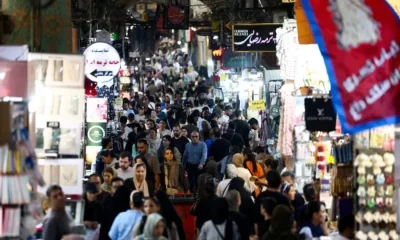
Signs of the economic strain have also emerged in major Iranian cities. Videos shared on social media last week showed nearly empty markets in Tehran and Karaj, with vendors complaining that they were unable to sell fresh produce.
Residents and business owners told CNN that the economic pressure has become increasingly difficult to withstand.
Nima, a 36-year-old Tehran resident, said the cost of living has surged while access to essential goods has also become increasingly difficult.
“Not only is everything expensive, but some of the important things we need, such as certain medicines, are not even available,” she said.
The latest US measures could further deepen the economic challenges facing Iran, particularly as the conflict and disruptions in the Strait of Hormuz continue to affect global trade and energy markets.
International
U.S. Revokes Nearly 900 Visas in Crackdown on ‘Birth Tourism’
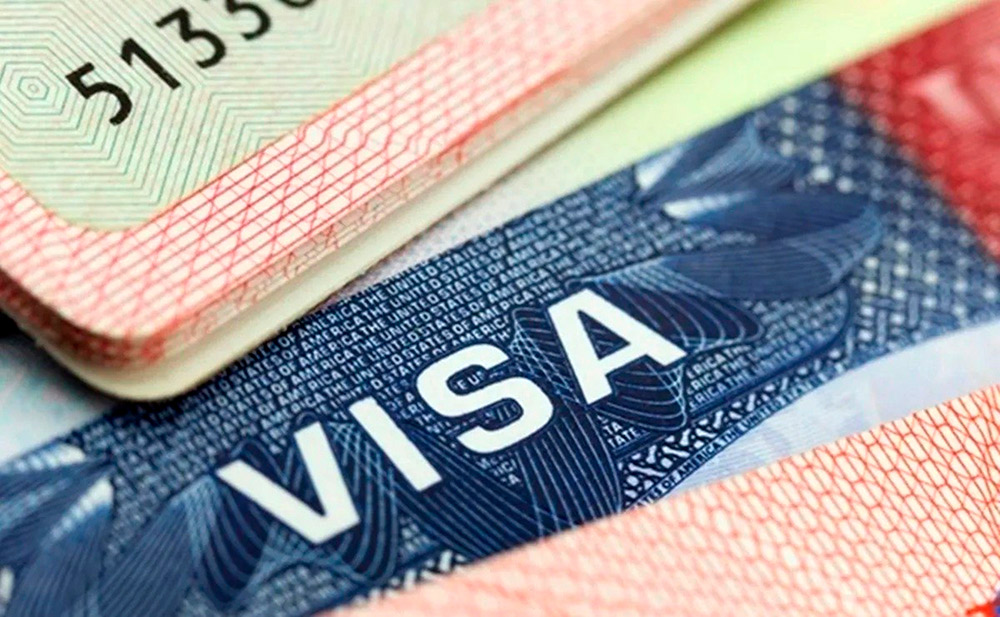
The United States has revoked nearly 900 temporary visas as part of measures promoted by President Donald Trump’s administration against so-called “birth tourism,” State Department spokesperson Tommy Pigott said.
“Nearly 900 visas have already been revoked just since this task force was established. And that is in addition to the actions we have taken since the beginning of this administration to dismantle birth tourism networks around the world,” Pigott said in an interview with Newsmax.
The visa revocations are the result of coordinated efforts between the State Department and the Department of Homeland Security (DHS) to identify people who allegedly use tourist visas to enter the United States with the intention of giving birth there.
The measures are part of Trump’s broader immigration policies. In January, the president signed an executive order describing birth tourism as a practice that undermines the integrity of the U.S. immigration system in an effort to obtain what the administration considers permanent immigration benefits.
The directive stated that some people enter the country through temporary visas issued for tourism, education, cultural exchanges or temporary employment, and later seek to benefit from the U.S. citizenship their children acquire by being born on American soil.
Trump targets birthright citizenship
The latest actions are also part of Trump’s broader efforts to restrict birthright citizenship in the United States.
The country has traditionally followed the principle of jus soli, under which citizenship is generally granted based on birth within U.S. territory, rather than solely on parental nationality, as is the case in other legal systems.
The administrative measures come after the U.S. Supreme Court blocked Trump’s attempt to end birthright citizenship through executive action, ruling that the policy raised constitutional issues involving the Fourteenth Amendment.
The visa crackdown represents another step by the administration to target practices it associates with the use of temporary immigration permits to obtain long-term immigration benefits.
International
Sinaloa Governor Returns to Office Amid Political Backlash and Cartel Allegations
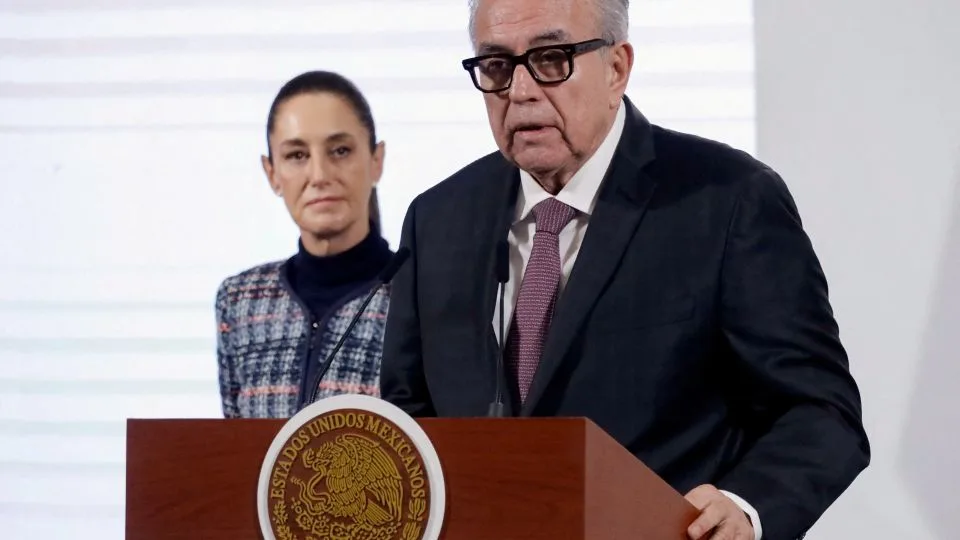
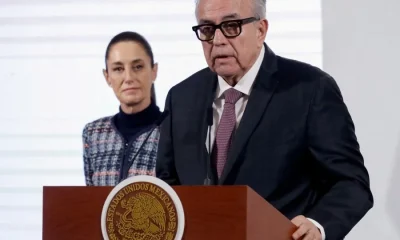
Sinaloa Governor Rubén Rocha Moya returned to office on Friday after taking more than three months of leave while facing an investigation into allegations by the U.S. government that he has ties to the Sinaloa Cartel. Rocha has denied the accusations.
His return has drawn criticism from Mexico’s federal government and the ruling Morena party, which have accused the governor of putting personal interests ahead of the public good.
Although she did not mention Rocha by name, Mexican President Claudia Sheinbaum addressed the situation Saturday in a post on X, warning about the dangers of placing personal ambitions above the interests of the country.
“Power without principles becomes arrogance,” Sheinbaum wrote.
The president stressed that no personal interest should take precedence over the interests of the Mexican people and the nation, particularly when the objective is not public well-being but the pursuit of power for its own sake.
“Mexico deserves public servants who understand that positions are temporary, but responsibility before the nation is eternal,” Sheinbaum said.
She added that public officials should prioritize the dignity, future and hopes of the Mexican people over individual names, political groups or personal interests.
Later Saturday, while attending the inauguration of new agricultural services facilities in Mexico City, Sheinbaum told reporters that she learned of Rocha’s return through the governor’s social media post.
The president said she would provide further comments on the matter during her daily press conference on Monday.

Bukele Announces Education Investment Exceeding 8% of El Salvador’s GDP

Iran Faces Mounting Economic Pressure as US Prepares ‘Toughest Sanctions in History’

U.S. Revokes Nearly 900 Visas in Crackdown on ‘Birth Tourism’

Sinaloa Governor Returns to Office Amid Political Backlash and Cartel Allegations

Panama’s Geisha Coffee Retains Pure Ethiopian Genetics, Studies Find

Pilot killed and two Pennsylvania state troopers injured in mid-air collision

Argentina’s Milei Links Low Birth Rates to Abortion and Feminism

Virginia Police Arrest Salvadoran Man in Great Falls Woman’s Killing

Honduran Lawyer and Protected Witness in Angie Peña Case Shot Dead
Virginia Police Arrest Salvadoran Man in Great Falls Woman’s Killing
Argentina’s Milei Links Low Birth Rates to Abortion and Feminism
Pilot killed and two Pennsylvania state troopers injured in mid-air collision
U.S. Revokes Nearly 900 Visas in Crackdown on ‘Birth Tourism’
Panama’s Geisha Coffee Retains Pure Ethiopian Genetics, Studies Find
Sinaloa Governor Returns to Office Amid Political Backlash and Cartel Allegations
Bukele Announces Education Investment Exceeding 8% of El Salvador’s GDP
-
 Central America5 days ago
Honduran Lawyer and Protected Witness in Angie Peña Case Shot Dead
-
 International5 days ago
Virginia Police Arrest Salvadoran Man in Great Falls Woman’s Killing
-
 International4 days ago
Argentina’s Milei Links Low Birth Rates to Abortion and Feminism
-
 International4 days ago
Pilot killed and two Pennsylvania state troopers injured in mid-air collision
-
 International1 day ago
U.S. Revokes Nearly 900 Visas in Crackdown on ‘Birth Tourism’
-
 Central America4 days ago
Panama’s Geisha Coffee Retains Pure Ethiopian Genetics, Studies Find
-
 International2 days ago
Sinaloa Governor Returns to Office Amid Political Backlash and Cartel Allegations
-
 Central America3 hours ago
Bukele Announces Education Investment Exceeding 8% of El Salvador’s GDP
-
 International3 hours ago
Iran Faces Mounting Economic Pressure as US Prepares ‘Toughest Sanctions in History’