
Central America
Tropical Storm Amanda Damages El Salvador’s Infrastructure

Amanda impacted Central America over the weekend, causing severe damage to El Salvador’s infrastructure and roads.
Increased river flows and permanent rainfall have caused landslides affecting homes in vulnerable areas and weakened ravines along the most important roads of San Salvador.
El Salvador’s government, through the Road Conservation Fund, reported that protection and mitigation works are being carried out to restore damaged infrastructures. A national red alert remains in effect because of the possible impact that tropical storm Cristobal, which has formed over the Gulf of Mexico, may have over the country.















International
Cristiano Ronaldo Makes History as First Player to Score in Six World Cups

Cristiano Ronaldo made football history on Tuesday by becoming the first player ever to score in six different editions of the FIFA World Cup.
The Portuguese forward opened the scoring in Portugal’s Group K match against Uzbekistan in Houston. Just six minutes into the game, Ronaldo found the back of the net with a right-footed strike from inside the box, sending the Portuguese fans into celebration.
The “Commander” sparked excitement throughout the stadium with his iconic celebration, as supporters joined in with his famous “Siuuu!” chant to honor another milestone in the career of one of football’s greatest stars.
At 41 years old, Ronaldo has now scored in Germany 2006, South Africa 2010, Brazil 2014, Russia 2018, Qatar 2022, and North America 2026. With his two goals in this tournament, he has surpassed Lionel Messi’s record, as the Argentine has scored in every World Cup he played except South Africa 2010.
The Portuguese captain has also reached nine World Cup goals, matching Eusébio as Portugal’s all-time top scorer in the history of the tournament.
Ronaldo’s achievement came just one day after Messi also made history by becoming the outright leading scorer in World Cup history, reaching 18 goals after scoring twice in Argentina’s 2-0 victory over Austria.
With his appearance at the 2026 World Cup, Cristiano Ronaldo has also extended another remarkable record by becoming the first player to participate in six consecutive editions of the tournament, further cementing his legacy as one of the most influential players in football history.
Central America
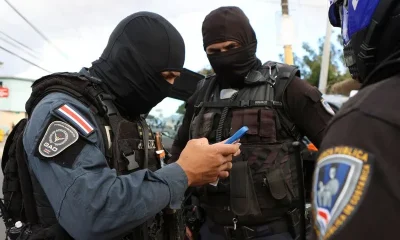
Costa Rica Launches Largest Police Operation in History, Dismantles Major Drug Cartel
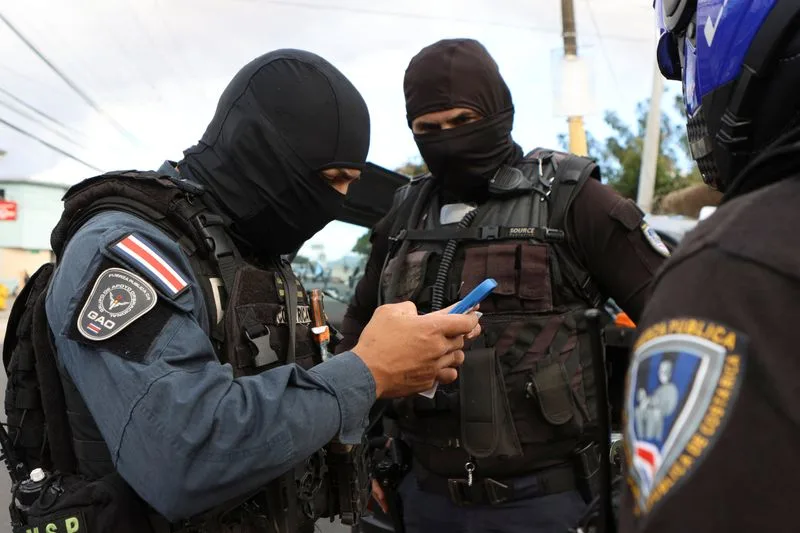
Costa Rican judicial authorities on Tuesday announced the largest police operation in the country’s history, resulting in the dismantling of a major local drug trafficking organization allegedly led by a man who was extradited to the United States earlier this year.
More than 1,500 law enforcement officers carried out 97 raids across different regions of the country, targeting 41 suspects and seizing assets valued at nearly $22 million, according to Michael Soto, director of the Judicial Investigation Agency (OIJ).
Speaking in a video statement, Soto described the operation as unprecedented in scale and coordination.
“This is the largest operation we have ever conducted. Never before have we carried out so many raids with our officers working alongside prosecutors from the Public Ministry and security forces from the Executive Branch. It is historic,” Soto said.
The operation, dubbed “Riverside,” was the result of months of investigations conducted with support from the U.S. Drug Enforcement Administration (DEA).
Authorities said the large-scale crackdown dismantled one of the country’s most significant criminal organizations involved in international drug trafficking, a major contributor to the security crisis affecting the Central American nation, long known for its stability and tourism industry.
According to investigators, the operation focused on uncovering the multimillion-dollar business activities of a Costa Rican criminal network allied with a Colombian group known as “Los Costeños.”
The alleged leader of the organization was identified as Edwin Pérez, also known as “Pecho de Rata,” who was extradited to the United States on March 20 alongside former Security Minister and former Supreme Court magistrate Celso Gamboa.
Both men were arrested on June 23, 2025, shortly after a legislative reform came into effect allowing Costa Rican citizens suspected of drug trafficking to be extradited to foreign jurisdictions.
Among those detained during the operation were two prison officers, two former professional football players and a model. Prosecutors indicated that the suspects could face charges including domestic and international drug trafficking, arms trafficking, possession of explosives, smuggling drugs into correctional facilities, money laundering and participation in organized criminal activities.
Authorities stated that the investigation remains ongoing and that additional arrests and asset seizures could follow as prosecutors continue to examine the network’s operations and financial structure.
Central America
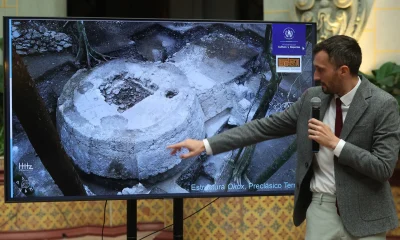
Ancient Maya Ceremonial Site Reveals New Clues About Preclassic Ritual Practices
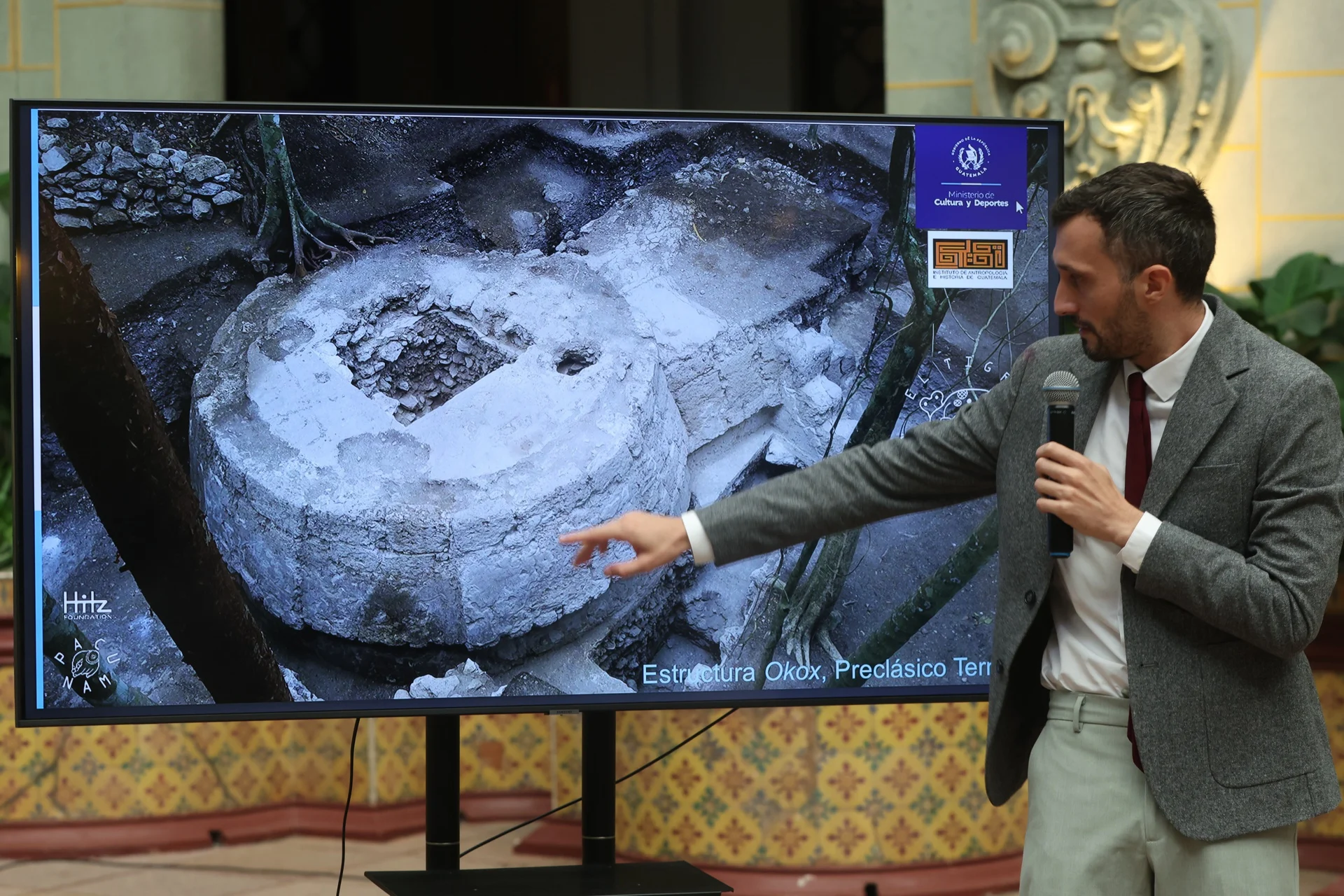
An international team of archaeologists has uncovered a unique Maya ritual structure at the pre-Hispanic site of El Tigre, located in Guatemala’s northern department of Petén, offering new insights into ceremonial practices and social organization during the Late Preclassic period (100 B.C. – A.D. 150).
The discovery was announced on Monday by researchers from the Lechugal Norte–El Tigre Archaeological Project, a multidisciplinary initiative involving experts from Guatemala, France, Mexico, and Canada who have been conducting excavations in the area during the 2025 and 2026 field seasons.
“This is a structure with highly distinctive characteristics that allow us to make significant advances in understanding ritual practices at sites of medium-scale monumentality,” said project director Julien Hiquet during a press conference.
The structure, named “Okox” — meaning “mushroom” in the Indigenous Q’eqchi’ language — features a distinctive keyhole-shaped design and stands out for its exceptional state of preservation. Unlike many Maya structures, it was not modified or covered by later construction phases, enabling researchers to study its original architectural features.
According to the archaeological team, El Tigre functioned as a residential and administrative center that supported thousands of inhabitants during the Preclassic era.
Excavations at the site revealed several infant burials strategically placed within the platform’s fill as ritual offerings. Researchers also uncovered the remains of a high-ranking adult male buried in a seated position and accompanied by a stingray spine awl, an object commonly associated with bloodletting and self-sacrifice ceremonies in Maya culture.
Officials highlighted the significance of the discovery for understanding the development of Maya society and religion. Guatemala’s Vice Minister of Cultural and Natural Heritage, Rossina Cazali, described the find as “a window into a pivotal stage” of Maya history.
Archaeologists believe the findings will contribute to a deeper understanding of ceremonial traditions, political organization, and social dynamics in the Maya lowlands during a critical period of cultural development.

U.S. Proposes Higher Citizenship Fees and Limits on Immigration Fee Waivers

Cristiano Ronaldo Makes History as First Player to Score in Six World Cups

Costa Rica Launches Largest Police Operation in History, Dismantles Major Drug Cartel
Tec de Monterrey honors one of its students for his contribution to nanotechnology in medicine

Defense Minister commends salvadoran soldier for Central American Cross Country victory

Extension of the state of emergency approved in southern Chile
-
 International1 day ago
Cristiano Ronaldo Makes History as First Player to Score in Six World Cups
-
 International2 days ago
UNHCR Urges U.S. Deportation Agreements to Uphold Asylum Rights and International Law
-

 International2 days ago
Mbappé Ties Klose on All-Time World Cup Scoring List After Brace Against Iraq
-
 International1 day ago
U.S. Proposes Higher Citizenship Fees and Limits on Immigration Fee Waivers
-
 Central America1 day ago
Costa Rica Launches Largest Police Operation in History, Dismantles Major Drug Cartel
-
 Central America2 days ago
Ancient Maya Ceremonial Site Reveals New Clues About Preclassic Ritual Practices