
Central America
Costa Rica disagrees with the region in terms of cargo transport
Earlier this week, Costa Rican authorities announced that empty cargo units will not be allowed into the country if driven by non-resident foreigners.
The measure, announced by the Ministry of Foreign Trade and the Ministry of Finance, comes in response to measures taken by other countries in the area. At present, Costa Rican transporters cannot enter any Central American country with empty cargo units.
According to the authorities, this measure is intended to even out the current conditions for transporters in the region. The differences in cargo movement began in mid-May, after two Costa Rican decrees came into force limiting access to the country for cargo transporters.










Central America
Panama’s Geisha Coffee Retains Pure Ethiopian Genetics, Studies Find
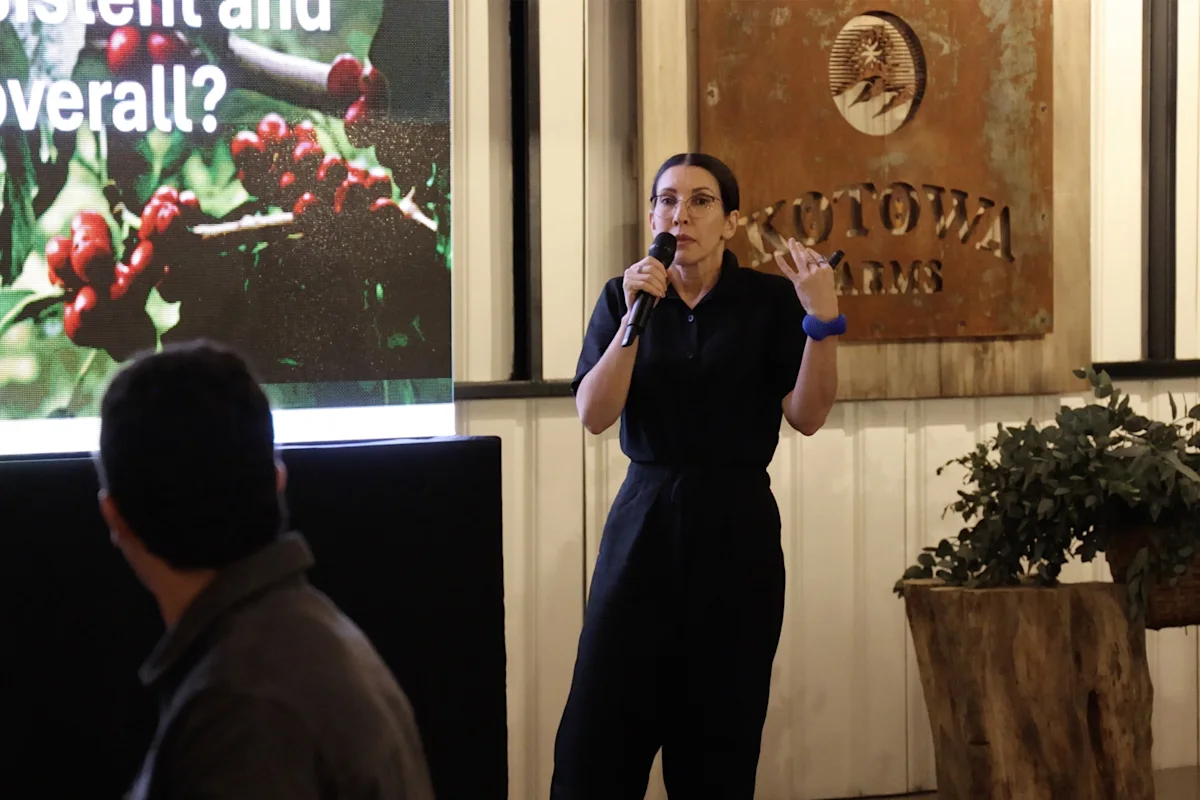
Panama’s exclusive Geisha coffee variety retains the full genetic purity of its Ethiopian ancestors and preserves a distinctive sensory profile, according to two studies presented by the Specialty Coffee Association of Panama (SCAP).
“Ensuring that the genetics we have in Panama remain 100% pure is vital for the country’s future,” Ricardo Koyner, president of Panama’s specialty coffee association, told EFE.
Panamanian Geisha coffee has gained international fame after breaking price records at global auctions. In the latest auction, a kilogram sold for more than $30,000.
The variety is highly sought after, particularly in Asian markets, for its complex flavor, which differs from traditional strong coffee, as well as its distinctive floral aroma.
Studies confirm genetic purity and unique flavor
A genetic analysis conducted in France found that Geisha coffee trees grown in Panama retain the same genetic lineage as the original plants from Ethiopia. Those plants are preserved at the Tropical Agricultural Research and Higher Education Center (CATIE) in Costa Rica, through which the coffee variety reached Panama.











“We compared Panama’s Geisha with the original Geisha from CATIE, which is the ancestral reference. The genetics are exactly the same,” explained Christophe Montagnon, director of the study.
According to Montagnon, the findings indicate that Panama has preserved the genetic heritage of the variety over the years.
A second study focused on the sensory characteristics of Panamanian Geisha coffee and identified a distinctive note of white flowers or jasmine, described as particularly sweet and similar to the sensation of drinking jasmine tea.
Fabiana Carvalho, a flavor neuroscientist at the University of Campinas in Brazil, said the characteristic is highly valued in the international specialty coffee market.
“Coffees from Panama that have these sensory markers will be perceived, and already are perceived, as authentic. The final consumer, the coffee drinker, is willing to pay more,” said Carvalho, who led the study aimed at identifying the flavor markers that distinguish Panamanian coffee.
The findings reinforce the reputation of Panama’s Geisha coffee as one of the world’s most distinctive and valuable specialty coffees.
Central America
Honduran Lawyer and Protected Witness in Angie Peña Case Shot Dead

Honduran lawyer and former judicial official Dereck McField was shot and killed on Monday morning, according to local media reports.
The attack took place in the street as McField was returning home after dropping off his young son at school, Honduran outlet HCH reported.
The killing sparked widespread concern after Honduras President Nasry Asfura later confirmed that McField was a protected witness in the case of Angie Peña, a Honduran university student who disappeared on January 1, 2022, while riding a jet ski on an island.
Authorities suspect Peña was trafficked to a criminal network for sexual exploitation. Her jet ski, life jacket and other belongings were found days later on a cay in Belize.
Four men — three Americans and one Honduran — have been charged in connection with the case and remain in pretrial detention as proceedings continue.
At the start of the judicial process in 2024, authorities said they had evidence indicating that Harold Green allegedly sold Peña to William James Murdock for money. Prosecutors said the case included phone records, videos, photographs and witness testimony.
Search operations have been carried out since then in an effort to locate Peña, but she has not been found. Authorities have said they continue to hope that she is alive.
The three U.S. defendants live in Honduras and have tourism-related investments in Roatán.
McField’s killing raises new questions about the safety of witnesses involved in the high-profile case and comes as authorities continue investigating Peña’s disappearance.
Central America
Guatemala Declares Highest Alert in Areas Affected by Fuego Volcano Eruption
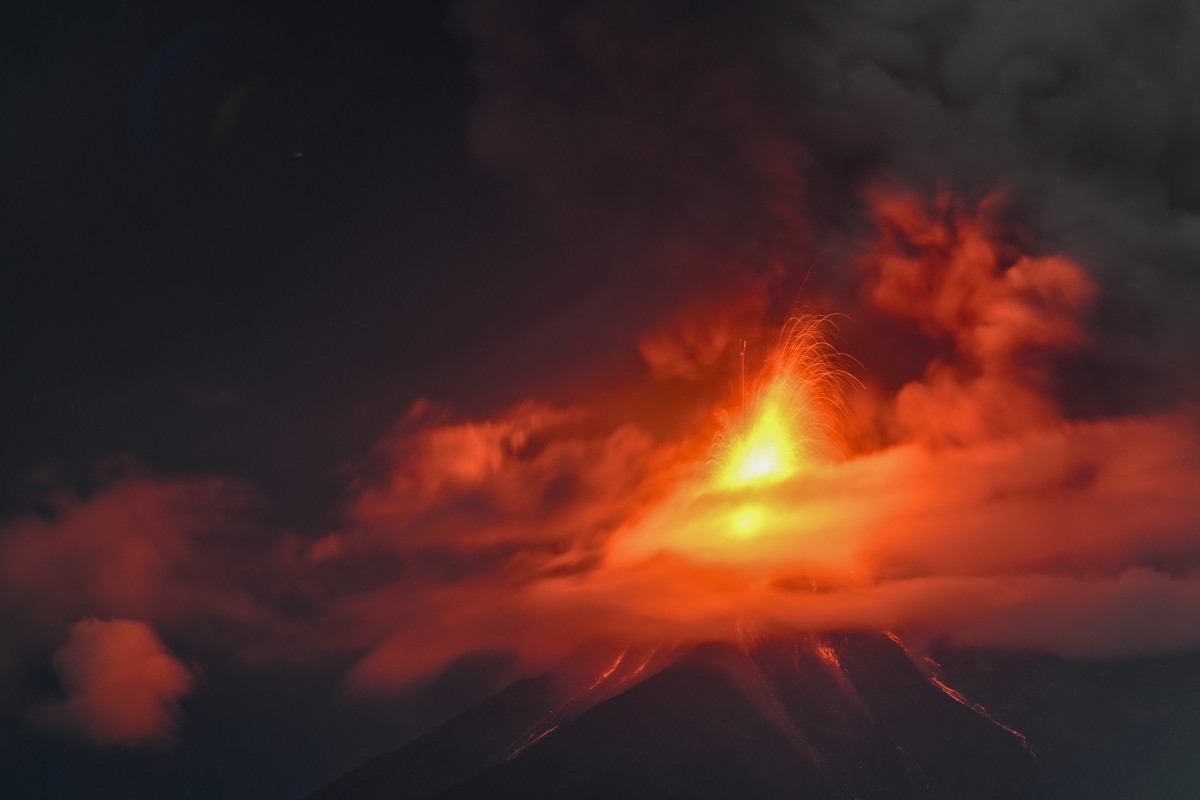
Guatemalan authorities declared a red alert, the highest level of danger, on Tuesday in areas affected by the eruption of the Fuego Volcano, located about 35 kilometers from the country’s capital.
The most active volcano in Central America entered an eruptive phase on Monday morning, and its activity intensified overnight with lava emissions and large columns of gas and ash.
No fatalities have been reported, but the volcanic activity forced the evacuation of around 500 people as a precautionary measure.
The National Coordination for Disaster Reduction (Conred) declared a state of emergency in the departments of Sacatepéquez, Chimaltenango and Escuintla, the agency announced through its official X account.
The affected regions are home to approximately 1.6 million people. However, ashfall has so far impacted only about five municipalities.
Despite the increase in the alert level, authorities reopened a road leading to the city of Antigua, the country’s main tourist destination, after evaluating safety conditions in the area.
The Fuego Volcano is one of Guatemala’s most active geological formations and has a history of frequent eruptions, requiring continuous monitoring by national emergency agencies.

U.S. Revokes Nearly 900 Visas in Crackdown on ‘Birth Tourism’

Sinaloa Governor Returns to Office Amid Political Backlash and Cartel Allegations

Panama’s Geisha Coffee Retains Pure Ethiopian Genetics, Studies Find

Pilot killed and two Pennsylvania state troopers injured in mid-air collision

Argentina’s Milei Links Low Birth Rates to Abortion and Feminism

Virginia Police Arrest Salvadoran Man in Great Falls Woman’s Killing

Honduran Lawyer and Protected Witness in Angie Peña Case Shot Dead

Mexico and Guatemala Agree on Five-Point Binational Plan for 2027

France to Expel Two Iranian Diplomats Over Alleged Attack on French Officials
Honduran Lawyer and Protected Witness in Angie Peña Case Shot Dead
Virginia Police Arrest Salvadoran Man in Great Falls Woman’s Killing
Argentina’s Milei Links Low Birth Rates to Abortion and Feminism
Pilot killed and two Pennsylvania state troopers injured in mid-air collision
Mexico and Guatemala Agree on Five-Point Binational Plan for 2027
Panama’s Geisha Coffee Retains Pure Ethiopian Genetics, Studies Find
U.S. Revokes Nearly 900 Visas in Crackdown on ‘Birth Tourism’
-
 International5 days ago
France to Expel Two Iranian Diplomats Over Alleged Attack on French Officials
-
 Central America4 days ago
Honduran Lawyer and Protected Witness in Angie Peña Case Shot Dead
-
 International4 days ago
Virginia Police Arrest Salvadoran Man in Great Falls Woman’s Killing
-
 International3 days ago
Argentina’s Milei Links Low Birth Rates to Abortion and Feminism
-
 International3 days ago
Pilot killed and two Pennsylvania state troopers injured in mid-air collision
-
 International5 days ago
Mexico and Guatemala Agree on Five-Point Binational Plan for 2027
-
 Central America3 days ago
Panama’s Geisha Coffee Retains Pure Ethiopian Genetics, Studies Find
-
 International5 hours ago
U.S. Revokes Nearly 900 Visas in Crackdown on ‘Birth Tourism’
-
 International20 hours ago
Sinaloa Governor Returns to Office Amid Political Backlash and Cartel Allegations