
Tottenham’s Conte era gets off to winning start

AFP
Antonio Conte was dished up the good and the bad in his first match in charge of Tottenham who beat Vitesse Arnhem 3-2 in the Europa Conference League on Thursday in a game which also three red cards.
Conte took his place in the dug out at the Tottenham Hotspur Stadium after his work permit arrived in time two days after his appointment.
Spurs had not mustered a single shot on target in the weekend defeat to Manchester United, which spelled the end for Nuno Espirito Santo after just four months in charge.
Against Vitesse they’d conjured up two within the first 90 seconds, encouraging the fans, some draped in Italian flags to make Conte feel at home.











The Italian former Inter Milan, Chelsea and Juventus boss only had to wait 14 minutes for his new side’s first goal, with Son Heung-min driving in a low angled shot from the right.
Shortly after Lucas Moura, taking receipt of an inch-perfect cross from Harry Kane, clinically converted the chance, sliding the ball past the onrushing keeper Markus Schubert.
The reenergized hosts were 3-0 up before the half hour, the goal awarded to Vitesse defender Jacob Rasmussen who in trying to keep out Kane’s close range shot dragged the ball over the line.
Rasmussen made quick amends, heading past Hugo Lloris four minutes later.
On 39 minutes a defensive error by Moura resulted in Matus Bero slotting past Lloris to give Conte plenty to talk about at his first half-time prep talk in the Spurs dressing room.
On the hour Tottenham went a man down after defender Cristian Romero received his second booking for a foul on Lois Openda.
Lloris was then kept busy as Vitesse tried to capitalise on their numerical advantage, the Spurs skipper superbly denying Riechedly Bazoer’s curling shot with his left hand.
Conte made a triple substitution, introducing Harry Winks, Davinson Sanchez and Tanguy Ndomblee for Son, Moura and Oliver Skipp.
Vitesse had a man sent off of their own when captain Danilho Doekhi felled Kane in the centre circle to earn his second booking, as Tottenham held on for a much needed win.
Vitesse keeper Markus Schubert was also sent off for handling the ball outside of his area.
While Conte was left with plenty of food for thought in north London ahead of his Premier League return against Everton, former Spurs boss Jose Mourinho watched his Roma side earn a come-from-behind 2-2 draw against Bodo/Glimt.
The Norwegians had embarrassed Mourinho’s Serie A charges 6-1 at home in the first match between the two sides last month.










International
U.S. Revokes Nearly 900 Visas in Crackdown on ‘Birth Tourism’
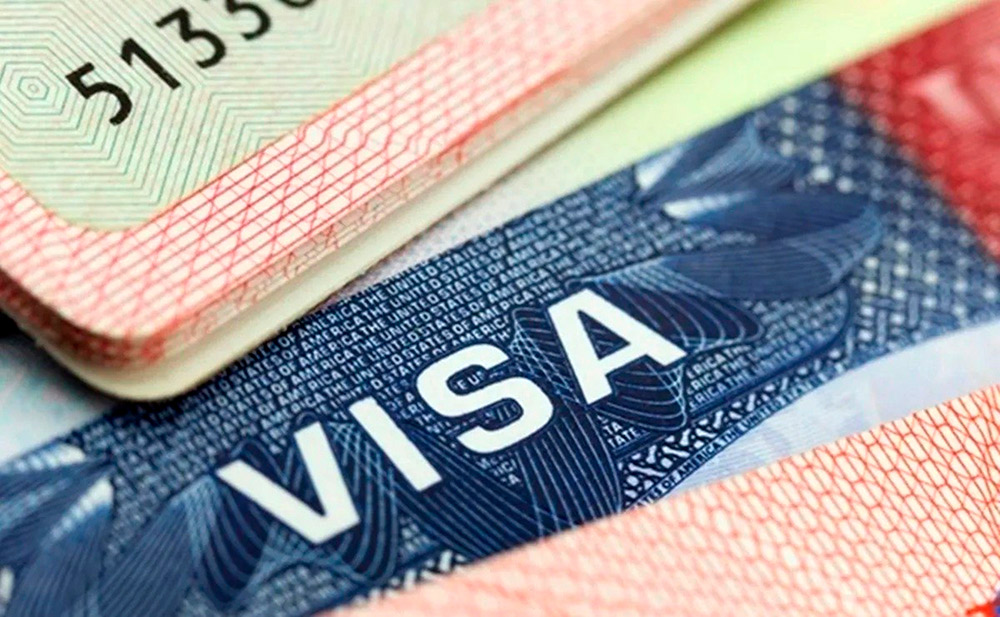
The United States has revoked nearly 900 temporary visas as part of measures promoted by President Donald Trump’s administration against so-called “birth tourism,” State Department spokesperson Tommy Pigott said.
“Nearly 900 visas have already been revoked just since this task force was established. And that is in addition to the actions we have taken since the beginning of this administration to dismantle birth tourism networks around the world,” Pigott said in an interview with Newsmax.
The visa revocations are the result of coordinated efforts between the State Department and the Department of Homeland Security (DHS) to identify people who allegedly use tourist visas to enter the United States with the intention of giving birth there.
The measures are part of Trump’s broader immigration policies. In January, the president signed an executive order describing birth tourism as a practice that undermines the integrity of the U.S. immigration system in an effort to obtain what the administration considers permanent immigration benefits.
The directive stated that some people enter the country through temporary visas issued for tourism, education, cultural exchanges or temporary employment, and later seek to benefit from the U.S. citizenship their children acquire by being born on American soil.
Trump targets birthright citizenship
The latest actions are also part of Trump’s broader efforts to restrict birthright citizenship in the United States.
The country has traditionally followed the principle of jus soli, under which citizenship is generally granted based on birth within U.S. territory, rather than solely on parental nationality, as is the case in other legal systems.
The administrative measures come after the U.S. Supreme Court blocked Trump’s attempt to end birthright citizenship through executive action, ruling that the policy raised constitutional issues involving the Fourteenth Amendment.
The visa crackdown represents another step by the administration to target practices it associates with the use of temporary immigration permits to obtain long-term immigration benefits.
International
Sinaloa Governor Returns to Office Amid Political Backlash and Cartel Allegations
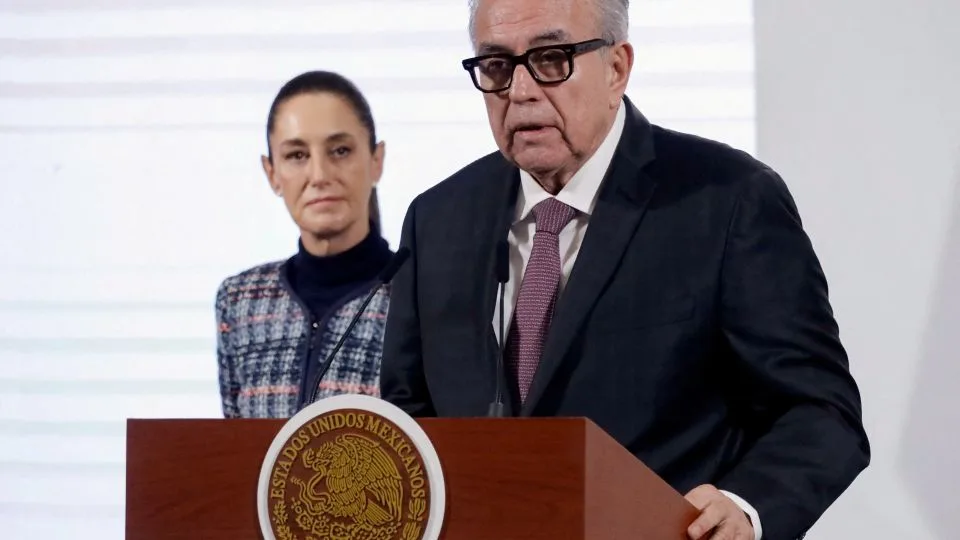
Sinaloa Governor Rubén Rocha Moya returned to office on Friday after taking more than three months of leave while facing an investigation into allegations by the U.S. government that he has ties to the Sinaloa Cartel. Rocha has denied the accusations.
His return has drawn criticism from Mexico’s federal government and the ruling Morena party, which have accused the governor of putting personal interests ahead of the public good.
Although she did not mention Rocha by name, Mexican President Claudia Sheinbaum addressed the situation Saturday in a post on X, warning about the dangers of placing personal ambitions above the interests of the country.
“Power without principles becomes arrogance,” Sheinbaum wrote.
The president stressed that no personal interest should take precedence over the interests of the Mexican people and the nation, particularly when the objective is not public well-being but the pursuit of power for its own sake.
“Mexico deserves public servants who understand that positions are temporary, but responsibility before the nation is eternal,” Sheinbaum said.
She added that public officials should prioritize the dignity, future and hopes of the Mexican people over individual names, political groups or personal interests.
Later Saturday, while attending the inauguration of new agricultural services facilities in Mexico City, Sheinbaum told reporters that she learned of Rocha’s return through the governor’s social media post.
The president said she would provide further comments on the matter during her daily press conference on Monday.
Central America
Panama’s Geisha Coffee Retains Pure Ethiopian Genetics, Studies Find
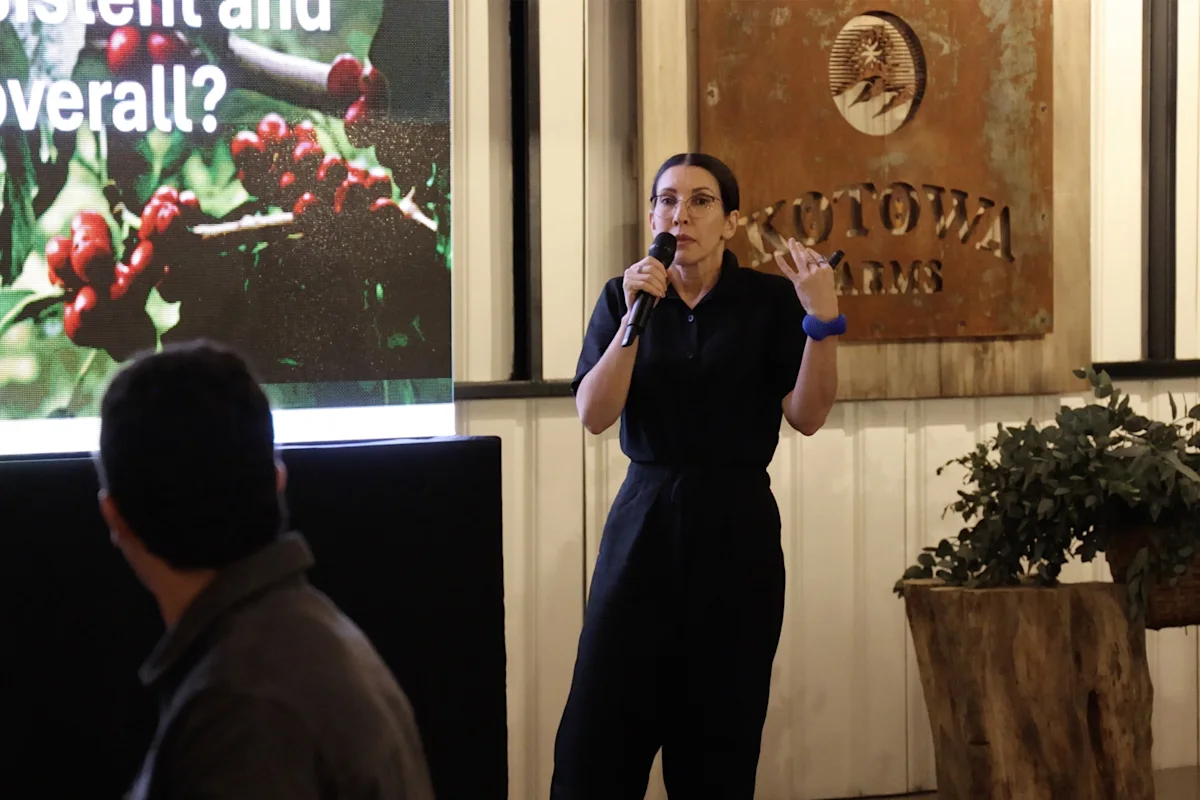
Panama’s exclusive Geisha coffee variety retains the full genetic purity of its Ethiopian ancestors and preserves a distinctive sensory profile, according to two studies presented by the Specialty Coffee Association of Panama (SCAP).
“Ensuring that the genetics we have in Panama remain 100% pure is vital for the country’s future,” Ricardo Koyner, president of Panama’s specialty coffee association, told EFE.
Panamanian Geisha coffee has gained international fame after breaking price records at global auctions. In the latest auction, a kilogram sold for more than $30,000.
The variety is highly sought after, particularly in Asian markets, for its complex flavor, which differs from traditional strong coffee, as well as its distinctive floral aroma.
Studies confirm genetic purity and unique flavor
A genetic analysis conducted in France found that Geisha coffee trees grown in Panama retain the same genetic lineage as the original plants from Ethiopia. Those plants are preserved at the Tropical Agricultural Research and Higher Education Center (CATIE) in Costa Rica, through which the coffee variety reached Panama.
“We compared Panama’s Geisha with the original Geisha from CATIE, which is the ancestral reference. The genetics are exactly the same,” explained Christophe Montagnon, director of the study.
According to Montagnon, the findings indicate that Panama has preserved the genetic heritage of the variety over the years.
A second study focused on the sensory characteristics of Panamanian Geisha coffee and identified a distinctive note of white flowers or jasmine, described as particularly sweet and similar to the sensation of drinking jasmine tea.
Fabiana Carvalho, a flavor neuroscientist at the University of Campinas in Brazil, said the characteristic is highly valued in the international specialty coffee market.
“Coffees from Panama that have these sensory markers will be perceived, and already are perceived, as authentic. The final consumer, the coffee drinker, is willing to pay more,” said Carvalho, who led the study aimed at identifying the flavor markers that distinguish Panamanian coffee.
The findings reinforce the reputation of Panama’s Geisha coffee as one of the world’s most distinctive and valuable specialty coffees.

U.S. Revokes Nearly 900 Visas in Crackdown on ‘Birth Tourism’

Sinaloa Governor Returns to Office Amid Political Backlash and Cartel Allegations

Panama’s Geisha Coffee Retains Pure Ethiopian Genetics, Studies Find

Pilot killed and two Pennsylvania state troopers injured in mid-air collision

Argentina’s Milei Links Low Birth Rates to Abortion and Feminism

Virginia Police Arrest Salvadoran Man in Great Falls Woman’s Killing

Honduran Lawyer and Protected Witness in Angie Peña Case Shot Dead

Mexico and Guatemala Agree on Five-Point Binational Plan for 2027
Honduran Lawyer and Protected Witness in Angie Peña Case Shot Dead
Virginia Police Arrest Salvadoran Man in Great Falls Woman’s Killing
Argentina’s Milei Links Low Birth Rates to Abortion and Feminism
Pilot killed and two Pennsylvania state troopers injured in mid-air collision
U.S. Revokes Nearly 900 Visas in Crackdown on ‘Birth Tourism’
Panama’s Geisha Coffee Retains Pure Ethiopian Genetics, Studies Find
Sinaloa Governor Returns to Office Amid Political Backlash and Cartel Allegations
-
 Central America4 days ago
Honduran Lawyer and Protected Witness in Angie Peña Case Shot Dead
-
 International4 days ago
Virginia Police Arrest Salvadoran Man in Great Falls Woman’s Killing
-
 International4 days ago
Argentina’s Milei Links Low Birth Rates to Abortion and Feminism
-
 International4 days ago
Pilot killed and two Pennsylvania state troopers injured in mid-air collision
-
 International15 hours ago
U.S. Revokes Nearly 900 Visas in Crackdown on ‘Birth Tourism’
-
 Central America4 days ago
Panama’s Geisha Coffee Retains Pure Ethiopian Genetics, Studies Find
-
 International1 day ago
Sinaloa Governor Returns to Office Amid Political Backlash and Cartel Allegations