
Central America
Sex abuse trial starts for Guatemalan ex-paramilitaries
AFP
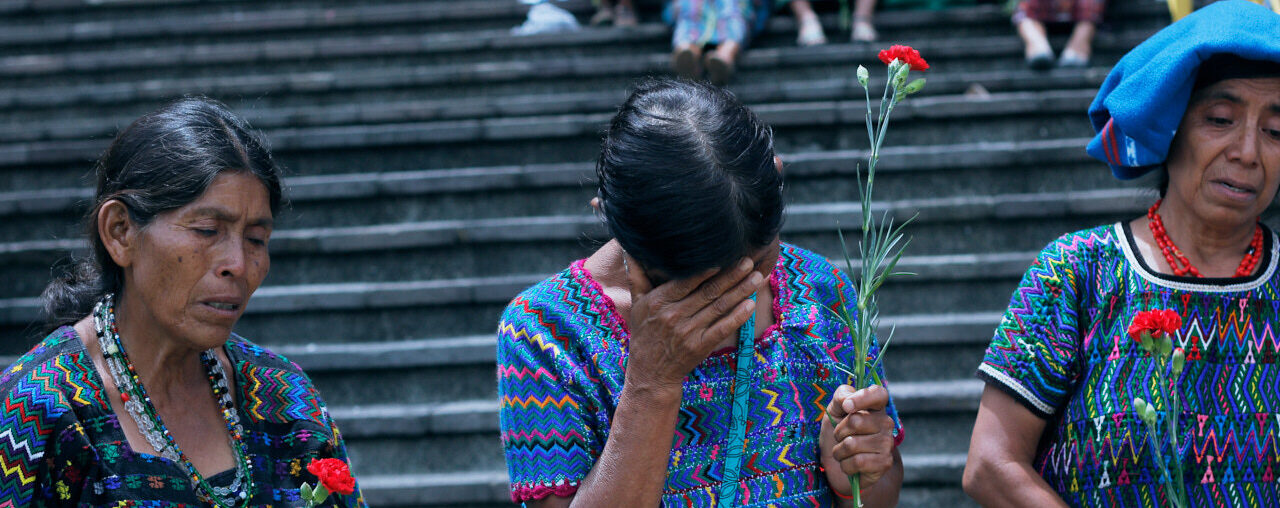
A trial started in Guatemala Wednesday for five former paramilitary soldiers accused of sexually abusing 36 indigenous Mayan women some 40 years ago during the country’s civil war.
The five are former members of Guatemala’s Civil Self-Defense Patrols (PAC) blamed for several atrocities during the 1960-1996 war in which an estimated 200,000 people were killed or disappeared.
They will take part via videoconference from the Mariscal Zavala jail where they are being detained for crimes committed between 1981 and 1985 around the town of Rabinal, north of the capital Guatemala City.
The population of Rabinal was particularly hard hit by the war. A mass grave with the bodies of more than 3,000 people was discovered in the area.









Thirty-six women have come forward in the last decade with accusations of sexual violence committed against them during that time.
The identities of most of the women are being withheld for their own security, said their lawyer Lucia Xiloj.
Some have already given recorded evidence to investigators, which will be played in court.
Only five of the victims have opted to be present for the trial before Judge Jazmin Barrios in the Supreme Court of Justice.
According to Xiloj, many Mayan women “were raped after the (forced) disappearance of their husbands” by paramilitaries and soldiers.
Nobel Peace Prize laureate Rigoberta Menchu told reporters at the court that Guatemala had failed to “fulfill its obligation to defend these sisters who were raped, tortured, humiliated and subjected to (sexual) slavery during so many years of armed conflict.”
A United Nations truth commission documented 669 massacres committed during Guatemala’s civil war, of which 93 percent were attributed to government forces.






Central America
Costa Rican President Presents Security Reform Package to Fight Crime and Strengthen Prisons
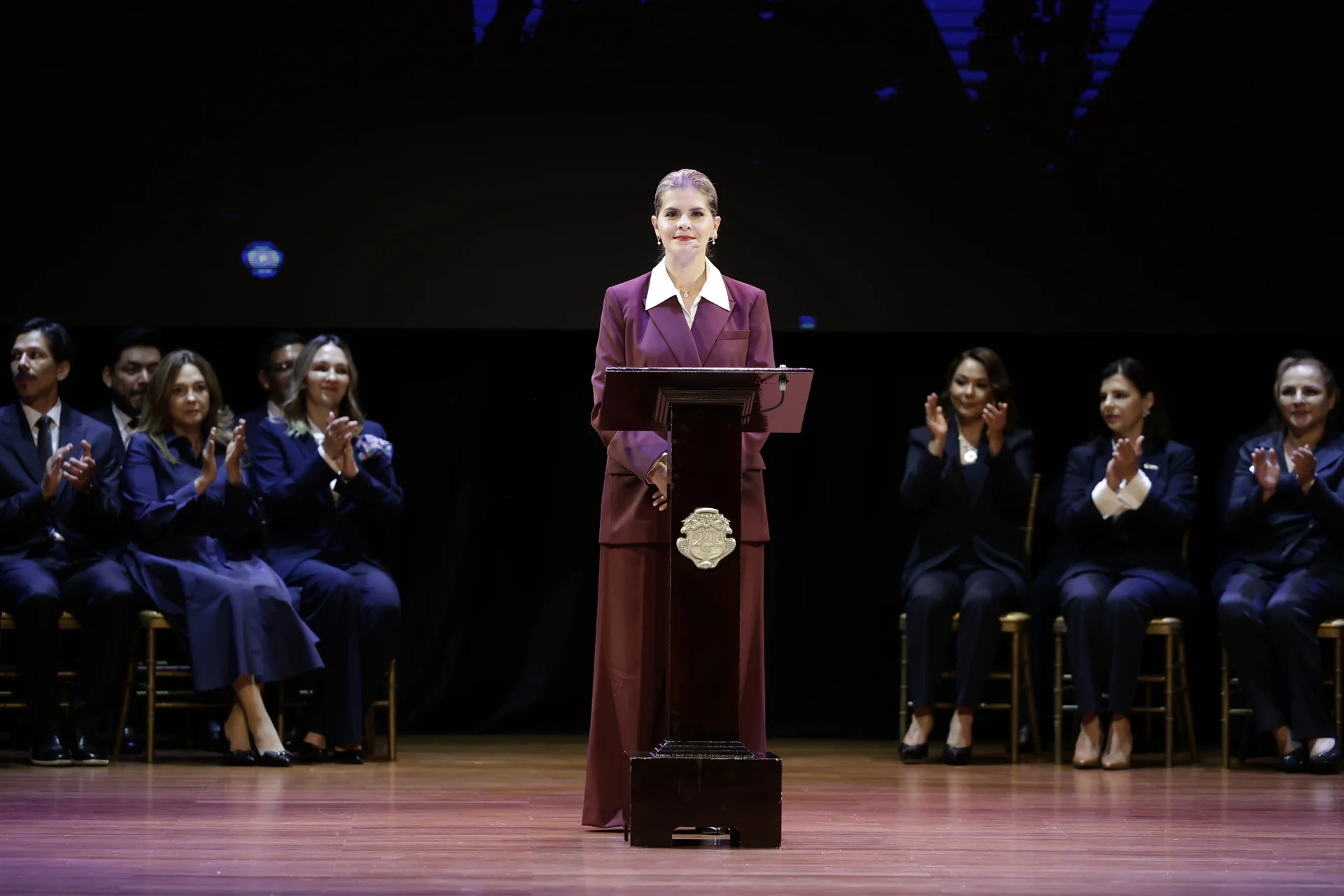
Costa Rican President Laura Fernández on Monday submitted a package of legislative proposals to the National Assembly aimed at strengthening public security, combating organized crime, and reforming the country’s prison system.
The president said the measures are designed to reinforce the government’s response to rising criminal violence and provide law enforcement authorities with stronger tools to confront growing security challenges.
Among the key initiatives is the proposed “Firm Hand Against Repeat Offenders Law,” which would establish mandatory pretrial detention for suspects accused of repeat criminal offenses, limiting judges’ ability to impose alternative precautionary measures.
The legislative package also includes the “Law to Combat Criminal Organizations,” which would impose prison sentences ranging from one to six years for individuals who participate in criminal groups. Penalties could increase to as much as 20 years for those linked to organizations involved in terrorism, drug trafficking, kidnapping, human trafficking, arms trafficking, or organ trafficking.
Another proposal, known as the “Zero Idleness in Prisons Law,” seeks to expand vocational training and paid work opportunities for inmates. Under the initiative, earnings generated by prisoners would help cover incarceration costs, support their families, and contribute to compensation for crime victims.
Fernández also introduced legislation aimed at expanding legal protections for police officers acting in self-defense and increasing penalties for individuals who assault or resist law enforcement personnel.
“It is now up to you, members of Congress, to make the decisions that our police officers and the families of crime victims have been waiting for,” the president told lawmakers as she urged them to support the reforms.
The president additionally highlighted progress on the construction of the High Containment Center Against Organized Crime (CACCO), a maximum-security prison modeled after the strategy implemented by Salvadoran President Nayib Bukele.
According to Fernández, the project is currently 36 percent complete and forms part of a broader effort to strengthen Costa Rica’s capacity to confront organized crime and improve public safety.
The proposed reforms now move to the Legislative Assembly, where lawmakers will debate the measures and determine whether they will become part of Costa Rica’s legal framework in the coming months.
Central America
Nicaraguan media publishes photos of detained Indigenous leader amid calls for proof of life
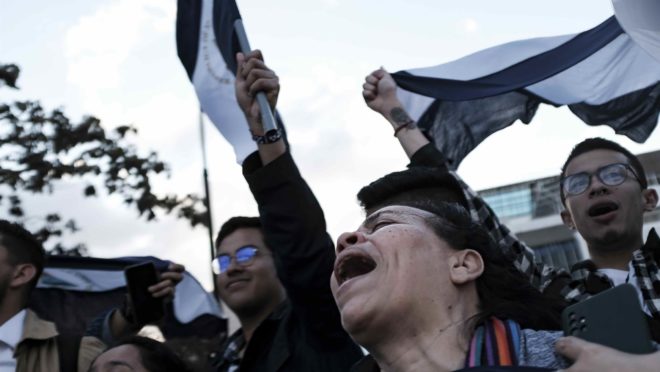
A pro-government media outlet in Nicaragua published on Sunday a series of photographs showing Indigenous leader Steadman Fagoth Müller during a visit from his wife at the National Penitentiary System, days after an opposition alliance demanded proof of life, citing concerns that he could be a political prisoner subjected to enforced disappearance.
The images were shared by the outlet El 19 on its website, with a caption stating that the photos were taken during a scheduled prison visit on Friday, June 12, between Fagoth and his wife, Dr. Stefany Martínez.
The publication includes eleven photographs in which the Indigenous leader and former presidential adviser on Indigenous affairs appears seated with his wife in a room where two meals are served on a table. The images also carry a watermark indicating the date 12.06.2026 and the time 11:13.
The release of the photos comes after the opposition coalition Unidad Nacional Azul y Blanco called on the government of co-presidents Daniel Ortega and Rosario Murillo to provide proof of life for at least nine political prisoners allegedly held in conditions of enforced disappearance, including Fagoth.
The request followed the recent death in state custody of Indigenous leader Brooklyn Rivera Brayan, aged 73, which was reported by the Ministry of Health on May 31. Rivera had been arrested in September 2023.
Fagoth, a former presidential adviser on Indigenous policy, was detained by Nicaraguan police in September 2024 on allegations of attempting to “remove organic weapons” from the army.
His arrest came a day after local media circulated statements in which he criticized environmental damage caused by the arrival of armed non-Indigenous settlers in the Bosawás Reserve, a remote area near the Honduras border inhabited by Miskito and Mayangna communities.
The publication of the photographs has intensified scrutiny over the condition and legal status of detained opposition-linked figures in Nicaragua.
Central America
U.S. Authorities Accuse Guatemalan Nationals of Using False Information to Sponsor Migrant Minors
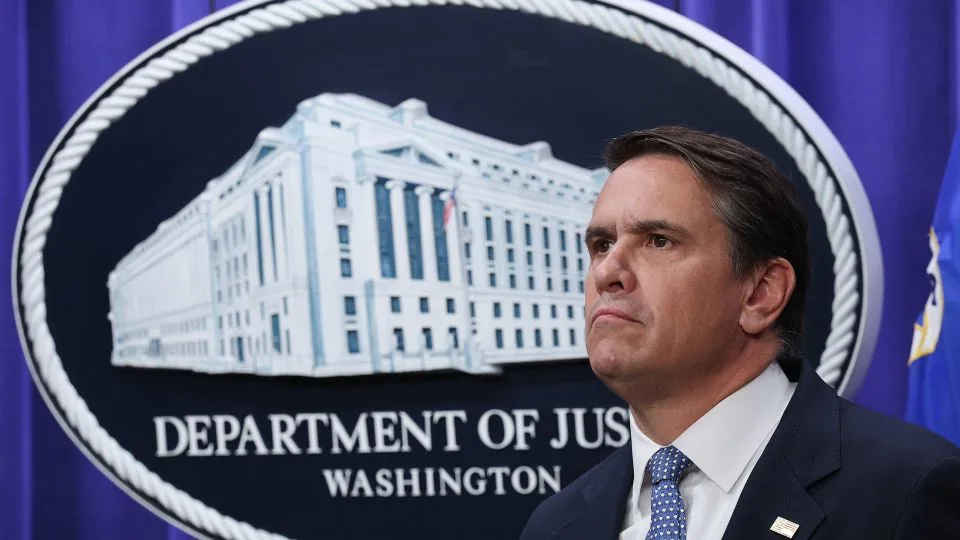
Senior officials from the U.S. Department of Justice and the Department of Homeland Security announced Thursday criminal charges against three Guatemalan citizens accused of using false information to sponsor migrant children who crossed the U.S.-Mexico border without a parent or guardian.
According to an indictment filed in Ohio, Maritza Cahuec Coc allegedly submitted at least 12 sponsorship applications, several of which were filed under aliases or contained materially false statements intended to secure custody of the minors.
Under U.S. procedures, unaccompanied migrant children apprehended at the southern border are placed in the custody of the Department of Health and Human Services, which is responsible for their care until they can be released to a qualified sponsor, such as a parent or relative living in the United States.
Prosecutors allege that Cahuec Coc, who reportedly entered the United States illegally in 2018, received payments between late 2020 and 2023 for helping bring 12 migrant minors into the country. Authorities claim she submitted fraudulent documents and misleading information to obtain approval for the sponsorship requests.
The case was announced during a joint press conference led by Acting Deputy Attorney General Todd Blanche and Homeland Security Secretary Markwayne Mullin. However, officials provided limited details about the investigation and instead focused much of their remarks on criticizing immigration policies implemented under the previous administration.
Republican lawmakers and Trump administration officials have frequently pointed to the increase in unaccompanied migrant children arriving at the U.S.-Mexico border during President Joe Biden’s term, arguing that the government failed to adequately oversee their care and placement.
During Thursday’s briefing, A. Tysen Duva, Assistant Attorney General for the Justice Department’s Criminal Division, alleged that Cahuec Coc used the identities of other individuals and falsely claimed family relationships in order to obtain custody of the children.
“Maritza submitted sponsorship applications using other people’s identities and falsely represented that the minors were the children of close relatives in order to secure their release,” Duva said.
The case remains under investigation, and federal authorities have not yet disclosed additional information regarding the other two Guatemalan nationals charged in connection with the alleged scheme.

Costa Rican President Presents Security Reform Package to Fight Crime and Strengthen Prisons

FBI Says It Disrupted Alleged Plot Targeting White House During UFC Event

Nicaraguan media publishes photos of detained Indigenous leader amid calls for proof of life
Tec de Monterrey honors one of its students for his contribution to nanotechnology in medicine

Defense Minister commends salvadoran soldier for Central American Cross Country victory

Extension of the state of emergency approved in southern Chile
-
 Sin categoría5 days ago
Energy chief says U.S. will restore Gulf oil shipments and refill strategic reserves
-
 International5 days ago
‘El Chapo’ Guzmán again asks Mexican president to seek his return from U.S. prison
-
 Central America2 days ago
Nicaraguan media publishes photos of detained Indigenous leader amid calls for proof of life
-
 Central America19 hours ago
Costa Rican President Presents Security Reform Package to Fight Crime and Strengthen Prisons
-
 International4 days ago
Mexico and U.S. Launch New Bilateral Security Group to Combat Fentanyl and Organized Crime
-
 International2 days ago
Brazil helicopter crash in Rio de Janeiro kills six, including pilots and international figures
-
 International19 hours ago
FBI Says It Disrupted Alleged Plot Targeting White House During UFC Event