
International
SAfrican indigenous ‘king’ arrested for growing pot at presidency

AFP
South African police Wednesday uprooted cannabis plants grown by indigenous activists who have camped outside President Cyril Ramaphosa’s office for more than three years, AFP reporters saw.
Their leader, wearing a traditional loincloth, clung to a shoulder-height plant as police dragged it across the presidential lawn in Pretoria before arresting him.
“Police… you have declared war,” he shouted. “We have been here peacefully. We are coming for you,” warned the man, who calls himself King Khoisan South Africa.
The Khoisan were formerly known as Bushmen or Hottentots — a name coined by Dutch settlers in the 17h century, reflecting the clicks characteristic of their languages.









During the raid, another activist yelled in Afrikaans at the police, asking them: “For plants? For plants? You are rubbish people in uniforms.”
The group’s tarpaulin tents have been a fixture on the emerald lawns of the South African president’s office since 2018, when they began a campaign for official recognition of their languages.
One of the tents is just metres (yards) away from a giant bronze statue of Nelson Mandela, the country’s first black president.
Around two dozen police, some in riot gear, others mounted on horseback and some with sniffer dogs, raided the small group.
Police did not respond to AFP’s request for comment, but journalists heard officers on the scene saying the raid was over the cannabis planted some six months ago in the activists’ vegetable garden.
In 2018, South Africa’s top court decriminalised the private and personal use of cannabis in a landmark case that pitted law enforcement agencies against advocates of the plant, known locally as dagga.
South Africa’s Khoisan community is thought to number in the hundreds of thousands.






International
U.S. Proposes Higher Citizenship Fees and Limits on Immigration Fee Waivers
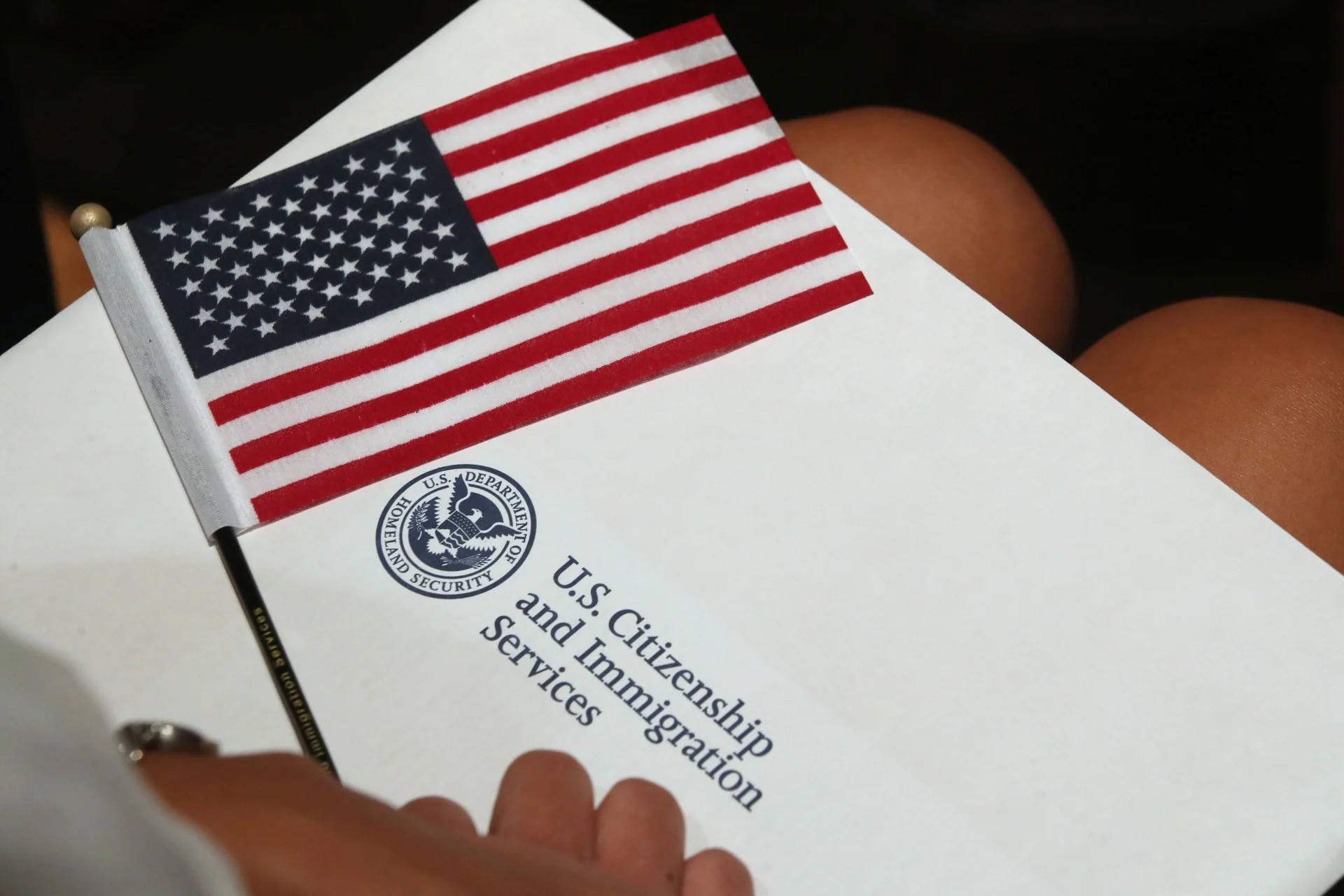
The U.S. Department of Homeland Security (DHS) has proposed increasing fees related to citizenship applications, while also seeking changes to programs that reduce or waive immigration-related costs for certain applicants.
The proposal would eliminate fee waivers and reduced-fee programs for immigrants whose household incomes are at or below 400% of the federal poverty level.
However, the changes would not take effect immediately. Before receiving final approval, the proposal must go through a 60-day public comment period, allowing individuals and organizations to submit feedback.
DHS justified the proposed increases by stating that the goal is to fully cover the costs associated with processing citizenship and naturalization applications.
“Although the Department of Homeland Security has historically limited form fees to promote naturalization, the agency no longer considers that these applications should have lower costs at the expense of other immigration benefits,” the department said in the proposal document.
If approved, the reform would modify the current immigration fee structure and could impact thousands of applicants who rely on financial assistance programs to complete their citizenship process.
U.S. authorities said the measure is part of a broader review of immigration service fees and the mechanisms used to fund the administration of these programs.
International
Cristiano Ronaldo Makes History as First Player to Score in Six World Cups
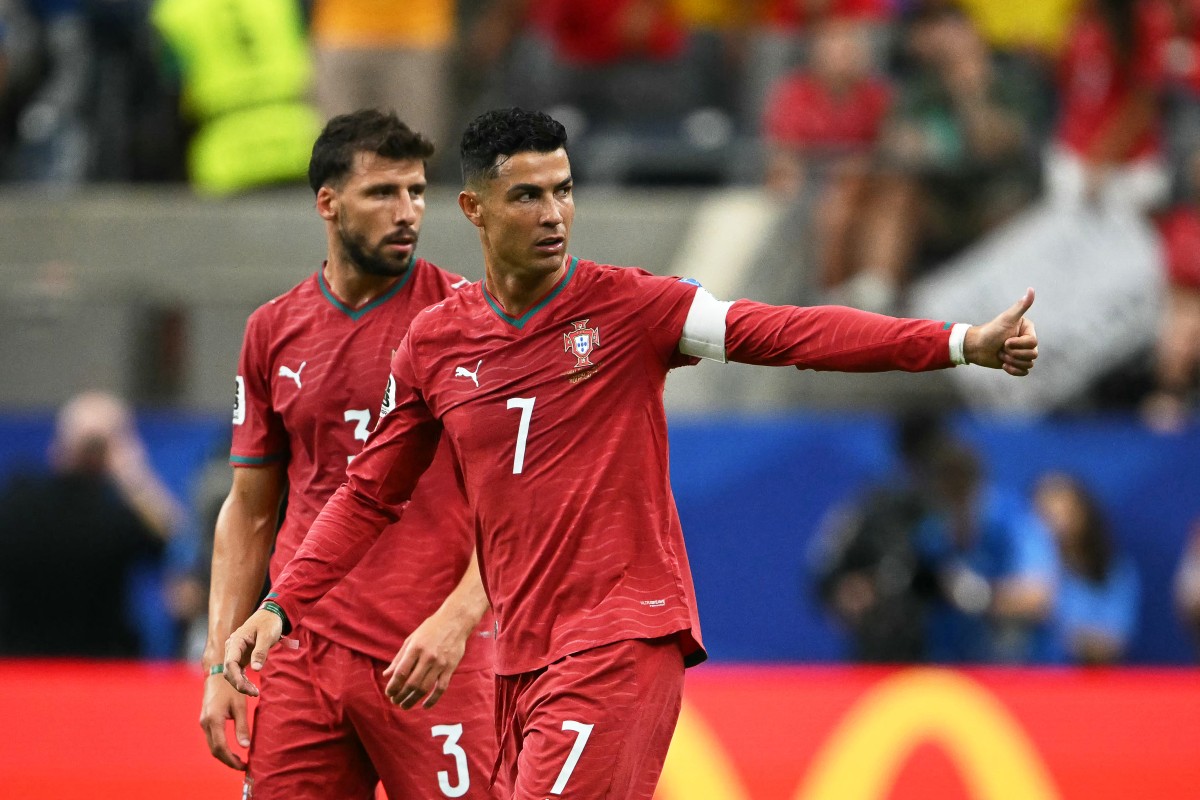
Cristiano Ronaldo made football history on Tuesday by becoming the first player ever to score in six different editions of the FIFA World Cup.
The Portuguese forward opened the scoring in Portugal’s Group K match against Uzbekistan in Houston. Just six minutes into the game, Ronaldo found the back of the net with a right-footed strike from inside the box, sending the Portuguese fans into celebration.
The “Commander” sparked excitement throughout the stadium with his iconic celebration, as supporters joined in with his famous “Siuuu!” chant to honor another milestone in the career of one of football’s greatest stars.
At 41 years old, Ronaldo has now scored in Germany 2006, South Africa 2010, Brazil 2014, Russia 2018, Qatar 2022, and North America 2026. With his two goals in this tournament, he has surpassed Lionel Messi’s record, as the Argentine has scored in every World Cup he played except South Africa 2010.
The Portuguese captain has also reached nine World Cup goals, matching Eusébio as Portugal’s all-time top scorer in the history of the tournament.
Ronaldo’s achievement came just one day after Messi also made history by becoming the outright leading scorer in World Cup history, reaching 18 goals after scoring twice in Argentina’s 2-0 victory over Austria.
With his appearance at the 2026 World Cup, Cristiano Ronaldo has also extended another remarkable record by becoming the first player to participate in six consecutive editions of the tournament, further cementing his legacy as one of the most influential players in football history.
International
Mbappé Ties Klose on All-Time World Cup Scoring List After Brace Against Iraq
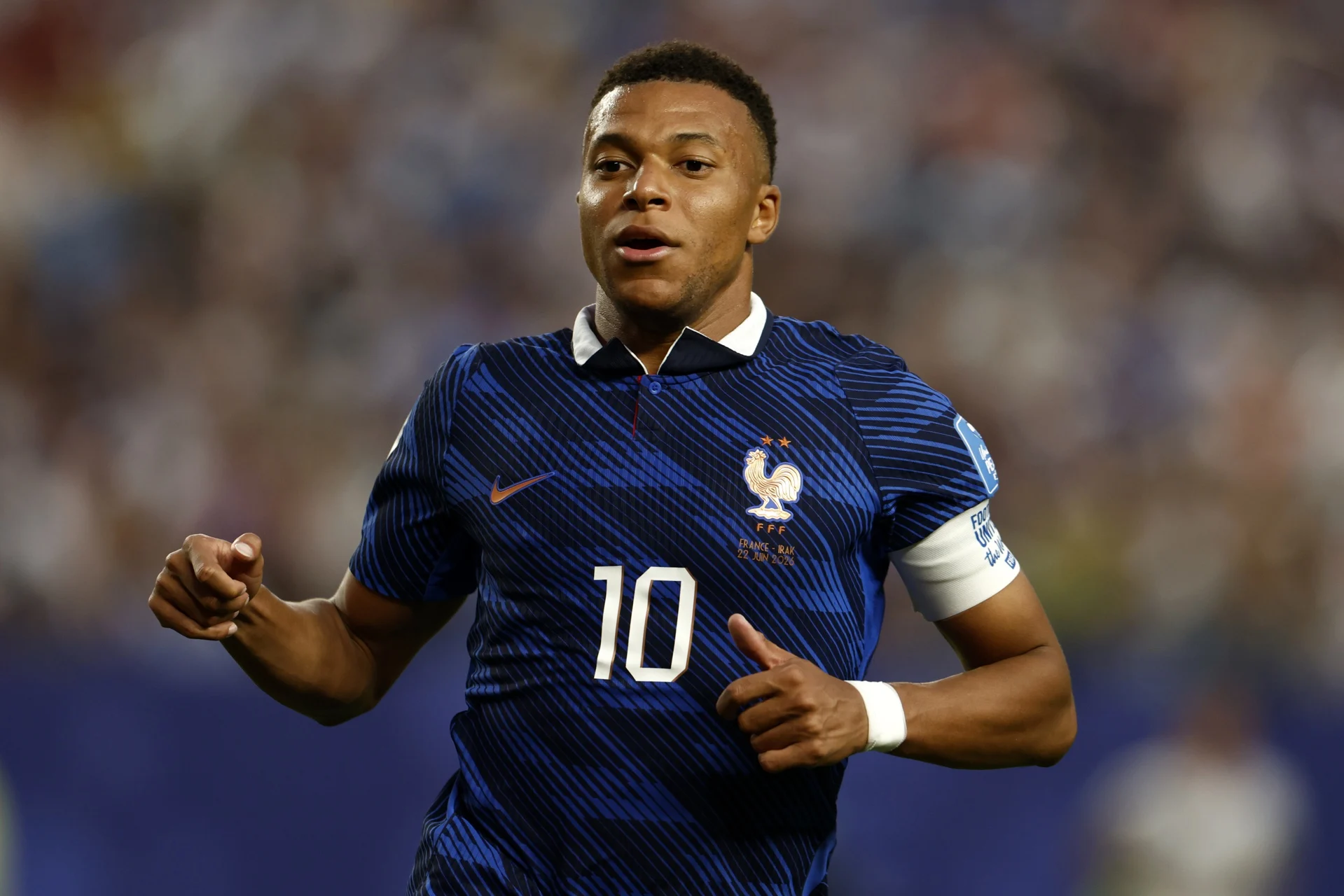
Kylian Mbappé moved another step closer to World Cup history on Monday, scoring twice against Iraq to reach 16 career goals in the tournament and draw level with German legend Miroslav Klose on the all-time scoring chart.
The French forward found the net in the 14th and 54th minutes of France’s Group I clash in Philadelphia, registering his second consecutive brace of the 2026 FIFA World Cup.
Mbappé’s achievement came on the same day that Argentina captain Lionel Messi set a new all-time World Cup scoring record. The Argentine star scored twice against Austria to raise his career total to 18 goals, surpassing the previous mark of 16 held by Klose.
Klose established his record on July 8, 2014, during Germany’s historic 7-1 victory over Brazil in the World Cup semifinals in Belo Horizonte.
Before facing Iraq, Mbappé was tied with German striker Gerd Müller on 14 World Cup goals. His first goal of the match lifted him to 15, drawing level with Brazilian great Ronaldo Nazário.
The second strike moved the Real Madrid forward to 16 goals, allowing him to surpass Ronaldo, match Klose’s tally, and position himself just two goals behind Messi in the race for World Cup immortality.
The match also marked a personal milestone for Mbappé, as he made his 100th appearance for the French national team.
At 27 years old, the French superstar remains firmly in pursuit of Messi’s newly established record and continues to strengthen his legacy as one of the most prolific scorers in World Cup history.

U.S. Proposes Higher Citizenship Fees and Limits on Immigration Fee Waivers

Cristiano Ronaldo Makes History as First Player to Score in Six World Cups

Costa Rica Launches Largest Police Operation in History, Dismantles Major Drug Cartel
Tec de Monterrey honors one of its students for his contribution to nanotechnology in medicine

Defense Minister commends salvadoran soldier for Central American Cross Country victory

Extension of the state of emergency approved in southern Chile
-
 International18 hours ago
Cristiano Ronaldo Makes History as First Player to Score in Six World Cups
-

 International1 day ago
UNHCR Urges U.S. Deportation Agreements to Uphold Asylum Rights and International Law
-
 International1 day ago
Mbappé Ties Klose on All-Time World Cup Scoring List After Brace Against Iraq
-
 International17 hours ago
U.S. Proposes Higher Citizenship Fees and Limits on Immigration Fee Waivers
-
 Central America18 hours ago
Costa Rica Launches Largest Police Operation in History, Dismantles Major Drug Cartel
-
 Central America1 day ago
Ancient Maya Ceremonial Site Reveals New Clues About Preclassic Ritual Practices