
International
Washington must listen to UN and release Afghan funds: Taliban
AFP
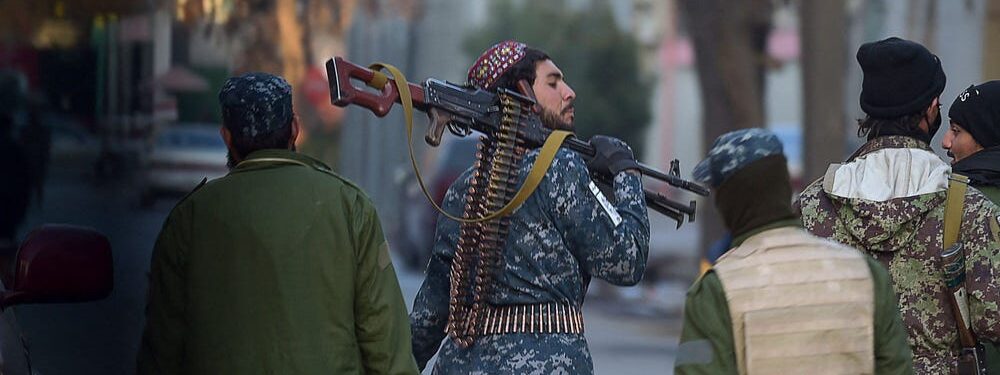
The Taliban on Friday urged Washington to heed a call by the United Nations chief to unlock Afghan funds frozen in the United States, as a humanitarian crisis deepens.
US authorities froze billions of dollars in Afghan assets after the hardline Islamists seized power in August following the withdrawal of foreign forces.
On Thursday, UN Secretary-General Antonio Guterres called on Washington to take the lead and prevent “the nightmare unfolding in Afghanistan” by releasing capital.
“The United States must respond positively to the international voice and release Afghan capital,” the Taliban government’s spokesman Zabihullah Mujahid said on Twitter.











Washington has taken control of nearly $9.5 billion in assets belonging to the Afghan central bank.
The International Monetary Fund and World Bank have suspended activities in Afghanistan, withholding aid as well as $340 million in new reserves issued by the IMF in August.
Many Western nations have also largely suspended their assistance to Afghanistan, one of the world’s poorest countries.
Aid agencies and the UN have estimated that more than half of the nation’s 38 million population is expected to face hunger this winter.
“We must… rapidly inject liquidity into the economy and avoid a meltdown that would lead to poverty, hunger and destitution for millions,” Guterres told reporters in New York.
His comments came two days after the UN said it needs $5 billion in aid for Afghanistan in 2022.










International
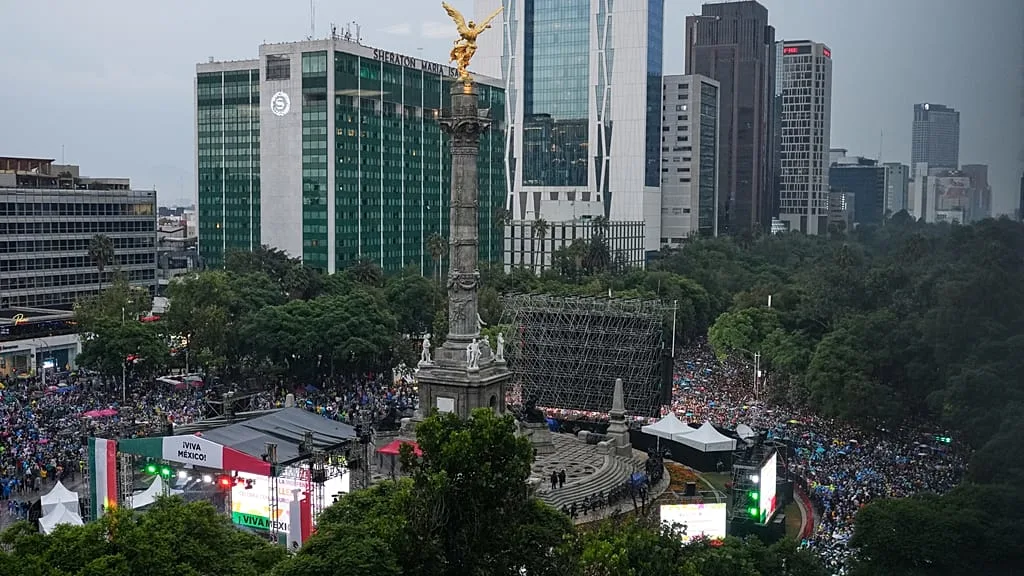
Three Die During World Cup Celebrations in Mexico City After Mexico’s Victory
International
Families Sue Nicolás Maduro in U.S. Over Alleged Extrajudicial Killings
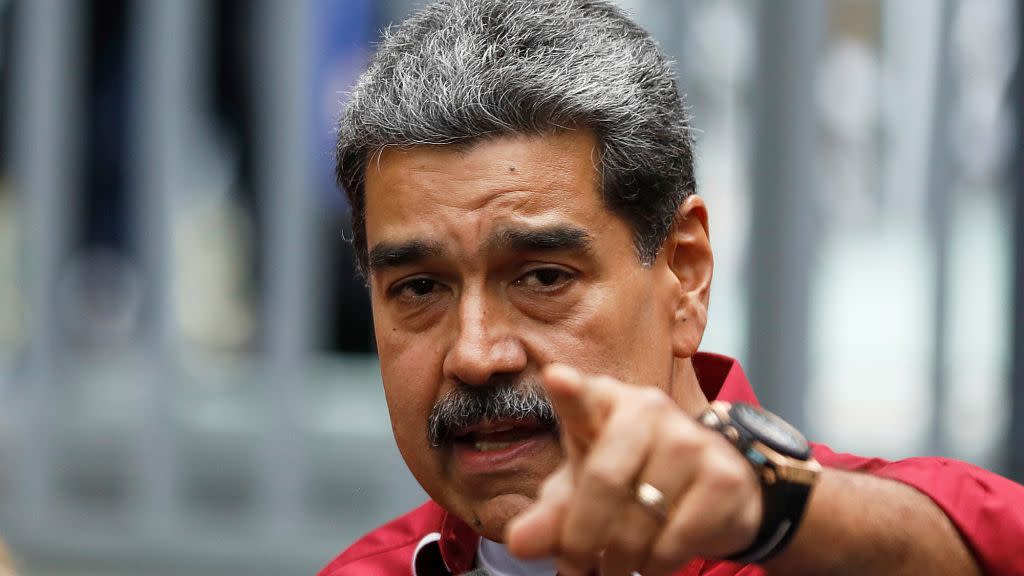
The families of five young Venezuelan men have filed a 44-page civil lawsuit in a U.S. federal court, accusing former Venezuelan President Nicolás Maduro of ordering extrajudicial executions carried out by the country’s former Special Action Forces (FAES) between 2017 and 2020.
The lawsuit, filed Tuesday in the U.S. District Court for the Eastern District of New York in Brooklyn, alleges that the victims were among thousands of people killed under Maduro’s administration by security units, including the FAES, which were dissolved in 2021 following widespread allegations of human rights abuses, including criticism from the United Nations.
Maduro is currently being held in a New York detention facility awaiting trial on U.S. drug trafficking charges after he was removed from power during a U.S. military operation in Venezuela in January.
The complaint argues that the killings followed a well-documented pattern of extrajudicial executions allegedly carried out during Maduro’s presidency, which lasted from 2013 to 2026. Throughout his time in office, Maduro faced repeated accusations from international organizations of using state repression to maintain power.
According to the lawsuit, FAES officers arrived at the victims’ neighborhoods before dawn, dressed entirely in black and wearing face coverings. The agents allegedly separated the men from their families before fatally shooting them.
The complaint further alleges that authorities later fabricated official reports claiming the victims had “resisted arrest” in an effort to justify the killings.
“Maduro used the FAES as a political instrument and a mechanism of social control to violently suppress dissent, terrorize low-income communities, and eliminate political opposition,” the lawsuit states.
It also describes the FAES as being “widely regarded as a death squad or extermination group.”
The plaintiffs argue that Venezuela’s judicial system has failed to provide accountability for the killings, preventing the victims’ families from obtaining justice.
For security reasons, the identities of the families remain confidential. They are seeking financial compensation from Maduro under the U.S. Torture Victim Protection Act.
According to The New York Times, Maduro is expected to argue that he is entitled to head-of-state immunity in the civil proceedings.
In the separate criminal case pending against him in the United States, in which he is charged alongside his wife, Cilia Flores, Maduro has described himself as a “prisoner of war.”
He has pleaded not guilty to multiple charges, including conspiracy to import cocaine into the United States and weapons-related offenses.
International
Salvadoran National Arrested in New Jersey with Over 70 Machine Gun Conversion Devices
The U.S. Department of Justice announced the arrest of 21-year-old Salvadoran national Erick Márquez Cruz after authorities allegedly discovered more than 70 machine gun conversion devices and other firearm-related components during a search of his residence in North Bergen, New Jersey.
According to the Justice Department, law enforcement officers executed a search warrant on June 25 at Cruz’s home, where they recovered a 3D printer that was allegedly being used to manufacture firearm components. Investigators also seized 17 3D-printed firearm frames, magazines, and more than 70 machine gun conversion devices (MCDs).
Federal authorities explained that the conversion devices, which are classified as machine guns under U.S. law, are designed to convert semiautomatic firearms into fully automatic weapons capable of firing multiple rounds with a single pull of the trigger.
Cruz has been charged with unlawful possession of a machine gun. If convicted, he faces a maximum sentence of 10 years in federal prison and a fine of up to $250,000, or twice the gross financial gain resulting from the offense, whichever is greater.

Three Die During World Cup Celebrations in Mexico City After Mexico’s Victory

Families Sue Nicolás Maduro in U.S. Over Alleged Extrajudicial Killings

Salvadoran National Arrested in New Jersey with Over 70 Machine Gun Conversion Devices
Tec de Monterrey honors one of its students for his contribution to nanotechnology in medicine

Defense Minister commends salvadoran soldier for Central American Cross Country victory

Extension of the state of emergency approved in southern Chile
-
 International3 days ago
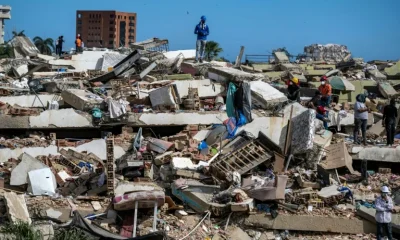
Looting Spreads in Venezuela’s Hardest-Hit Areas After Deadly Earthquakes
-
 International1 day ago
Salvadoran National Arrested in New Jersey with Over 70 Machine Gun Conversion Devices
-
 International2 days ago
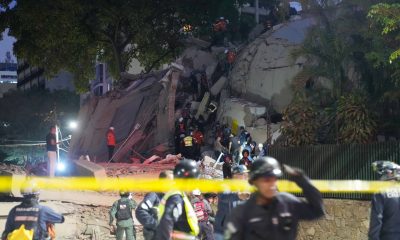
Venezuela Earthquake Death Toll Surpasses 1,700 as Search for Survivors Continues
-
 International5 days ago
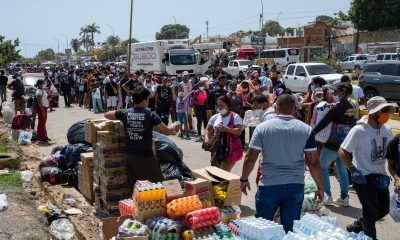
UN warns Venezuela earthquakes could affect up to 6.76 million people
-
 International2 days ago
Venezuela Earthquakes Spark Diplomatic Thaw With Former Critics
-
 International8 hours ago
Families Sue Nicolás Maduro in U.S. Over Alleged Extrajudicial Killings
-
 International7 hours ago
Three Die During World Cup Celebrations in Mexico City After Mexico’s Victory