
Central America
Honduras leader offers rebel deputy post to end congress crisis
AFP
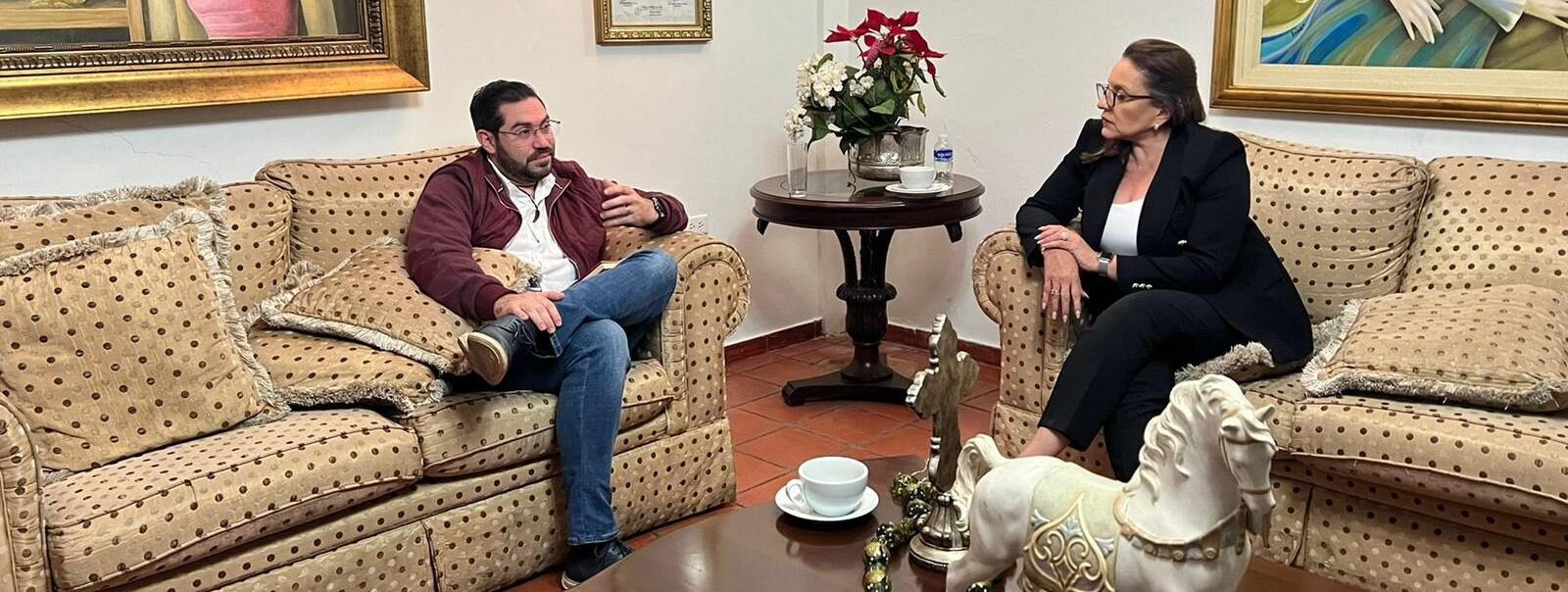
Honduras’ president-elect Xiomara Castro made a last ditch attempt late Wednesday to solve a congressional crisis with hours left before her inauguration.
Last week two rival factions within her left wing Libre party elected their own duelling presidents of Congress.
Castro backs the claims of Luis Redondo of her coalition partner Savior Party of Honduras (PSH).
But Jorge Calix, a deputy within her own Libre party, has led a band of close to 20 rebels, with support from the right wing National and Liberal parties, to launch a rival claim.











Late on Wednesday, Castro tried to break the impasse by offering Calix a role in her cabinet.
“I proposed to Jorge Calix that he joins my government in the position of Cabinet Coordinator for the sake of uniting in the Reformation of Honduras,” Castro wrote on Twitter.
She did not, however, explain what the role entailed, although it appears to be something akin to a chief of staff.
“Thank you President @XiomaraCastroZ, it was a great pleasure speaking with you,” said Calix in a reply to her post on Twitter.
“For me and for anyone, it would be a great honor to form part of the government of resistence and national reconciliation. You will soon receive my answer,” he wrote.
The offer came a day after the two rival factions held competing first sessions presided over by their respective presidents.
Redondo took office as president of the Congress in the building that houses the legislative body.
In parallel and via video link, Calix was also installed as head of Congress by his own loyalist faction.
Calix was joined by around 70 deputies while only around 40 were in the parliament building, although the Redondo faction achieved a quorum as substitute lawmakers stood in for those that were absent.
The crisis broke out last week when a group of Libre dissidents ignored an agreement with the PSH, whose support was key to Castro winning the November elections.
Rival lawmakers came to blows in the dispute.
PSH leader Salvador Nasralla had agreed to withdraw his presidential candidacy and support Castro, in return for the position of vice president and a member of his party being named president of Congress.
But the dissidents argued that Congress should be led by the party with the most members — Libre has 50 deputies compared to just 10 for the Savior party.
Control of parliament is key to Castro’s anti-corruption and political reform platform in a country battered by poverty, migration and drug trafficking.










Central America
Honduran Lawyer and Protected Witness in Angie Peña Case Shot Dead
Honduran lawyer and former judicial official Dereck McField was shot and killed on Monday morning, according to local media reports.
The attack took place in the street as McField was returning home after dropping off his young son at school, Honduran outlet HCH reported.
The killing sparked widespread concern after Honduras President Nasry Asfura later confirmed that McField was a protected witness in the case of Angie Peña, a Honduran university student who disappeared on January 1, 2022, while riding a jet ski on an island.
Authorities suspect Peña was trafficked to a criminal network for sexual exploitation. Her jet ski, life jacket and other belongings were found days later on a cay in Belize.
Four men — three Americans and one Honduran — have been charged in connection with the case and remain in pretrial detention as proceedings continue.
At the start of the judicial process in 2024, authorities said they had evidence indicating that Harold Green allegedly sold Peña to William James Murdock for money. Prosecutors said the case included phone records, videos, photographs and witness testimony.
Search operations have been carried out since then in an effort to locate Peña, but she has not been found. Authorities have said they continue to hope that she is alive.
The three U.S. defendants live in Honduras and have tourism-related investments in Roatán.
McField’s killing raises new questions about the safety of witnesses involved in the high-profile case and comes as authorities continue investigating Peña’s disappearance.
Central America
Guatemala Declares Highest Alert in Areas Affected by Fuego Volcano Eruption
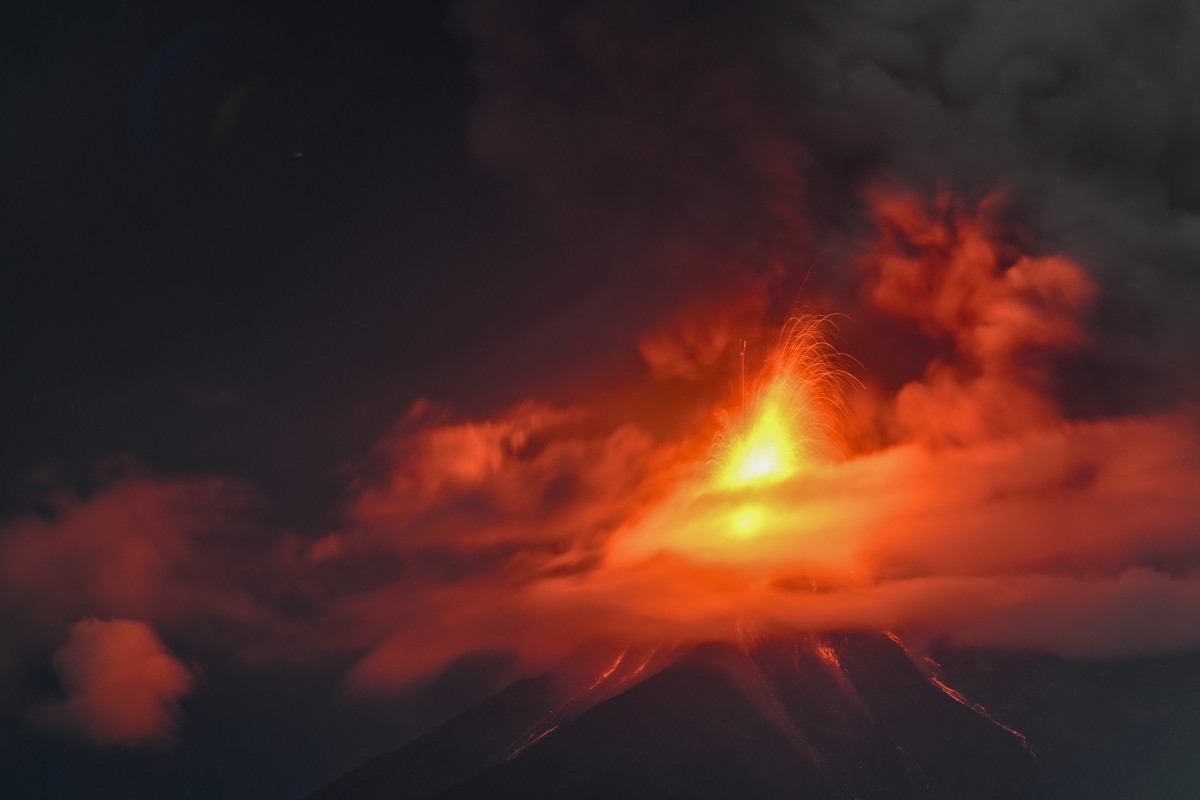
Guatemalan authorities declared a red alert, the highest level of danger, on Tuesday in areas affected by the eruption of the Fuego Volcano, located about 35 kilometers from the country’s capital.
The most active volcano in Central America entered an eruptive phase on Monday morning, and its activity intensified overnight with lava emissions and large columns of gas and ash.
No fatalities have been reported, but the volcanic activity forced the evacuation of around 500 people as a precautionary measure.
The National Coordination for Disaster Reduction (Conred) declared a state of emergency in the departments of Sacatepéquez, Chimaltenango and Escuintla, the agency announced through its official X account.
The affected regions are home to approximately 1.6 million people. However, ashfall has so far impacted only about five municipalities.
Despite the increase in the alert level, authorities reopened a road leading to the city of Antigua, the country’s main tourist destination, after evaluating safety conditions in the area.
The Fuego Volcano is one of Guatemala’s most active geological formations and has a history of frequent eruptions, requiring continuous monitoring by national emergency agencies.
Central America
U.S. Defense Secretary to Close Multinational Military Exercises in Panama to Protect Canal
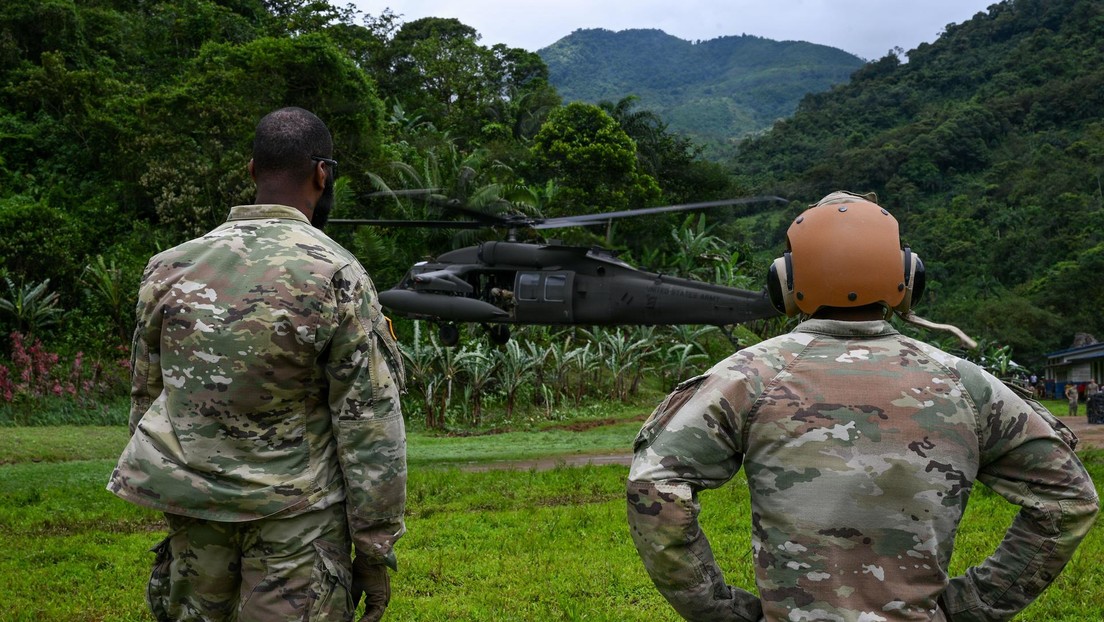
U.S. Secretary of Defense Pete Hegseth will travel to Panama next week to close multinational military exercises involving more than 20 countries aimed at strengthening security measures for the Panama Canal against potential threats, a Panamanian government official announced Monday.
This will mark Hegseth’s second visit to Panama. The U.S. defense chief is expected to arrive on August 13 for the closing ceremony of the military drills, which began this week and have been conducted in the Central American country for more than two decades to support the protection of the interoceanic waterway, according to Panama’s Security Minister Frank Ábrego.
The exercises include participation from the United States, Argentina, Brazil, Chile, Colombia, Mexico, the Netherlands, Peru and the United Kingdom, among other nations.
“The canal is a strategic infrastructure that connects markets and supports global supply chains. Its security and uninterrupted operation are of fundamental importance for Panama, the United States and the international community,” said U.S. Ambassador to Panama Kevin Marino Cabrera.
The drills include maritime training operations, exercises in jungle areas surrounding the canal, as well as virtual simulations focused on cybersecurity and strategic planning.
The Panama Canal, one of the world’s most important trade routes, handles approximately 5% of global maritime commerce, making its security a priority for international trade and logistics networks.
Ábrego emphasized that preparedness and international coordination are essential to maintaining stability.
“The best way to preserve peace and guarantee the continuity of global trade is to be prepared to respond in a coordinated and effective manner to any threat,” the Panamanian official said.

Virginia Police Arrest Salvadoran Man in Great Falls Woman’s Killing

Honduran Lawyer and Protected Witness in Angie Peña Case Shot Dead

Mexico and Guatemala Agree on Five-Point Binational Plan for 2027

France to Expel Two Iranian Diplomats Over Alleged Attack on French Officials

Heat wave puts more than 70 million Americans under alerts as temperatures near 46°C

Trump warns Iran over nuclear ambitions as U.S.-Iran ceasefire deadline passes

Brazil’s Lula and Flávio Bolsonaro kick off election campaigns amid focus on crime

Actress Hayden Panettiere Dies at 36, Representative Confirms
France to Expel Two Iranian Diplomats Over Alleged Attack on French Officials
Actress Hayden Panettiere Dies at 36, Representative Confirms
Trump warns Iran over nuclear ambitions as U.S.-Iran ceasefire deadline passes
Heat wave puts more than 70 million Americans under alerts as temperatures near 46°C
Honduran Lawyer and Protected Witness in Angie Peña Case Shot Dead
Brazil’s Lula and Flávio Bolsonaro kick off election campaigns amid focus on crime
Mexico and Guatemala Agree on Five-Point Binational Plan for 2027
Virginia Police Arrest Salvadoran Man in Great Falls Woman’s Killing
-
 International1 day ago
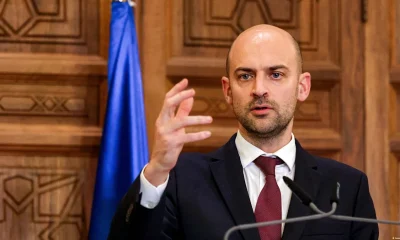
France to Expel Two Iranian Diplomats Over Alleged Attack on French Officials
-
 International3 days ago
Actress Hayden Panettiere Dies at 36, Representative Confirms
-
 International3 days ago
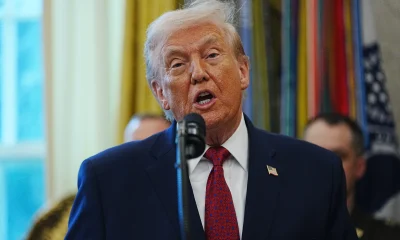
Trump warns Iran over nuclear ambitions as U.S.-Iran ceasefire deadline passes
-
 International3 days ago
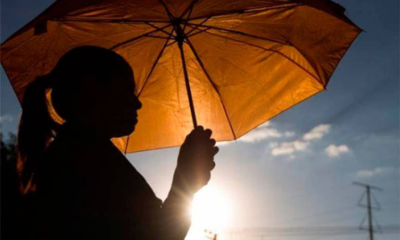
Heat wave puts more than 70 million Americans under alerts as temperatures near 46°C
-
 Central America8 hours ago
Honduran Lawyer and Protected Witness in Angie Peña Case Shot Dead
-
 International3 days ago
Brazil’s Lula and Flávio Bolsonaro kick off election campaigns amid focus on crime
-
 International1 day ago
Mexico and Guatemala Agree on Five-Point Binational Plan for 2027
-
 International8 hours ago
Virginia Police Arrest Salvadoran Man in Great Falls Woman’s Killing