
International
Chile defense minister’s home robbed, presidential car stolen
AFP
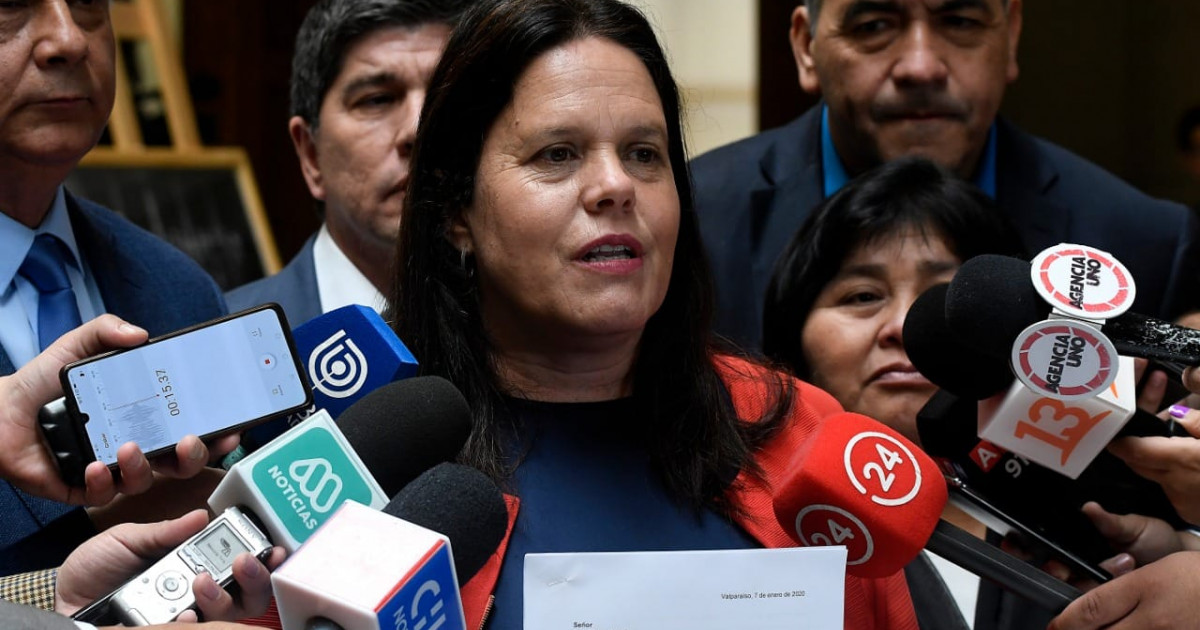
The home of Chilean Defense Minister Maya Fernandez was robbed by attackers who beat her son and threatened her husband, authorities said Saturday.
Fernandez, a granddaughter of former Socialist leader Salvador Allende, was not at home at the time of the attack late Friday in Santiago’s Nunoa neighborhood.
A bodyguard in President Gabriel Boric’s security team was also shot in the arm by attackers who stole a presidential vehicle, as Chile suffers what one official has called “the worst moment in security since the return to democracy,” with crime surging in both numbers and severity.
“There was a robbery in the defense minister’s property,” General Jean Camus, a district police chief, announced Saturday. “Unknown individuals stole cash and also a vehicle.”









The same night, the presidential bodyguard, a sergeant in the Carabineros, or national police, was robbed and shot when a group of men approached him as he sat in an official vehicle.
The attack occurred in the San Miguel neighborhood in southern Santiago as the man was driving the car back to the presidential palace. Police said the assailants drove him to a town north of Santiago, shot him and left him in the street before fleeing aboard the vehicle.
There was no information on his condition.
Chilean officials have called for a redoubling of efforts to rein in crime and improve security.
“We have taken concrete actions to go after organized crime,” said Deputy Interior Minister Manuel Monsalve.
Blaming organized criminals for the surge in lawlessness, the authorities have promised greater cooperation between the militarized Carabineros police and their civilian counterparts.






International
WHO worker killed as Israeli forces fire on Gaza medical convoy
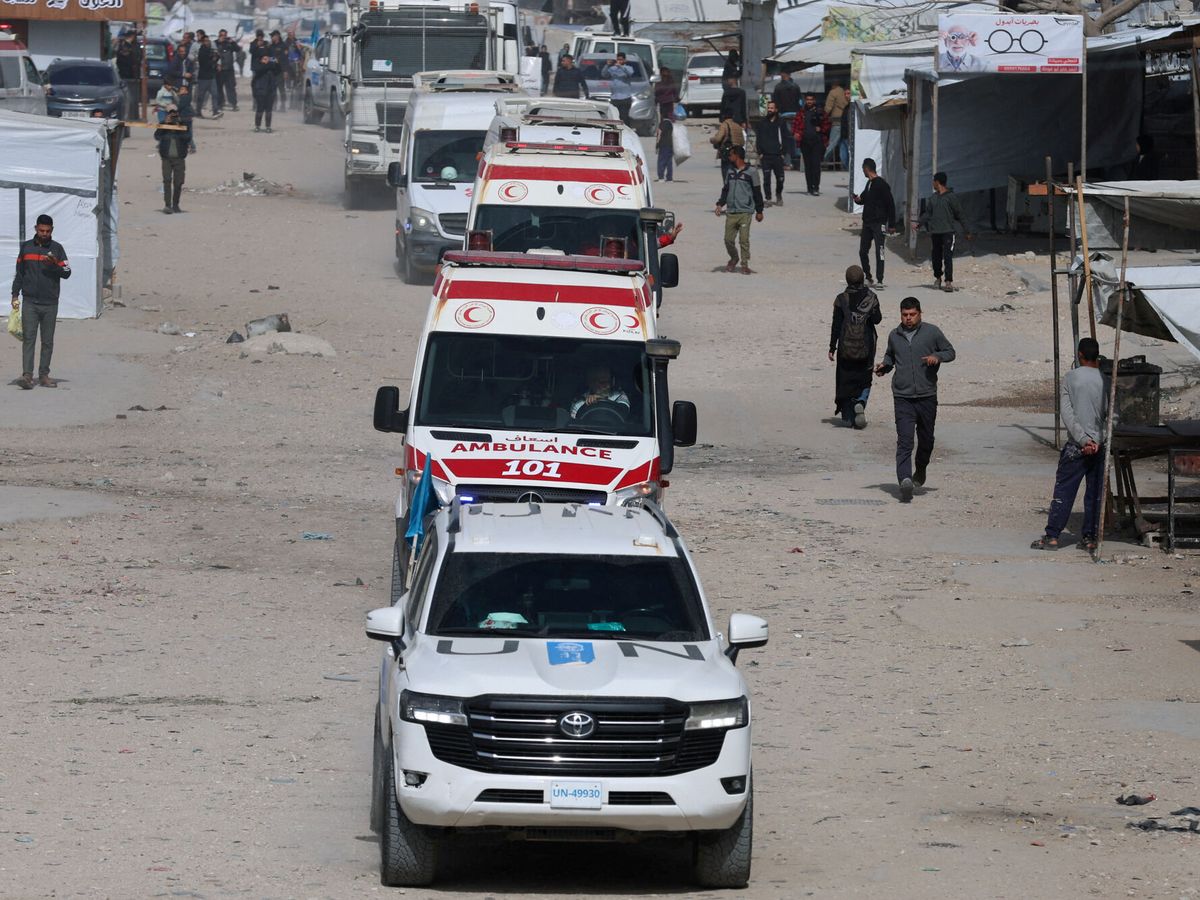
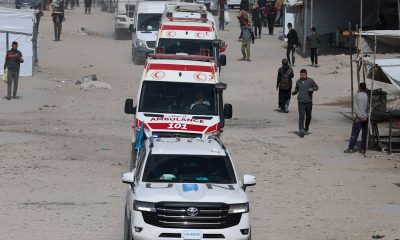
An employee of the World Health Organization (WHO) was killed on Monday in Gaza Strip after Israeli forces opened fire on a medical convoy transporting patients for evacuation, according to witnesses and official accounts.
The Israel Defense Forces (IDF) said the vehicle approached troops in a “threatening manner,” alleging that the driver accelerated toward soldiers despite warning shots. “The troops fired warning shots. The vehicle continued advancing, and additional fire was directed at it,” the military said in a statement.
The army also claimed the vehicle lacked clear markings and was therefore treated as a potential threat.
However, survivors disputed that account. Raed Aslan, a passenger in the convoy, told reporters in Khan Younis that the vehicles were clearly marked with WHO insignia. “The vehicle was clearly identified as belonging to the WHO,” he said, adding that an Israeli tank blocked the road and fired at the driver despite the route being empty.
The convoy was transporting patients to the Rafah crossing, the only exit point available for medical evacuations abroad, as Israel does not permit transfers to Jerusalem or the West Bank.
The incident adds to a series of controversial cases involving Israeli military actions against humanitarian convoys. In April 2024, seven workers from World Central Kitchen were killed in an Israeli strike in Deir al-Balah. The military initially cited a “misidentification,” despite the vehicles being clearly marked.
Similarly, in March 2025, 15 paramedics, rescuers, and a UN worker were killed near Rafah. Israeli authorities first claimed emergency lights were off, but video evidence later contradicted that assertion.
A subsequent investigation by organizations including Forensic Architecture found that Israeli forces fired hundreds of rounds at the convoy, and that the vehicles were later destroyed and buried along with the bodies before being recovered days later.
The latest incident is likely to intensify scrutiny over the conduct of military operations in Gaza, particularly regarding the safety of humanitarian personnel and medical evacuations.
International
NASA’s Orion sets record as farthest crewed mission from Earth

NASA’s Orion spacecraft set a new milestone on Monday, becoming the crewed space mission to travel the farthest distance from Earth, surpassing the record set by Apollo 13, which reached 400,171 kilometers from the planet.
The Orion capsule, part of the Artemis II mission, achieved the record at 12:57 p.m. Eastern Time as it continued its journey toward the gravitational sphere of influence of the Moon.
The milestone came less than an hour before the crew was scheduled to begin observation activities during its planned lunar flyby.
“From here, in the ‘Integrity Cabin,’ as we surpass the greatest distance humans have ever traveled from Earth, we do so honoring the extraordinary efforts and achievements of those who came before us in human space exploration,” said Canadian astronaut Jeremy Hansen.
The mission, which launched last Wednesday from Cape Canaveral, is designed to orbit the Moon and return to Earth within ten days. According to the schedule, the spacecraft is expected to begin its lunar flyby at 2:45 p.m. ET, concluding around 9:20 p.m.
International
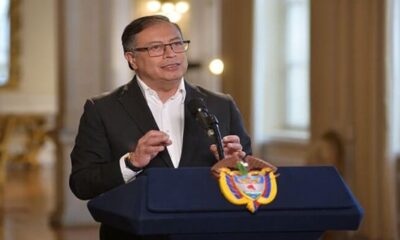
Petro accuses top guerrilla leader of bribing officers to evade military strikes
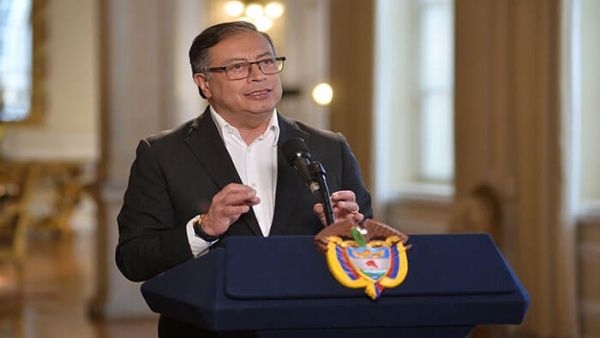
The president of Colombia, Gustavo Petro, said Saturday that the country’s most wanted guerrilla leader is bribing members of the security forces to obtain advance information and evade military operations.
According to the government, Iván Mordisco, a dissident leader of the now-defunct FARC, is currently on the run in the जंगल following an الجيش bombardment last week that killed six of his closest collaborators in the department of Vaupés.
Authorities believe the guerrilla commander had been at the site shortly before the operation. “He buys off the commanders who are supposed to capture him; that’s how he escapes the bombings, but leaves his own people to die. He is warned before every strike,” Petro wrote on social media platform X.
The six individuals killed in the strike were part of Mordisco’s security ring, according to Defense Minister Pedro Sánchez.
Local media reported that one of those killed was a woman known as “alias Lorena,” who was allegedly Mordisco’s partner and the mother of his child.
After failed attempts to negotiate peace, Petro’s administration has shifted to a more aggressive military strategy against the guerrilla leader. In recent months, three of Mordisco’s brothers have been captured and now face charges including homicide, kidnapping, and arms trafficking.

Honduras coffee exports jump nearly 30% in March despite price drop

Guatemala extends state of prevention and expands it to new regions

WHO worker killed as Israeli forces fire on Gaza medical convoy
Tec de Monterrey honors one of its students for his contribution to nanotechnology in medicine

Defense Minister commends salvadoran soldier for Central American Cross Country victory

Extension of the state of emergency approved in southern Chile
-
 International4 days ago
Devotees in Philippines mark Holy Week with extreme rituals despite rising costs
-

 International4 days ago
Le pape Léon XIV appelle à relancer le dialogue pour une paix au Moyen-Orient
-
 Central America13 hours ago
Guatemala extends state of prevention and expands it to new regions
-
 Internacionales4 days ago
Ecuador extends state of emergency amid escalating violence and crime crackdown
-

 International13 hours ago
NASA’s Orion sets record as farthest crewed mission from Earth
-
 Central America13 hours ago
Honduras coffee exports jump nearly 30% in March despite price drop
-
 International4 days ago
Mexico leads global cases of enforced disappearances, UN report finds
-
 International13 hours ago
WHO worker killed as Israeli forces fire on Gaza medical convoy
-

 Central America2 days ago
Costa Rica urges China to halt actions against Panama-flagged vessels
-
 International2 days ago
Petro accuses top guerrilla leader of bribing officers to evade military strikes