
International
Venezuela’s opposition announces presidential primaries for 2023
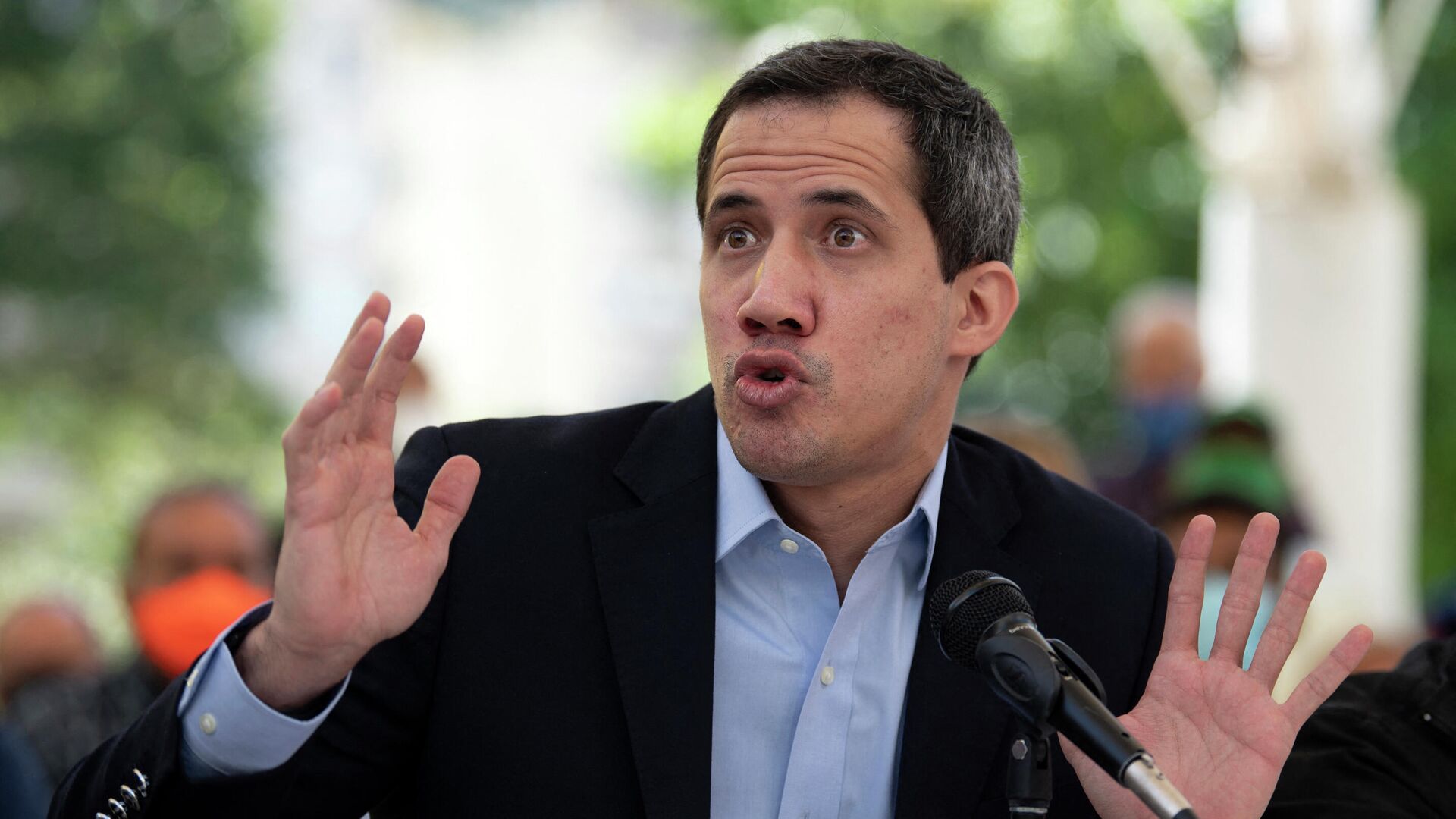
AFP
Venezuela’s main opposition on Monday announced primaries in 2023 to elect a single candidate to stand against incumbent Nicolas Maduro in the country’s next presidential election.
The opposition last held primaries in 2012 when candidate Henrique Capriles romped to victory before he was beaten by the late Hugo Chavez in the presidential election.
Following Chavez’s death, Capriles stood again as opposition candidate the next year against Maduro. However, the opposition boycotted the last elections in 2018.
“The presidential candidate of the democratic forces will be elected by a broad and plural primary process that will take place in 2023,” the main opposition parties said in a statement.











The presidential election is scheduled for 2024, six years after Maduro won a second successive term in the largely boycotted 2018 vote.
Dozens of countries, led by the European Union and United States, joined the opposition in rejecting the result of the election and accusing Maduro of fraud.
That rejection led to opposition leader Juan Guaido in January 2019 using his position as assembly speaker to declare himself acting president, quickly garnering the support of almost 60 countries.
However, Maduro has crucially kept control of Venezuela’s institutions, including the influential military.
A source has said Guaido has not ruled out running in the primaries.
“As Venezuelans, we need a presidential election,” Guaido tweeted, saying such a vote could mean “the end of the dictatorship and the return of democracy.”
“We are taking steps to demand a date and conditions for a free and fair election,” he said.
No date has yet been set for the 2024 elections by the top electoral body, which is controlled by Maduro loyalists.










International
Virginia Police Arrest Salvadoran Man in Great Falls Woman’s Killing

Alexis Antonio Cedillos-Campos, 19, identified by federal officials as an undocumented immigrant from El Salvador, was arrested in connection with the death of Carmen Lizet Puch, 42, who was found dead Monday, the Fairfax County Police Department said.
Authorities said Cedillos-Campos and Puch were coworkers and were also involved in an “intimate relationship.”
“Our victim suffered numerous stab wounds in a truly brutal and indescribable manner,” Police Chief Kevin Davis said during a news conference Wednesday.
Investigators said surveillance video showed Cedillos-Campos at the restaurant where he and Puch worked, allegedly taking a fixed-blade knife, a pair of black latex gloves and a bottle of water before leaving.
“He left with the intent to harm and kill the victim,” Davis said.
Cedillos-Campos was arrested Wednesday morning in Maryland and confessed to the killing, according to Davis. He is awaiting extradition to Virginia. Authorities have not said whether he has an attorney representing him.
The Department of Homeland Security said Cedillos-Campos had previously been arrested by U.S. Customs and Border Protection in 2024 after allegedly crossing the U.S.-Mexico border illegally near El Paso, Texas.
International
Mexico and Guatemala Agree on Five-Point Binational Plan for 2027
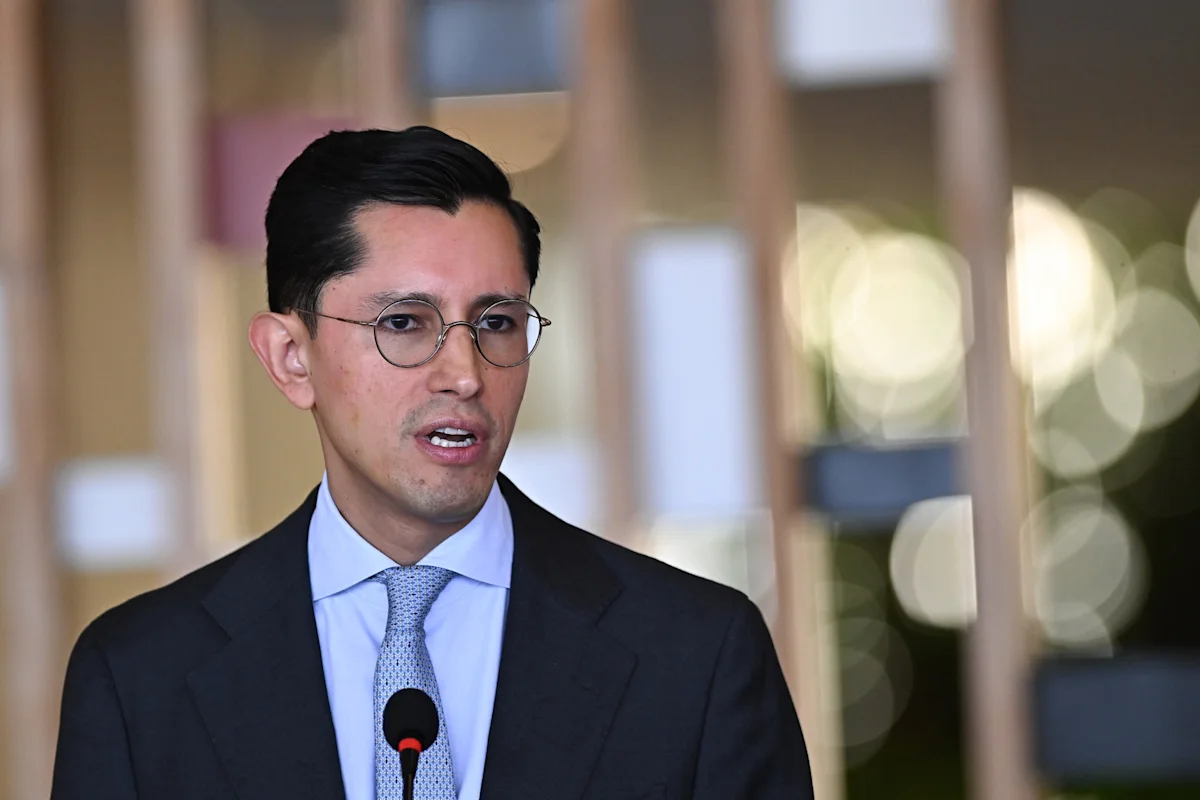
Mexico and Guatemala agreed Tuesday on a 2027 Binational Plan built around five areas of cooperation, along with a schedule of meetings and initiatives aimed at making progress by the end of 2026 on security, border infrastructure, human mobility, development and technical and social cooperation.
The agreement was announced by the foreign ministers of both countries following a meeting in Mexico City.
Mexican Foreign Minister Roberto Velasco said the plan will establish the “direction and priorities” of bilateral relations for next year. His Guatemalan counterpart, Carlos Ramiro Martínez, said the meeting allowed both governments to make decisions, schedule activities and revitalize bilateral cooperation mechanisms.
Security and border infrastructure
In the area of security, the two governments have nearly completed negotiations on a new memorandum of understanding for the Mexico-Guatemala High-Level Security Group (Ganseg), which was reactivated in 2025.
The countries expect to sign the agreement in the coming months to strengthen coordination and their ability to respond to shared security threats.
Regarding their nearly 1,000-kilometer shared border, Mexico and Guatemala agreed to advance infrastructure improvements at border crossings and continue work on a joint cargo clearance program between Ciudad Hidalgo and Tecún Umán, two border areas separated by the Suchiate River.
The measures are intended to facilitate bilateral trade while making cross-border exchanges safer and more efficient.
The two governments will also continue defining a route toward a railway connection between their countries through Line K of Mexico’s Interoceanic Corridor of the Isthmus of Tehuantepec (CIIT), with the aim of strengthening economic and community ties.
Migration and development
On human mobility, Mexico and Guatemala will maintain coordination to ensure safe, orderly and dignified returns, while strengthening protection for people in transit.
The bilateral agenda also includes a second phase of the Sembrando Vida program in Guatemala, which is expected to benefit 10,000 people across 15 departments.
Both countries will also advance initiatives under Juntos para el Bienestar, as well as six technical, scientific and energy cooperation projects approved by the Joint Commission.
The agreements seek to strengthen bilateral ties and establish concrete priorities for cooperation between Mexico and Guatemala during 2027.
International
France to Expel Two Iranian Diplomats Over Alleged Attack on French Officials
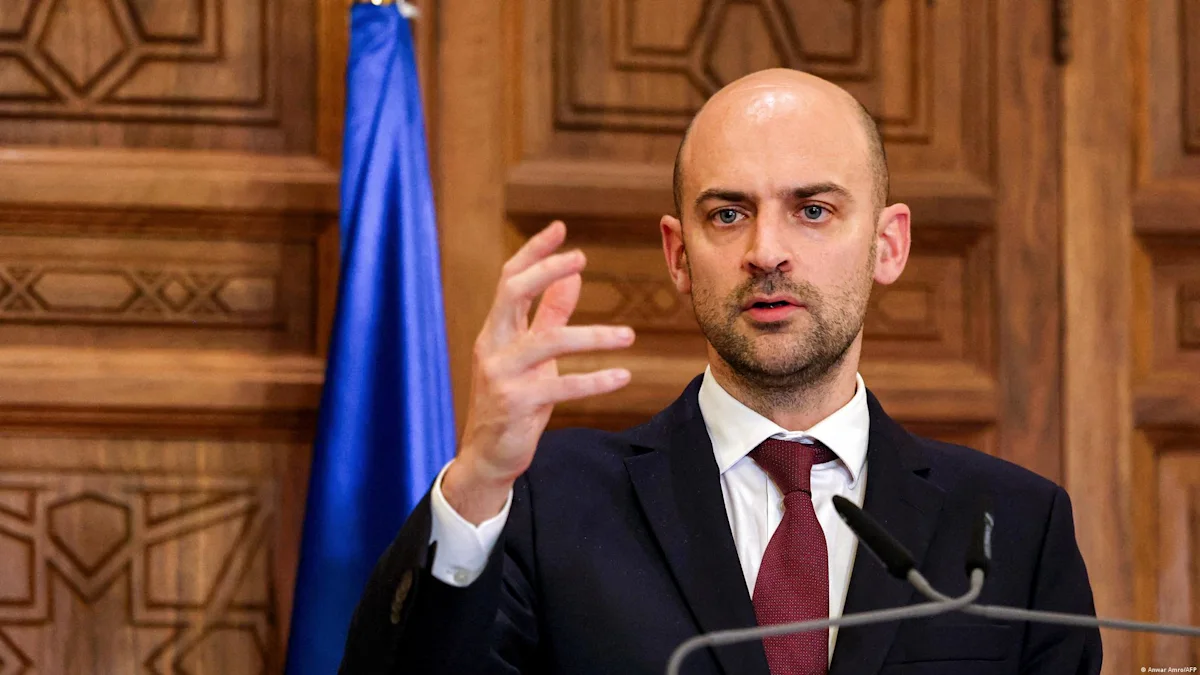
French Foreign Minister Jean-Noël Barrot announced Tuesday, August 18, 2026, that France will expel two Iranian diplomats in response to what Paris described as an attack on two French representatives in Iran last month.
“Two French diplomats were scandalously and deliberately assaulted on July 19. I had announced that this intolerable act would have consequences. It has now happened. Two Iranian diplomats in France will be expelled in the coming days,” Barrot said in a message posted on X.
The two Iranian diplomats have been declared persona non grata and will be required to leave France within the coming days, according to the French foreign minister.
About a month ago, Barrot said that two members of the French diplomatic staff had been detained by Iranian security forces for several hours. One of them was also subjected to harassment, he said.
The French government described the incident as an “extremely serious act of intimidation” that violated diplomatic immunity.
The two French embassy staff members were working on programs supporting Iranian civil society, particularly initiatives involving artists and researchers.
Iran has denied France’s allegations regarding the incident. The diplomatic dispute comes amid already strained relations between Paris and Tehran.

Virginia Police Arrest Salvadoran Man in Great Falls Woman’s Killing

Honduran Lawyer and Protected Witness in Angie Peña Case Shot Dead

Mexico and Guatemala Agree on Five-Point Binational Plan for 2027

France to Expel Two Iranian Diplomats Over Alleged Attack on French Officials

Heat wave puts more than 70 million Americans under alerts as temperatures near 46°C

Trump warns Iran over nuclear ambitions as U.S.-Iran ceasefire deadline passes

Brazil’s Lula and Flávio Bolsonaro kick off election campaigns amid focus on crime

Actress Hayden Panettiere Dies at 36, Representative Confirms
France to Expel Two Iranian Diplomats Over Alleged Attack on French Officials
Actress Hayden Panettiere Dies at 36, Representative Confirms
Honduran Lawyer and Protected Witness in Angie Peña Case Shot Dead
Trump warns Iran over nuclear ambitions as U.S.-Iran ceasefire deadline passes
Heat wave puts more than 70 million Americans under alerts as temperatures near 46°C
Virginia Police Arrest Salvadoran Man in Great Falls Woman’s Killing
Brazil’s Lula and Flávio Bolsonaro kick off election campaigns amid focus on crime
Mexico and Guatemala Agree on Five-Point Binational Plan for 2027
-
 International2 days ago
France to Expel Two Iranian Diplomats Over Alleged Attack on French Officials
-
 International4 days ago
Actress Hayden Panettiere Dies at 36, Representative Confirms
-
 Central America18 hours ago
Honduran Lawyer and Protected Witness in Angie Peña Case Shot Dead
-
 International3 days ago
Trump warns Iran over nuclear ambitions as U.S.-Iran ceasefire deadline passes
-
 International3 days ago
Heat wave puts more than 70 million Americans under alerts as temperatures near 46°C
-
 International18 hours ago
Virginia Police Arrest Salvadoran Man in Great Falls Woman’s Killing
-
 International3 days ago
Brazil’s Lula and Flávio Bolsonaro kick off election campaigns amid focus on crime
-
 International2 days ago
Mexico and Guatemala Agree on Five-Point Binational Plan for 2027