International
20 dead after attack on civilian convoy in Ukraine: governor
AFP
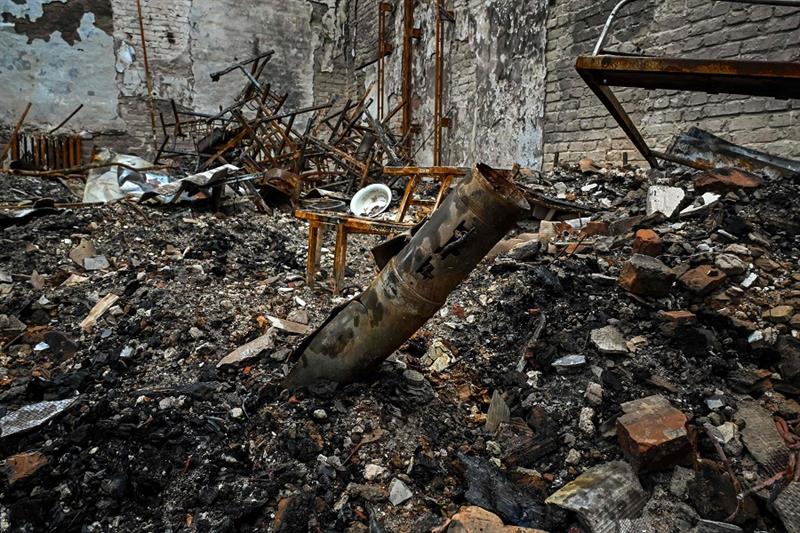
The bodies of 20 people were found following an attack on a convoy of cars with civilians near the town of Kupiansk in northeastern Ukraine, the governor of the Kharkiv region said Saturday.
“In the Kupiansk district, a shot-at convoy of cars containing civilians was found. According to preliminary data, 20 people died in the cars,” governor Oleg Synegubov said on the Telegram messenger site.
Russians “attacked civilians who tried to escape the shelling. This is cruelty that has no justification,” Synegubov added.
On Friday AFP reporters saw the bodies of at least 11 civilians, who died on an exposed section of road as defeated Russian forces retreated from Kupiansk.









The Ukrainian troops who found the group of destroyed civilian cars with dead and in some cases burned bodies, said they believed Russian troops had attacked a civilian convoy.
The bodies remained where they died in and around the six vehicles on a road from the village of Kyrylivka, some 70 kilometres (43 miles) east of Kharkiv.
A small van or minibus was completely burnt out, with the carbonised remains of four people within. At least one of these corpses appeared small enough to have been a child.
Russia’s February invasion left its forces in command of a swathe of northern and eastern Ukraine, but this month a lightning counteroffensive in the Kharkiv region has driven them back.
Russian forces have been accused of brutalising and murdering civilians in occupied areas several times during the seven-month-old war.







International
Trump floats Vance-Rubio potential Republican ticket for 2028 election
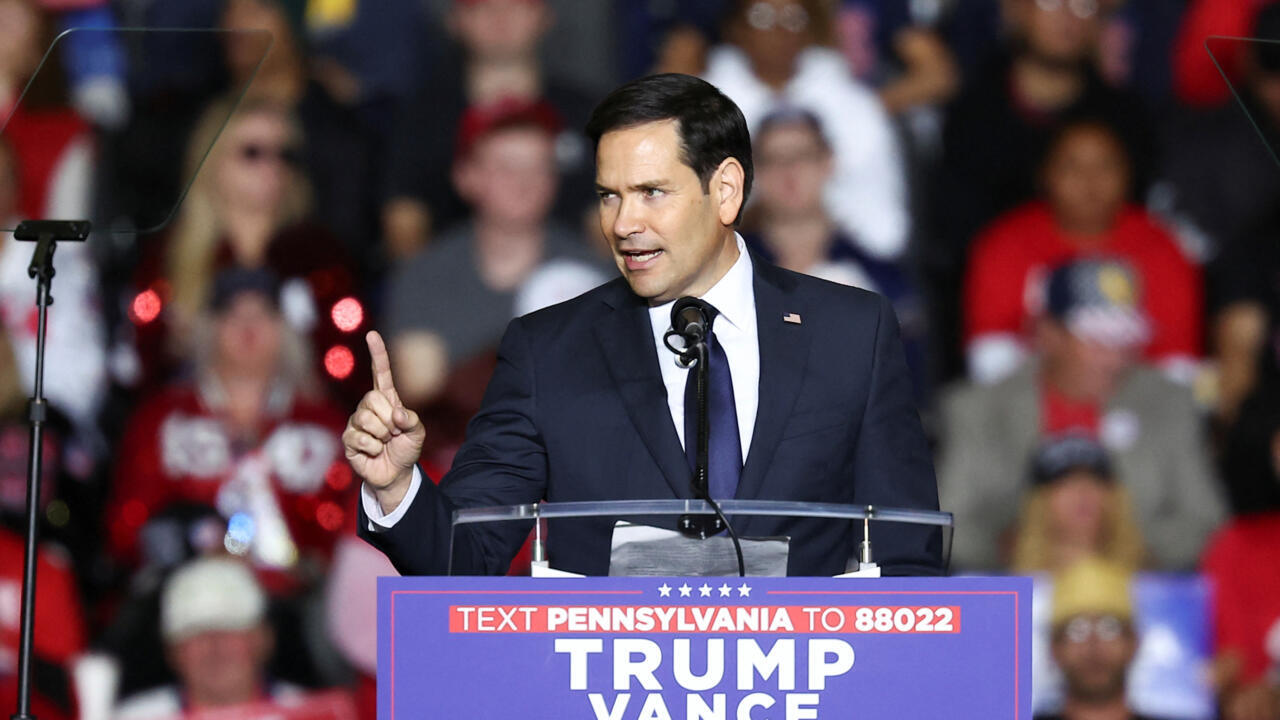
U.S. President Donald Trump suggested on Monday that Vice President JD Vance and Secretary of State Marco Rubiocould potentially form a Republican presidential ticket for the 2028 elections.
Speaking during a dinner with law enforcement officials as part of National Police Week, Trump publicly praised both officials and said they could make “an ideal team” for the next presidential race.
“Who likes JD Vance? Who likes Marco Rubio?” Trump asked attendees before adding that the pair “sound like a good combination.”
The president highlighted his vice president’s performance in office, stating that their current partnership has been highly effective. “JD is perfect, that has been a perfect formula,” Trump told reporters later.
He further suggested that a Vance-Rubio pairing could represent a strong presidential and vice-presidential ticket, although he stopped short of offering any formal endorsement.
“I think it sounds like a presidential candidate and a vice-presidential candidate,” he said, while clarifying that his remarks should not be interpreted as an official backing of any future campaign.
So far, neither Vance nor Rubio has publicly confirmed any intention to run in the 2028 presidential election.
Rubio previously sought the Republican nomination in 2016 but withdrew after losing the primary race to Trump. Later, in a December 2025 interview with Vanity Fair, he said he would be among the first to support Vance if he decided to run for the White House.
Vance, meanwhile, has recently dismissed speculation of any political rivalry with Rubio amid growing discussion about potential future GOP leadership.
International
Russia Accuses Ukraine of Violating Victory Day Truce
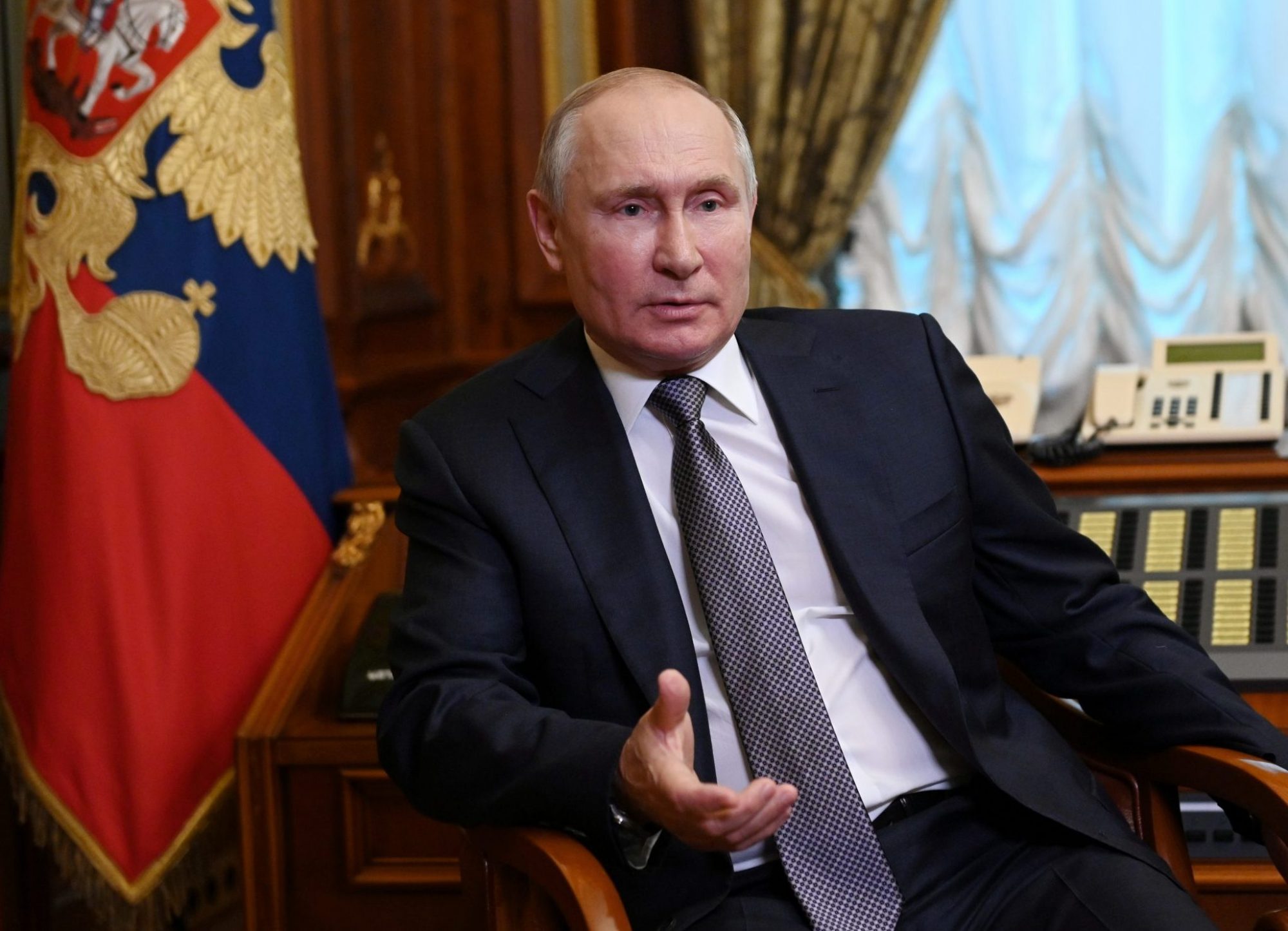
Russia accused Ukraine on Saturday of violating a Victory Day truce that was reportedly agreed with mediation from the United States, claiming that Ukrainian forces carried out attacks on Russian territory as well as on the annexed Crimean peninsula.
Despite the declared ceasefire, the Russian Ministry of Defense said in a statement that Ukrainian forces attacked Russian military positions using attack drones and artillery.
According to the ministry, Ukrainian forces made twelve attempts to advance toward Russian-held positions across several sectors of the front line.
It also alleged that Ukrainian strikes targeted civilian infrastructure in Crimea, several border regions, the Caucasus, and other areas including Moscow and Perm in the Ural region.
The Defense Ministry estimated around 8,900 violations of the ceasefire in total, including more than 7,000 drone attacks and over 1,000 strikes involving tanks, artillery, multiple rocket launch systems, and mortars since the truce came into effect at midnight.
Russia said its forces responded “symmetrically” to what it described as violations by Ukrainian troops.
Earlier, the Kremlin denied claims that Ukraine attempted to sabotage a military parade in Red Square marking the 81st anniversary of the Soviet victory over Nazi Germany in World War II.
“No attempts were made. Everything went well,” Kremlin spokesperson Dmitry Peskov told local media.
International
Trump Says U.S.-Iran Talks Progressing, Signals Possible Deal on Strait of Hormuz
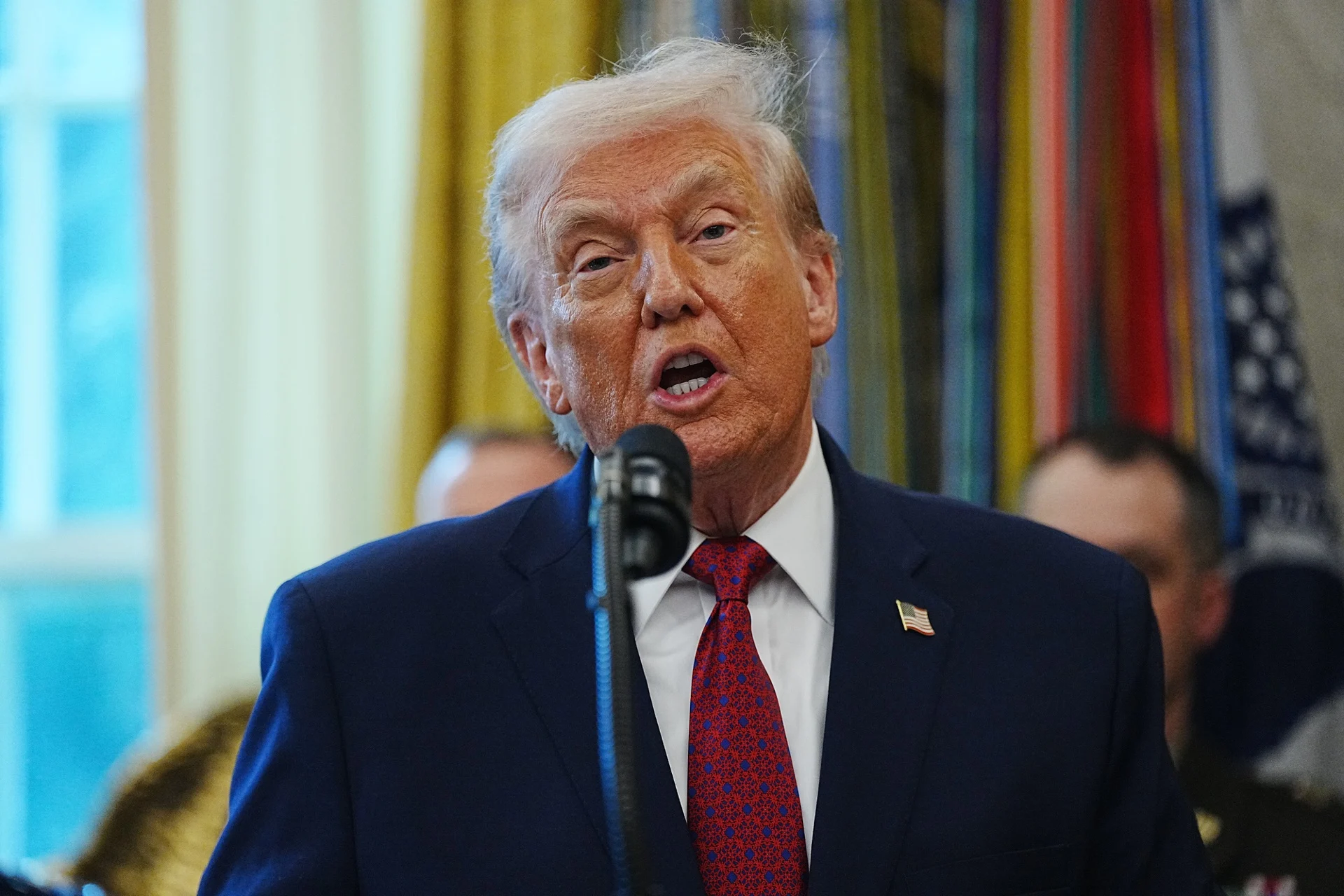
U.S. President Donald Trump said Wednesday that Washington is holding “very good” talks with Iran and stated that there is a strong possibility of reaching an agreement to end the conflict and reopen the Strait of Hormuz.
“We’ve had very good conversations over the last 44 hours, and it’s very possible that we’ll reach an agreement,” Trump said during an event held in the Oval Office at the White House.
The president’s remarks came just hours after he announced a temporary suspension of the military operation aimed at escorting vessels stranded in the Persian Gulf due to Iran’s blockade of the strategic Strait of Hormuz.
Trump explained that the pause in operations is intended to facilitate diplomatic negotiations between both sides and prevent further military escalation in the region.
“We’re in good shape, and right now things are going well. Now we have to achieve what we need to achieve. If we don’t, we’ll have to go much further,” the Republican president warned.
In a post published on his social media platform Truth Social, Trump reiterated that if Iran accepts Washington’s proposed conditions, military operations and the naval blockade affecting the Islamic republic would come to an end.
However, he also issued a new warning to the Iranian government, stating that the United States would respond with attacks “of greater intensity” if Tehran rejects the agreement promoted by the White House.

Panama confirms drug contamination of El Salvador coffee shipment occurred on its territory

Trump floats Vance-Rubio potential Republican ticket for 2028 election

Russia Accuses Ukraine of Violating Victory Day Truce
Tec de Monterrey honors one of its students for his contribution to nanotechnology in medicine

Defense Minister commends salvadoran soldier for Central American Cross Country victory