
International
Obama says democracy at stake in US midterms
| By AFP |
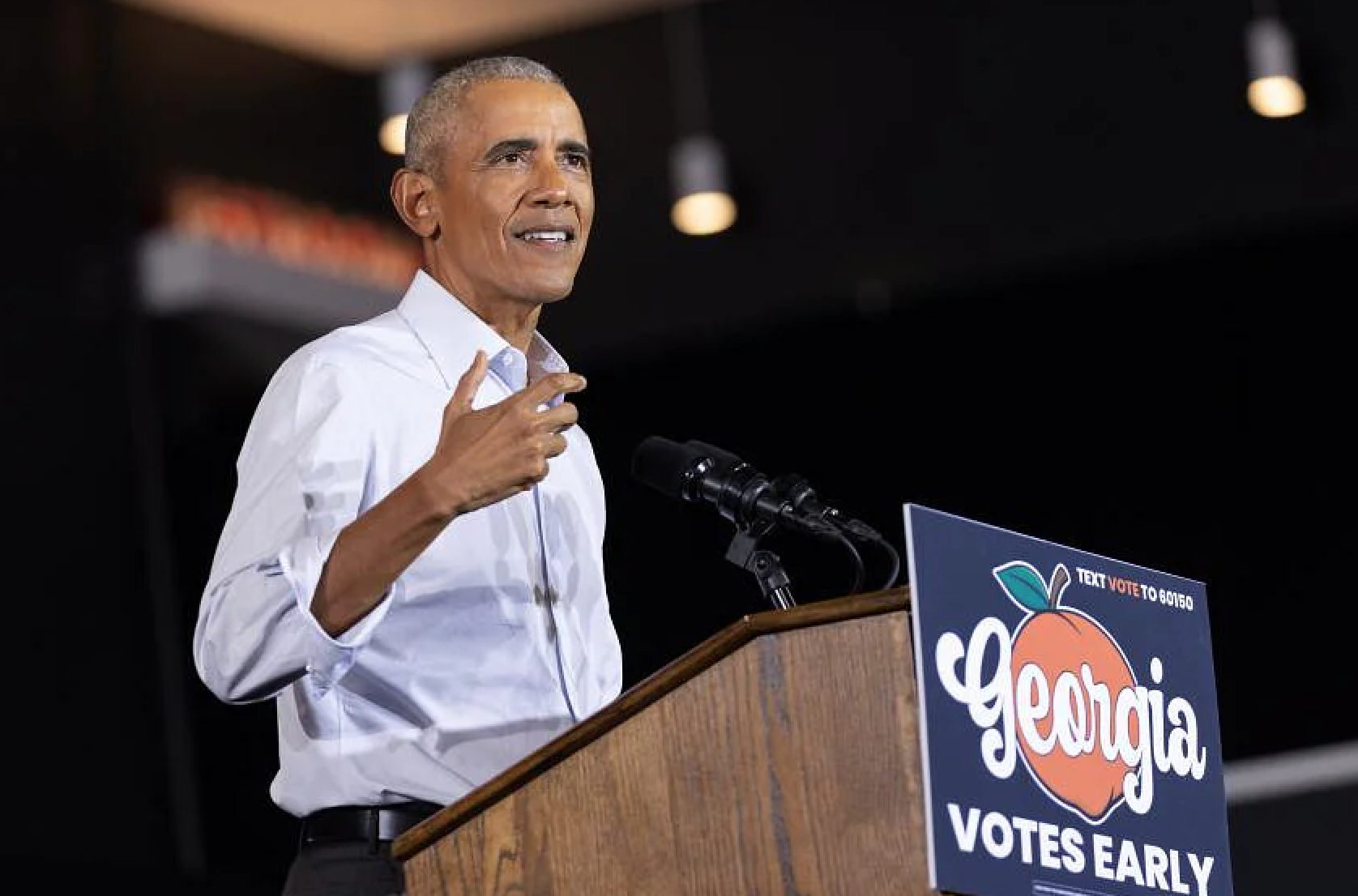
Former US president Barack Obama said Friday that democracy is at stake in next month’s midterm elections in the United States, as he hit his first stop on the campaign trail.
The Democratic power player, who remains a hugely popular figure in his party, told a boisterous rally in Georgia that everyone had to get out and vote to prevent election conspiracy theorists getting their hands on the levers of power.
“It’s not enough to elect Democrats at the top of the ticket,” a fired-up Obama told the crowd in the suburbs of Atlanta.
“We need to elect good people up and down the ballot. Across the country, some of the folks who tried to undermine our democracy are running for offices that will oversee the next election.









“And if they win, there’s no telling what might happen.”
Obama, who has kept a relatively low profile since leaving office in 2017, was guest of honor at the rally in Georgia, where two extremely close contests, fueled by tens of millions of dollars, are captivating America.
Democrat Raphael Warnock, the first Black US senator elected in the southern state with a long history of segregation, is seeking re-election against Herschel Walker, a former American football star backed by Donald Trump.
The contest could well decide which party gets control of the US Senate — and the ability to advance or frustrate President Joe Biden’s agenda.
There is also a fierce battle for the governor’s office, where Republican Brian Kemp is up against influential Democratic figure Stacey Abrams.
As well as hammering the Republican Party on electoral integrity and the Trump-driven false claims that the 2020 presidential ballot was rigged, Obama also touched on abortion rights, which have been threatened since the Supreme Court overturned the long-standing Roe vs. Wade.
“Women everywhere should be able to control have a say in what happens with their own bodies,” he said.
“It shouldn’t be controversial to say that the most personal of healthcare choices should be made by a woman and her doctor. Not by a bunch of mostly male politicians.”
Americans have already begun voting in elections that will decide control of both houses of Congress, as well as who gets the governors’ mansions in dozens of states.
Hundreds of other positions at county and state level will also be decided in the November 8 polls.






International
Mexico City Mayor Invites U2 to Perform at Iconic Zócalo Plaza
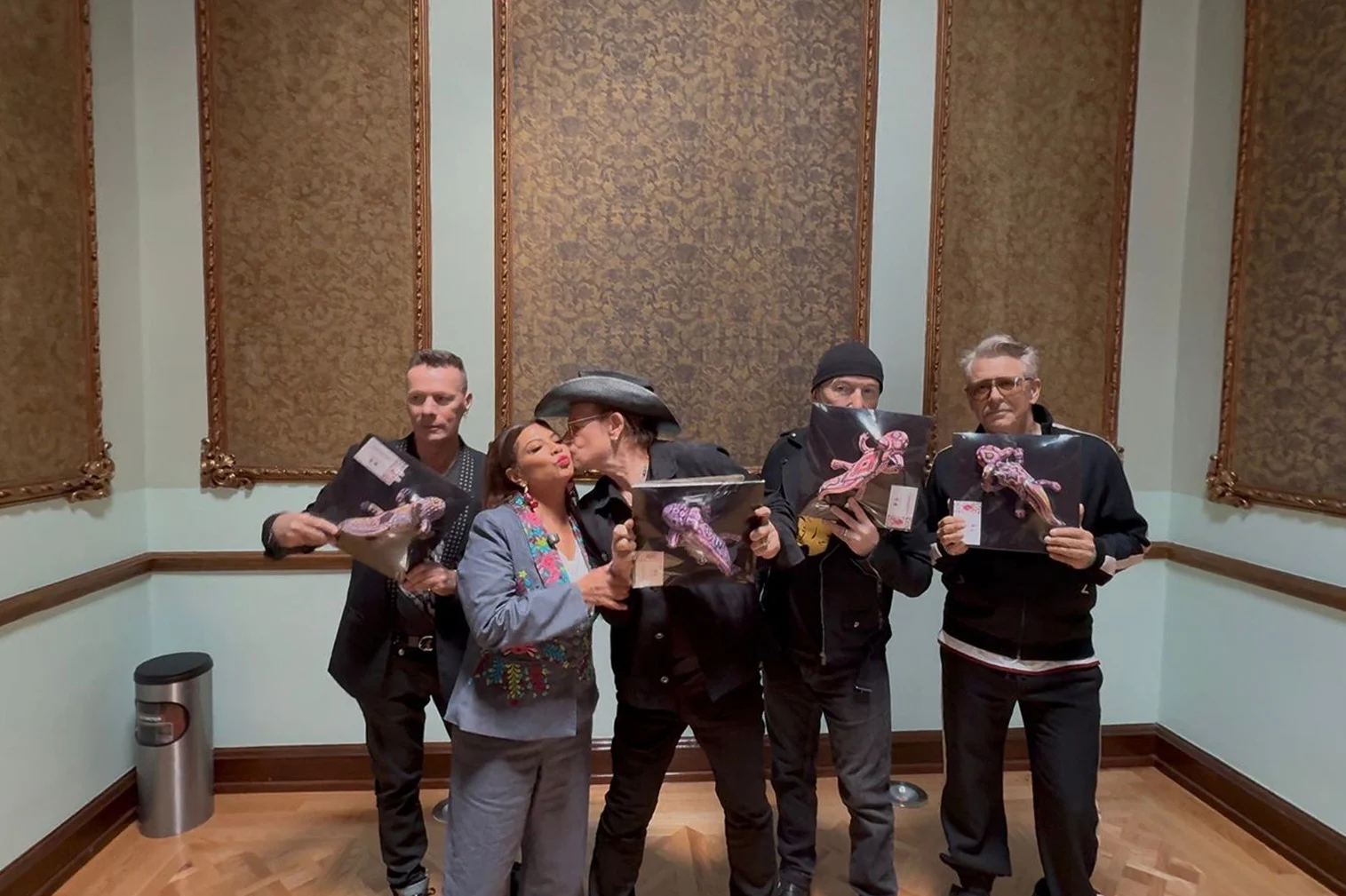
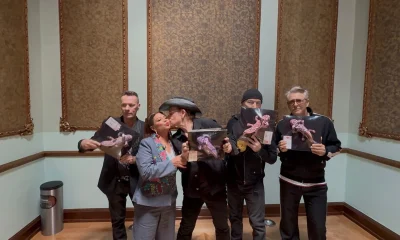
Irish rock band U2, which spent Tuesday and Wednesday filming a new music video for its song Street of Dreams in the Historic Center of Mexico City, received an invitation to perform at the capital’s iconic Zócalo square from Mayor Clara Brugada.
Brugada shared the invitation through social media posts accompanied by photos and a video showing her meeting with the band members.
“This is an invitation for you to perform in our wonderful public square, the Zócalo. You are welcome here, and we would love to have you,” Brugada said in the video while handing a document to Bono, the band’s lead singer.
Bono responded by saying that the group would like “to begin its new tour in Mexico City.”
Referencing one of the band’s most famous songs, In the Name of Love, Brugada said she was greeting Bono along with The Edge, Adam Clayton and Larry Mullen Jr..
“Welcoming U2 to our capital means celebrating music, connection and the emotion that can be felt in every corner of this city,” Brugada wrote in one of her messages. “We are a city open to the world, vibrant and full of stories shared from the stage to the streets.”
She also described the Zócalo as “the country’s most important public square” and a cultural landmark for Latin America.
Over the years, the Zócalo has hosted massive concerts by internationally renowned artists and bands including Roger Waters, Paul McCartney, Manu Chao, Café Tacvba, Los Fabulosos Cadillacs, Los Tigres del Norte, La Maldita Vecindad, Silvio Rodríguez, Joan Manuel Serrat, Rosalía and Shakira, drawing hundreds of thousands of fans.
International
Marco Rubio Urges China to Help Restrain Iran Amid Gulf Tensions
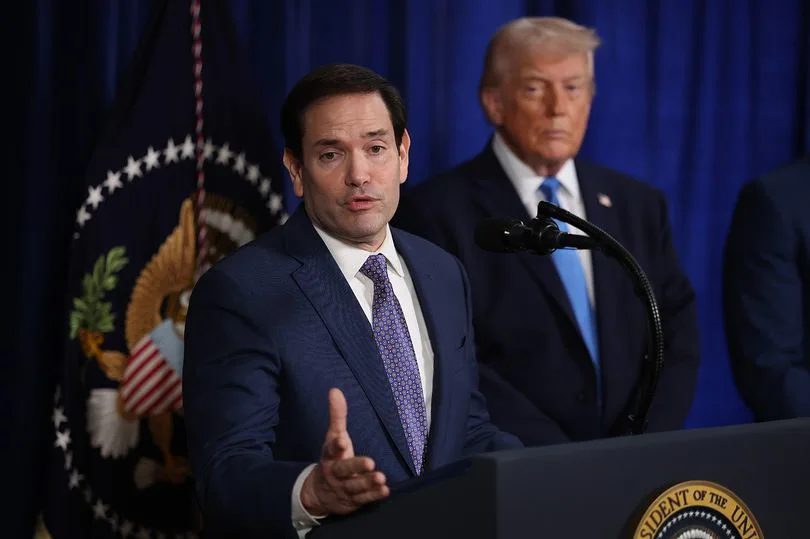
Marco Rubio said Wednesday that Washington hopes to persuade China to take a more active role in stopping Iran from escalating tensions in the Persian Gulf, arguing that the crisis directly threatens Asian commercial interests.
“It is in China’s interest to resolve this situation. We hope to convince them to play a more active role in getting Iran to stop what it is doing now and trying to do in the Persian Gulf,” Rubio said during an interview with journalist Sean Hannity on Fox News while traveling aboard Air Force One.
The top U.S. diplomat said the conflict and concerns over the possible disruption of the Strait of Hormuz have already affected China’s interests.
Rubio noted that “a Chinese cargo ship was struck over the weekend,” referring to the exchange of attacks reported last Friday between Iran and the United States.
The remarks come amid growing international concern over rising tensions in the region and the potential impact on global trade routes and energy supplies.
International
Trump floats Vance-Rubio potential Republican ticket for 2028 election
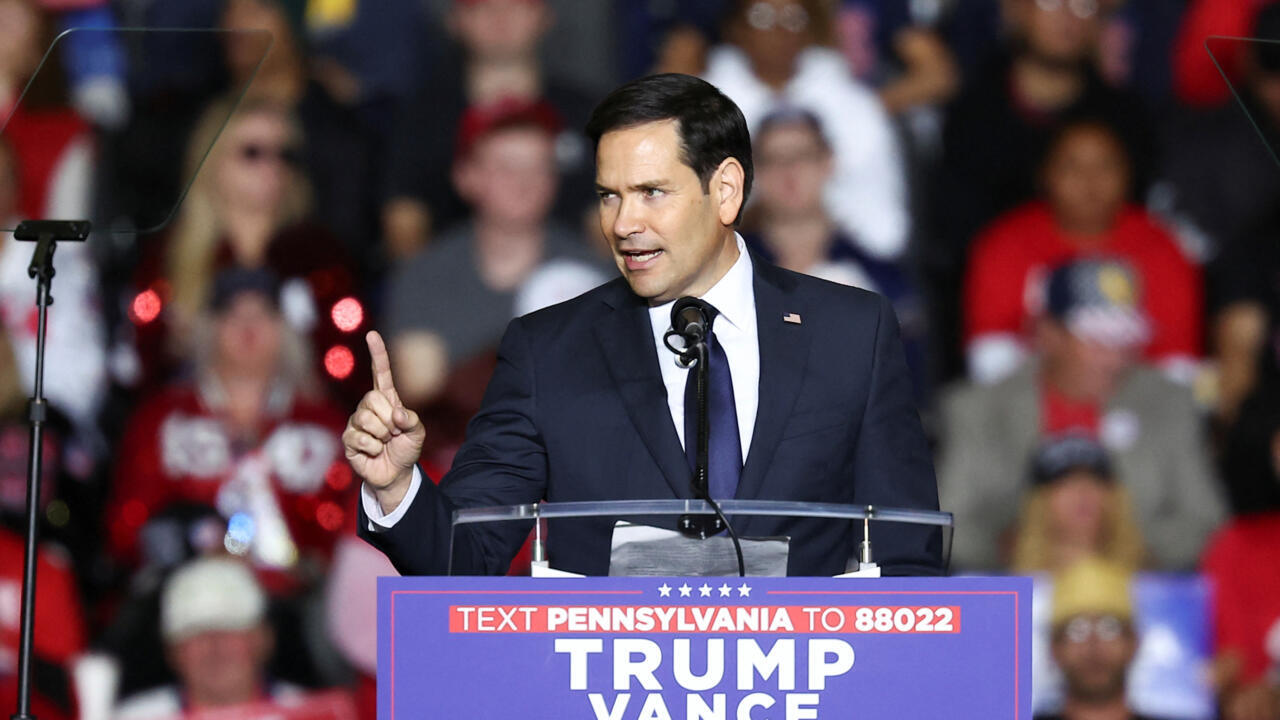
U.S. President Donald Trump suggested on Monday that Vice President JD Vance and Secretary of State Marco Rubiocould potentially form a Republican presidential ticket for the 2028 elections.
Speaking during a dinner with law enforcement officials as part of National Police Week, Trump publicly praised both officials and said they could make “an ideal team” for the next presidential race.
“Who likes JD Vance? Who likes Marco Rubio?” Trump asked attendees before adding that the pair “sound like a good combination.”
The president highlighted his vice president’s performance in office, stating that their current partnership has been highly effective. “JD is perfect, that has been a perfect formula,” Trump told reporters later.
He further suggested that a Vance-Rubio pairing could represent a strong presidential and vice-presidential ticket, although he stopped short of offering any formal endorsement.
“I think it sounds like a presidential candidate and a vice-presidential candidate,” he said, while clarifying that his remarks should not be interpreted as an official backing of any future campaign.
So far, neither Vance nor Rubio has publicly confirmed any intention to run in the 2028 presidential election.
Rubio previously sought the Republican nomination in 2016 but withdrew after losing the primary race to Trump. Later, in a December 2025 interview with Vanity Fair, he said he would be among the first to support Vance if he decided to run for the White House.
Vance, meanwhile, has recently dismissed speculation of any political rivalry with Rubio amid growing discussion about potential future GOP leadership.

Mexico City Mayor Invites U2 to Perform at Iconic Zócalo Plaza

Marco Rubio Urges China to Help Restrain Iran Amid Gulf Tensions

Panama confirms drug contamination of El Salvador coffee shipment occurred on its territory
Tec de Monterrey honors one of its students for his contribution to nanotechnology in medicine

Defense Minister commends salvadoran soldier for Central American Cross Country victory

Extension of the state of emergency approved in southern Chile
-
 International2 days ago
Trump floats Vance-Rubio potential Republican ticket for 2028 election
-
 International4 days ago
Russia Accuses Ukraine of Violating Victory Day Truce
-
 Central America1 day ago
Panama confirms drug contamination of El Salvador coffee shipment occurred on its territory
-
 International3 hours ago
Marco Rubio Urges China to Help Restrain Iran Amid Gulf Tensions
-
 International3 hours ago
Mexico City Mayor Invites U2 to Perform at Iconic Zócalo Plaza