
International
Biden agenda at stake, and Trump in the wings, as Americans vote
| By AFP | Andrea Bambino with Sebastian Smith in Washington |
Americans headed to the polls on Tuesday in midterm elections in which Republicans are chasing a congressional majority that would paralyze President Joe Biden’s agenda and serve as a springboard for another White House run by Donald Trump.
Biden’s Democrats are facing a gargantuan struggle to hang on to Congress, after a race the president has cast as a “defining” moment for US democracy — while Trump’s Republicans campaigned hard on kitchen-table issues like inflation and crime.
“It’s Election Day, America,” the 79-year-old Biden tweeted as polling stations opened on the East Coast. “Make your voice heard today. Vote.”
At stake are all 435 seats in the House of Representatives, one-third of the Senate and a slew of state and local positions. Five states are holding referendums on abortion — California, Vermont, Kentucky, Montana and Michigan.











First results will begin trickling in after 7:00 pm (0000 GMT) but with razor-thin margins in some key congressional races a full picture may not be available for days or even weeks, setting the stage for likely acrimonious challenges.
The bitter political divide in the country was on the minds of many voters as they cast their ballots.
“I hope that we’ll get a better mix of candidates and that both sides can actually work together to solve our issues instead of fighting against one another,” said Sarah Hunt, a 41-year-old teacher as she cast her ballot in New York.
“There’s so much polarization and misinformation that I’d like to make sure that my voice is heard,” said Robin Girdhar, a 61-year-old doctor at a polling station in Pittsburgh, Pennsylvania.
Trump — who has all but announced he will seek the White House again in 2024 — grabbed the election eve spotlight to flag “a big announcement” on November 15, while Biden made a final appeal to Democrats to turn out en masse.
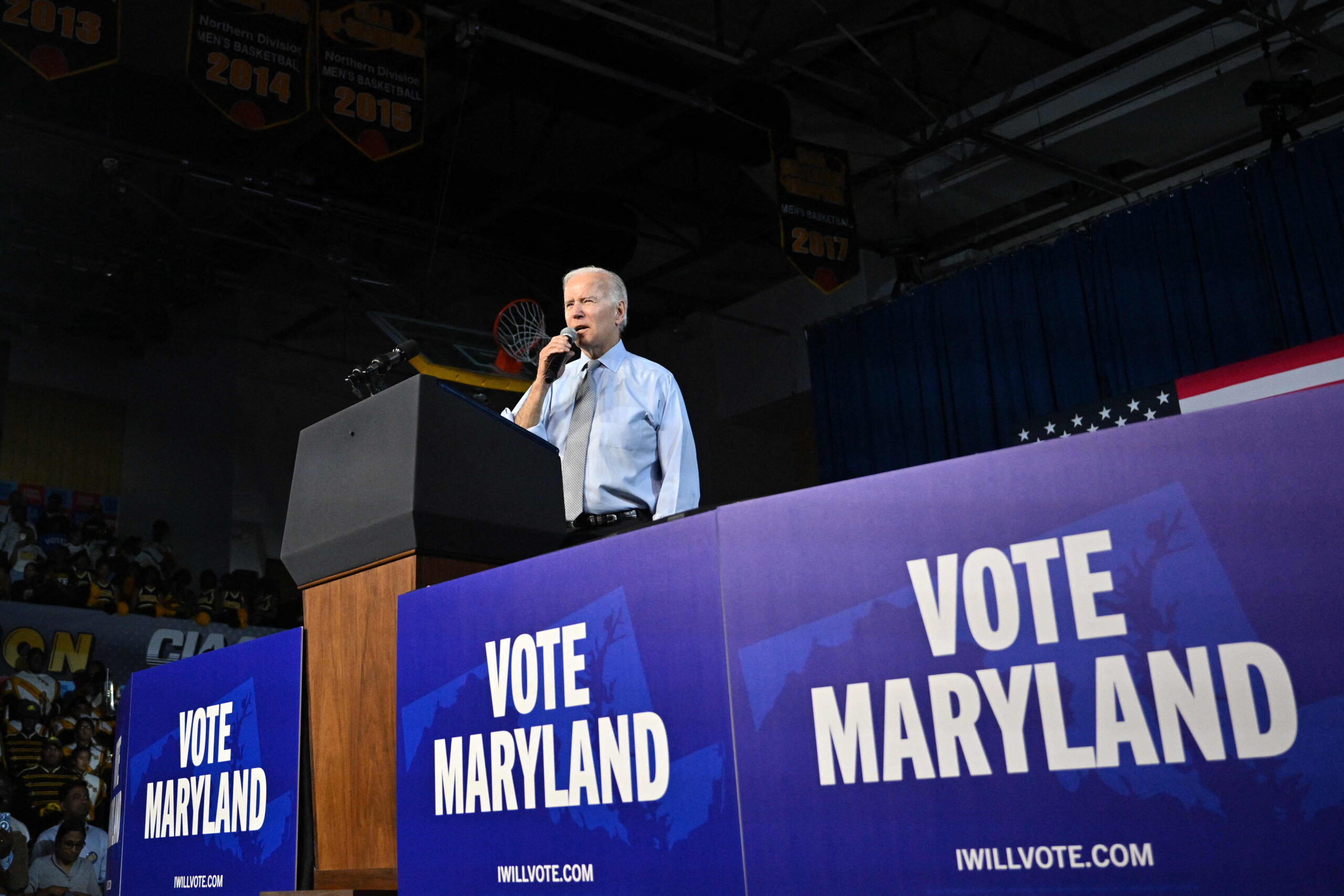
“The power’s in your hands,” Biden told a rally near the capital. “We know in our bones that our democracy is at risk and we know that this is your moment to defend it.”
Polls show Republicans in line to seize the House, which would allow them to snarl the rest of Biden’s first term in aggressive investigations and opposition to spending plans.
‘Giant red wave’
Returning to the White House Monday night, Biden told reporters he believed Democrats would hold on to the Senate but it would be “tough” to retain the House and his life in Washington may become “more difficult.”
If both the House and Senate flip, Biden would be left as little more than a lame duck and his legislative agenda would be frozen.
That would raise questions over everything from climate crisis policies, which the president will be laying out at the COP27 conference in Egypt this week, to Ukraine, where Republicans are reluctant to maintain the current rate of US financial and military support.
An influx of far-right Trump backers in Congress would also accelerate the shift that has been taking place inside the Republican Party since the former real estate tycoon stunned the world by defeating Hillary Clinton for the presidency in 2016.
Despite facing criminal probes over taking top secret documents from the White House and trying to overturn the 2020 election, Trump has been using the midterms to cement his status as the de facto Republican leader and presumptive presidential nominee.
In a typically dark, rambling speech to supporters in Dayton, Ohio, the 76-year-old Trump said, “if you support the decline and fall of America, then you must, you absolutely must vote for the radical left, crazy people.”
“If you want to stop the destruction of our country, then tomorrow you must vote Republican in a giant red wave,” he said — before teasing his 2024 announcement.
Across the country voters called on their fellow citizens to cast their ballot in the midterms, which historically have low turnout.
“Vote, vote, vote,” Luke Osuagwu, a 24-year-old student, told AFP in Atlanta, Georgia.
“Abortion is probably the biggest issue for me,” said Alexandra Ashley, a 30-year-old lawyer as she cast her vote in Pittsburgh. “I want to make sure it’s available for everybody and safe.”
44 million early votes
More than 44 million ballots were cast through early voting options, meaning the outcome had already begun to take shape before election day.
Senate races in Pennsylvania, Nevada, Arizona, Georgia, Wisconsin, New Hampshire and Ohio are expected to be close and any one of them could swing the balance of power in the chamber.
Trump has already claimed — baselessly — that swing state Pennsylvania “rigged” the midterms — reprising his playbook from the 2020 election which he falsely asserted was stolen by Biden.
Citing growing support for voter conspiracy theories among Trump and his Republicans, as well as their push to curb abortion access, Biden has warned that democracy and basic rights are at stake on Tuesday.
Republicans have countered that a vote for Democrats means more soaring inflation and rising violent crime, seeking to make the midterms a referendum on the president.
The outcome will likely determine whether Biden, who turns 80 this month and is the oldest president ever, will seek a second term in 2024 — or step aside.

















































































International
Pilot killed and two Pennsylvania state troopers injured in mid-air collision

A pilot was killed and two Pennsylvania state police officers were injured when a Cessna 150 airplane collided with the helicopter they were traveling in during a routine training exercise at a regional airport in the state.
Pennsylvania Governor Josh Shapiro identified the officers as Corporal Bryce Corman and Trooper Jason Mills, members of the Pennsylvania State Police aviation unit. Both are expected to recover from their injuries, according to ABC.
The county coroner’s office identified the pilot as 57-year-old Paul Sokoloski.
George Bivens, acting commissioner of the Pennsylvania State Police, said the collision occurred at around 6:50 p.m. Wednesday. The helicopter was flying several feet above a grassy area near a runway at Carlisle Regional Airport when the small plane approached from behind.
According to investigators, the Cessna suddenly veered to the right moments before the collision, striking the helicopter’s tail rotor before also hitting its main rotor.
The airplane crashed a short distance away and broke into several pieces, while the helicopter lost its tail and other components before crashing on its side.
Police said Corporal Corman opened a window and helped Trooper Mills escape from the helicopter because they feared the aircraft could catch fire.
The Federal Aviation Administration and the National Transportation Safety Board are investigating the circumstances surrounding the crash.
International
Argentina’s Milei Links Low Birth Rates to Abortion and Feminism

Argentine President Javier Milei on Thursday blamed feminism and the legalization of abortion for the country’s declining birth rate, arguing that the demographic trend is creating economic and pension-system challenges.
“We are paying a very high price for the madness of the green scarves,” Milei said during a speech at the Council of the Americas in Buenos Aires, referring to the symbol associated with the feminist movement and the campaign for legal abortion in Argentina.
According to Milei, Argentina is failing to reach the population growth and birth rates needed to maintain demographic replacement.
He also linked the decline in births to future challenges for the country’s pension system and workforce.
“That passion for killing children in the mother’s womb is costing us in terms of growth and pensions. It is also costing us in terms of human capital,” the president said.
Milei has consistently opposed abortion, which has been legal in Argentina since 2020. The law was considered a major victory for the feminist movement across Latin America at the time of its approval.
In February 2024, lawmakers from Milei’s La Libertad Avanza (LLA) party introduced a bill seeking to repeal voluntary abortion legislation.
Under Argentina’s current law, abortion is legal, safe and free of charge up to the 14th week of pregnancy. After that period, it is permitted when the pregnancy poses a risk to the woman’s life or health, or when it resulted from rape.
Milei has repeatedly criticized abortion
The Argentine president has also criticized abortion and feminism in international forums. During his speech at the World Economic Forum in Davos in January 2024, he attacked the feminist movement and denounced what he described as the “bloody agenda of abortion.”
His latest comments come amid growing concerns over Argentina’s demographic outlook and the potential long-term effects of declining birth rates on economic growth, the labor force and social security.
International
Virginia Police Arrest Salvadoran Man in Great Falls Woman’s Killing

Alexis Antonio Cedillos-Campos, 19, identified by federal officials as an undocumented immigrant from El Salvador, was arrested in connection with the death of Carmen Lizet Puch, 42, who was found dead Monday, the Fairfax County Police Department said.
Authorities said Cedillos-Campos and Puch were coworkers and were also involved in an “intimate relationship.”
“Our victim suffered numerous stab wounds in a truly brutal and indescribable manner,” Police Chief Kevin Davis said during a news conference Wednesday.
Investigators said surveillance video showed Cedillos-Campos at the restaurant where he and Puch worked, allegedly taking a fixed-blade knife, a pair of black latex gloves and a bottle of water before leaving.
“He left with the intent to harm and kill the victim,” Davis said.
Cedillos-Campos was arrested Wednesday morning in Maryland and confessed to the killing, according to Davis. He is awaiting extradition to Virginia. Authorities have not said whether he has an attorney representing him.
The Department of Homeland Security said Cedillos-Campos had previously been arrested by U.S. Customs and Border Protection in 2024 after allegedly crossing the U.S.-Mexico border illegally near El Paso, Texas.


Panama’s Geisha Coffee Retains Pure Ethiopian Genetics, Studies Find

Pilot killed and two Pennsylvania state troopers injured in mid-air collision

Argentina’s Milei Links Low Birth Rates to Abortion and Feminism

Virginia Police Arrest Salvadoran Man in Great Falls Woman’s Killing

Honduran Lawyer and Protected Witness in Angie Peña Case Shot Dead

Mexico and Guatemala Agree on Five-Point Binational Plan for 2027

France to Expel Two Iranian Diplomats Over Alleged Attack on French Officials

Heat wave puts more than 70 million Americans under alerts as temperatures near 46°C
France to Expel Two Iranian Diplomats Over Alleged Attack on French Officials
Honduran Lawyer and Protected Witness in Angie Peña Case Shot Dead
Virginia Police Arrest Salvadoran Man in Great Falls Woman’s Killing
Argentina’s Milei Links Low Birth Rates to Abortion and Feminism
Pilot killed and two Pennsylvania state troopers injured in mid-air collision
Mexico and Guatemala Agree on Five-Point Binational Plan for 2027
Panama’s Geisha Coffee Retains Pure Ethiopian Genetics, Studies Find
-
 International4 days ago
France to Expel Two Iranian Diplomats Over Alleged Attack on French Officials
-
 Central America3 days ago
Honduran Lawyer and Protected Witness in Angie Peña Case Shot Dead
-
 International3 days ago
Virginia Police Arrest Salvadoran Man in Great Falls Woman’s Killing
-
 International2 days ago
Argentina’s Milei Links Low Birth Rates to Abortion and Feminism
-
 International2 days ago
Pilot killed and two Pennsylvania state troopers injured in mid-air collision
-
 International4 days ago
Mexico and Guatemala Agree on Five-Point Binational Plan for 2027
-
 Central America2 days ago
Panama’s Geisha Coffee Retains Pure Ethiopian Genetics, Studies Find