
International
Venezuela’s Maduro to resume talks with opposition Friday
| By AFP | Esteban Rojas with Lina Vanegas en Bogota |
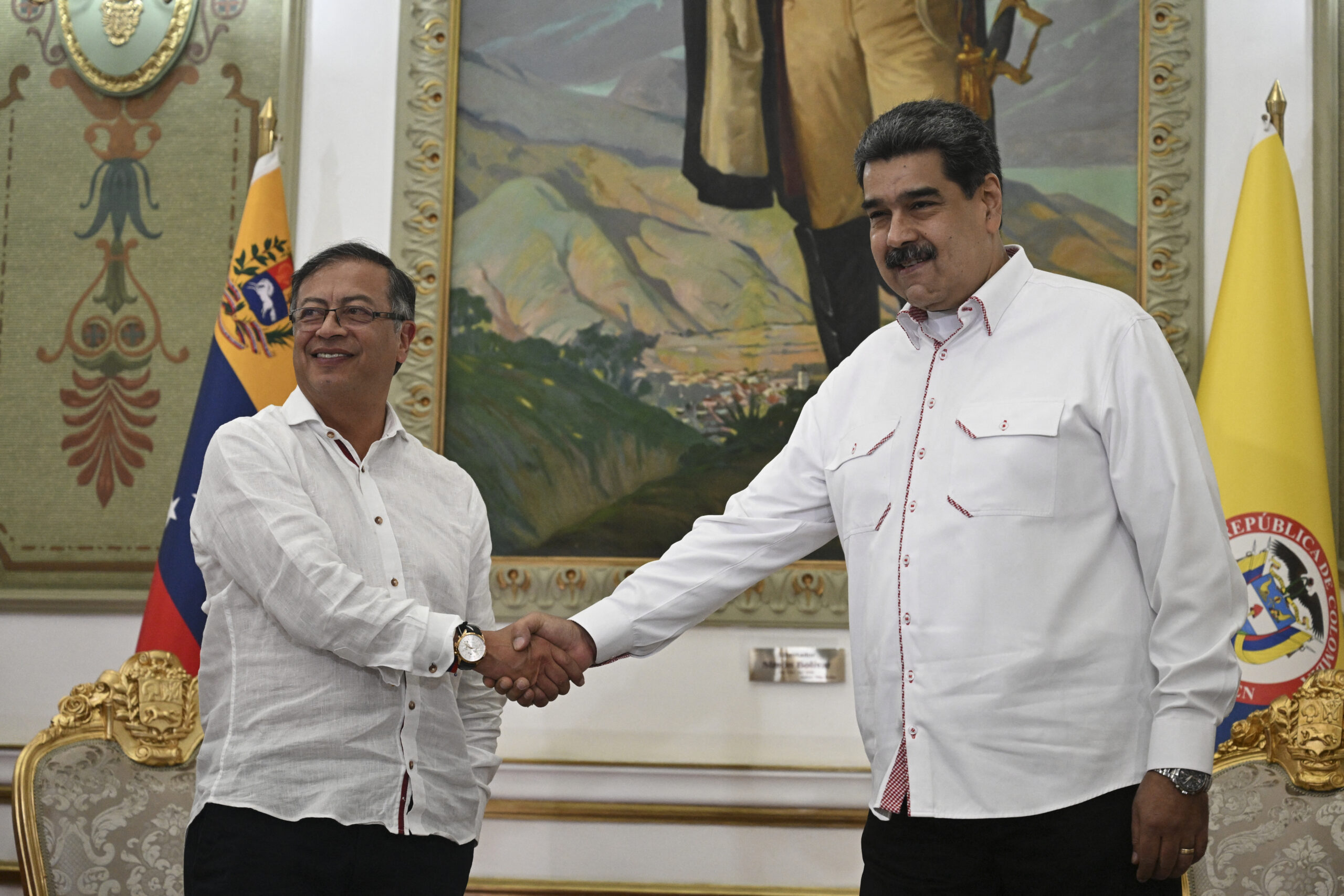
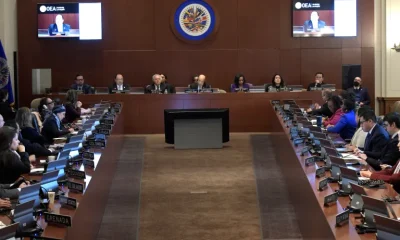
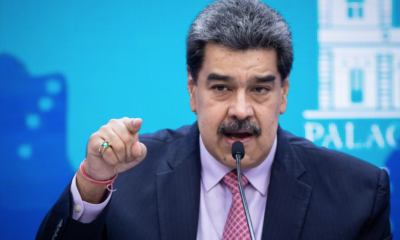
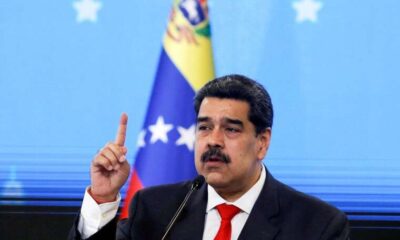
Venezuelan President Nicolas Maduro’s government will resume talks with the opposition Friday after more than a year in a bid to resolve a political crisis that has gripped the country since a contested 2018 election.
Formal negotiations between the two sides last took place in October 2021 in Mexico, and international efforts have mounted in recent months to get the talks back on track.
The opposition is seeking free and fair presidential elections, next due in 2024, while Caracas wants the international community to recognize Maduro as the rightful president and lift sanctions.
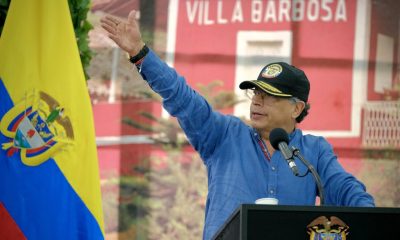
“Dialogue between Maduro’s government and the Venezuelan opposition will resume on the 25th and 26th of November,” Colombia’s President Gustavo Petro wrote on Twitter.











Venezuela opposition leader Juan Guaido’s office, however, tweeted that “information about a possible agreement and restart of the negotiations will be announced by official sources,” or by “the facilitating country, Norway.”
“Speculation hinders the possibility of a deal,” the office said.
While Colombia’s Petro did not specify where the talks would take place, a Venezuelan opposition source close to the negotiations told AFP the delegations would meet in Mexico City on Friday.
Venezuela was already facing a severe economic crisis and a brutal government crackdown on protests when a contested presidential election in 2018 plunged it into a political impasse.
Maduro declared himself the victor of the poll, which was widely seen as fraudulent, prompting massive protests.
Meanwhile, almost 60 countries, including the United States, recognized opposition leader Guaido as Venezuela’s acting president.
The US and the European Union imposed painful sanctions on Venezuela, worsening an economy that has seen roaring inflation in recent years, prompting millions to flee the country.
One measure prevented Venezuela from trading its crude oil — which accounted for 96 percent of the country’s revenues — on the US market.
Ukraine war sparks new impetus
After two prior negotiation efforts failed, the most recent round of talks between the government and opposition started in August 2021 in Mexico.
However, Maduro suspended the negotiations two months later in retaliation for the extradition to the United States by Cape Verde of Alex Saab, a Colombian national accused of acting as a money launderer for the Venezuelan socialist leader.
Earlier this month, negotiators for both sides met in Paris under the mediation of French President Emmanuel Macron.
International efforts to resolve the Venezuelan crisis have gained strength since Russia’s invasion of Ukraine and the pressure it has placed on global energy supplies.
US President Joe Biden’s administration announced in May it would ease some sanctions as energy prices surged due to the war.
At the same time, Guaido’s influence has ebbed, and he has lost key allies both at home and in the region, where many countries have since elected leftist presidents.
Colombia’s Petro has become a new actor in the talks since becoming his country’s first leftist president in August.
He has worked to improve his country’s relationship with Venezuela, resuming diplomatic ties for the first time since 2019, when former president Ivan Duque refused to recognize Maduro’s election.
Venezuela is now also hosting peace talks between the Colombian government and the last official rebel group in the country, the National Liberation Army.





























































International
Pilot killed and two Pennsylvania state troopers injured in mid-air collision

A pilot was killed and two Pennsylvania state police officers were injured when a Cessna 150 airplane collided with the helicopter they were traveling in during a routine training exercise at a regional airport in the state.
Pennsylvania Governor Josh Shapiro identified the officers as Corporal Bryce Corman and Trooper Jason Mills, members of the Pennsylvania State Police aviation unit. Both are expected to recover from their injuries, according to ABC.
The county coroner’s office identified the pilot as 57-year-old Paul Sokoloski.
George Bivens, acting commissioner of the Pennsylvania State Police, said the collision occurred at around 6:50 p.m. Wednesday. The helicopter was flying several feet above a grassy area near a runway at Carlisle Regional Airport when the small plane approached from behind.
According to investigators, the Cessna suddenly veered to the right moments before the collision, striking the helicopter’s tail rotor before also hitting its main rotor.
The airplane crashed a short distance away and broke into several pieces, while the helicopter lost its tail and other components before crashing on its side.
Police said Corporal Corman opened a window and helped Trooper Mills escape from the helicopter because they feared the aircraft could catch fire.
The Federal Aviation Administration and the National Transportation Safety Board are investigating the circumstances surrounding the crash.
International
Argentina’s Milei Links Low Birth Rates to Abortion and Feminism

Argentine President Javier Milei on Thursday blamed feminism and the legalization of abortion for the country’s declining birth rate, arguing that the demographic trend is creating economic and pension-system challenges.
“We are paying a very high price for the madness of the green scarves,” Milei said during a speech at the Council of the Americas in Buenos Aires, referring to the symbol associated with the feminist movement and the campaign for legal abortion in Argentina.
According to Milei, Argentina is failing to reach the population growth and birth rates needed to maintain demographic replacement.
He also linked the decline in births to future challenges for the country’s pension system and workforce.
“That passion for killing children in the mother’s womb is costing us in terms of growth and pensions. It is also costing us in terms of human capital,” the president said.
Milei has consistently opposed abortion, which has been legal in Argentina since 2020. The law was considered a major victory for the feminist movement across Latin America at the time of its approval.
In February 2024, lawmakers from Milei’s La Libertad Avanza (LLA) party introduced a bill seeking to repeal voluntary abortion legislation.
Under Argentina’s current law, abortion is legal, safe and free of charge up to the 14th week of pregnancy. After that period, it is permitted when the pregnancy poses a risk to the woman’s life or health, or when it resulted from rape.
Milei has repeatedly criticized abortion
The Argentine president has also criticized abortion and feminism in international forums. During his speech at the World Economic Forum in Davos in January 2024, he attacked the feminist movement and denounced what he described as the “bloody agenda of abortion.”
His latest comments come amid growing concerns over Argentina’s demographic outlook and the potential long-term effects of declining birth rates on economic growth, the labor force and social security.
International
Virginia Police Arrest Salvadoran Man in Great Falls Woman’s Killing

Alexis Antonio Cedillos-Campos, 19, identified by federal officials as an undocumented immigrant from El Salvador, was arrested in connection with the death of Carmen Lizet Puch, 42, who was found dead Monday, the Fairfax County Police Department said.
Authorities said Cedillos-Campos and Puch were coworkers and were also involved in an “intimate relationship.”
“Our victim suffered numerous stab wounds in a truly brutal and indescribable manner,” Police Chief Kevin Davis said during a news conference Wednesday.
Investigators said surveillance video showed Cedillos-Campos at the restaurant where he and Puch worked, allegedly taking a fixed-blade knife, a pair of black latex gloves and a bottle of water before leaving.
“He left with the intent to harm and kill the victim,” Davis said.
Cedillos-Campos was arrested Wednesday morning in Maryland and confessed to the killing, according to Davis. He is awaiting extradition to Virginia. Authorities have not said whether he has an attorney representing him.
The Department of Homeland Security said Cedillos-Campos had previously been arrested by U.S. Customs and Border Protection in 2024 after allegedly crossing the U.S.-Mexico border illegally near El Paso, Texas.


Panama’s Geisha Coffee Retains Pure Ethiopian Genetics, Studies Find

Pilot killed and two Pennsylvania state troopers injured in mid-air collision

Argentina’s Milei Links Low Birth Rates to Abortion and Feminism

Virginia Police Arrest Salvadoran Man in Great Falls Woman’s Killing

Honduran Lawyer and Protected Witness in Angie Peña Case Shot Dead

Mexico and Guatemala Agree on Five-Point Binational Plan for 2027

France to Expel Two Iranian Diplomats Over Alleged Attack on French Officials

Heat wave puts more than 70 million Americans under alerts as temperatures near 46°C
France to Expel Two Iranian Diplomats Over Alleged Attack on French Officials
Honduran Lawyer and Protected Witness in Angie Peña Case Shot Dead
Virginia Police Arrest Salvadoran Man in Great Falls Woman’s Killing
Argentina’s Milei Links Low Birth Rates to Abortion and Feminism
Pilot killed and two Pennsylvania state troopers injured in mid-air collision
Mexico and Guatemala Agree on Five-Point Binational Plan for 2027
Panama’s Geisha Coffee Retains Pure Ethiopian Genetics, Studies Find
-
 International4 days ago
France to Expel Two Iranian Diplomats Over Alleged Attack on French Officials
-
 Central America3 days ago
Honduran Lawyer and Protected Witness in Angie Peña Case Shot Dead
-
 International3 days ago
Virginia Police Arrest Salvadoran Man in Great Falls Woman’s Killing
-
 International2 days ago
Argentina’s Milei Links Low Birth Rates to Abortion and Feminism
-
 International2 days ago
Pilot killed and two Pennsylvania state troopers injured in mid-air collision
-
 International4 days ago
Mexico and Guatemala Agree on Five-Point Binational Plan for 2027
-
 Central America2 days ago
Panama’s Geisha Coffee Retains Pure Ethiopian Genetics, Studies Find