
International
Green tech fights for limelight at CES gadget fest
January 7th | By AFP | Glenn Chapman |
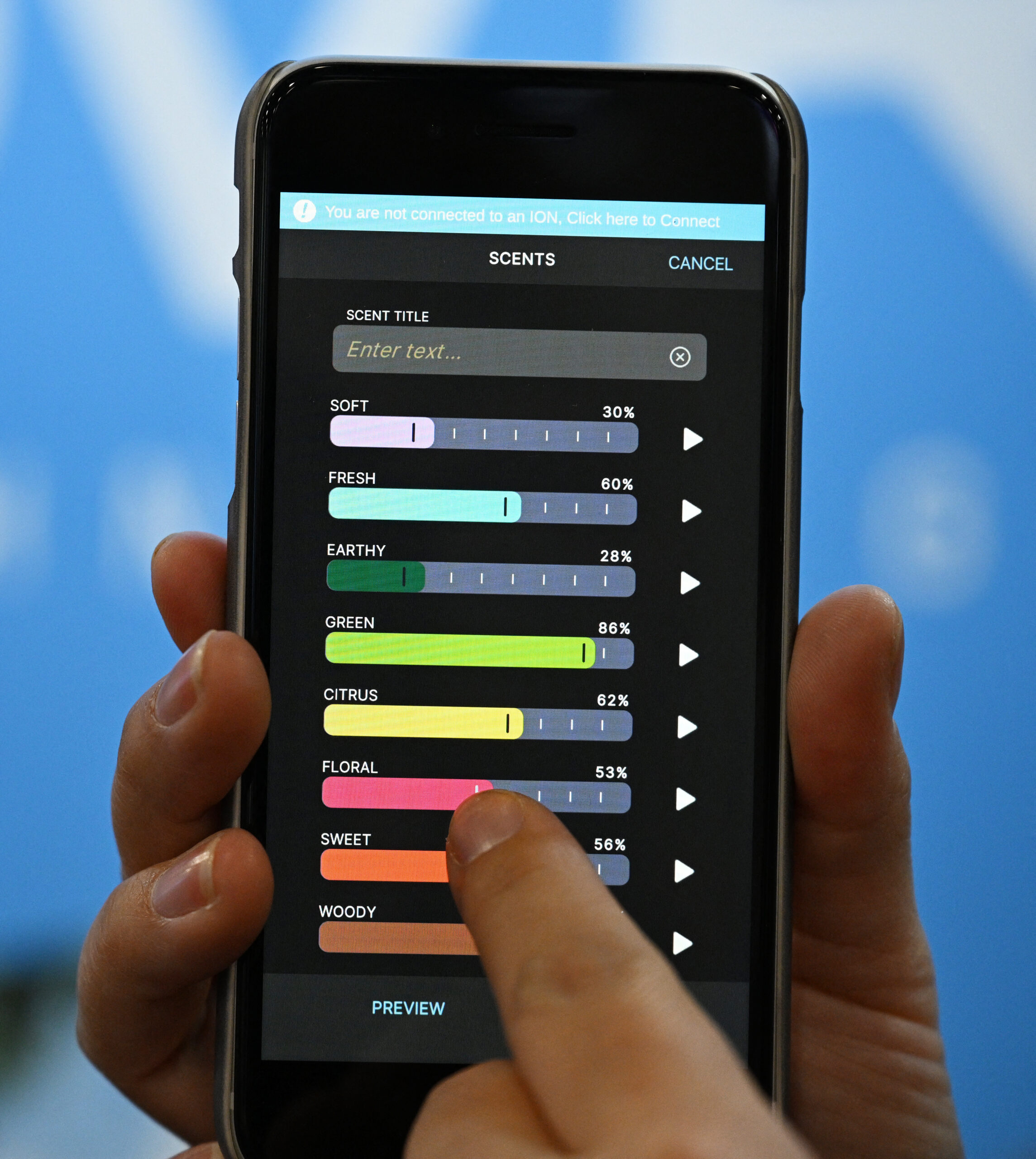
At the CES tech megashow in Las Vegas, it is unusual to see an entrepreneur hold up a plant and present it as the latest breakthrough in consumer technology.
But for NeoPlants co-founder Patrick Torbey, the gathering held annually just after the new year should not be thought of as “only about machine technology and electronics.”
“It’s also about natural technology that we can leverage using these really cool engineering techniques,” Torbey told AFP.
NeoPlants, a Paris-based startup, was showing off a bioengineered plant capable of purifying indoor air of toxic pollutants “by doing the work of 30 regular houseplants,” according to its website.









Technology geared towards helping the environment has steadily increased in number at CES since the Sin City expo began fifty years ago.
But observers often doubt the seriousness of the consumer tech industry’s commitment to protect the environment, with all the real excitement focused on smart TVs and robots instead of the more complicated and less profitable project of saving the planet.
“Until it really, really matters for consumers, it’s just going to kind of be this trend that’s over here on the side,” said Ben Arnold, research firm NPD’s consumer electronics analyst.
“As somebody who studies the market, I’m just not seeing yet where (environmental-minded tech) makes a difference in terms of units and dollars,” he added.
Ran Roth, the head of tech company Sensibo, agreed that successful devices were the ones that made financial sense and believed his products did just that.
Roth’s devices use artificial intelligence and sensors to better manage air conditioning, an important concern in the often blistering heat of Israel, where his company is based.
Sensibo’s sensors measure humidity and temperature, and use software that learns a user’s habits, thereby saving energy and money.
Roth said new technology should have a “path to profitability” if it is going to thrive, a recurrent shortcoming of so called green tech that so often fails to be bankable.
“What is good about smart thermostats is that they are readily available and they offer the highest return on investment,” said Roth, who called air conditioning a “human right.”
‘What matters’
But as the climate emergency worsens, industry observers said major tech companies were under more pressure to commit to sustainability goals.
“We have seen the public naming and shaming of organizations who indulged in greenwashing over the past year,” said Abhijit Sunil of Forrester Research.
“So a lot of organizations are kind of careful in what they mention as their sustainability initiatives and they are now as transparent as possible,” he said.
Sunil said that the real advances on the environment were to be seen in the industrial sector, agreeing that the consumer gadget business may be a step behind when it came to doubling down on going green.
Product design, manufacturing and packaging with an eye on a company’s waste and carbon footprint were the low hanging fruits when it came to environment technology, he said.
One such company, ACWA Robotics, won plaudits at CES for a robot dedicated to the detection and prevention of water leaks in underground pipes.
In France, where the startup is located, 20 percent of drinking water is estimated to be lost due to leaky pipes.
Fighting for the environment “is the challenge of a century,” ACWA Robotics engineer Elise Lengrand told AFP.
“I mean sure it’s really cool to make big TVs and stuff, but this is really what matters,” she said.






International
Mexico City Mayor Invites U2 to Perform at Iconic Zócalo Plaza
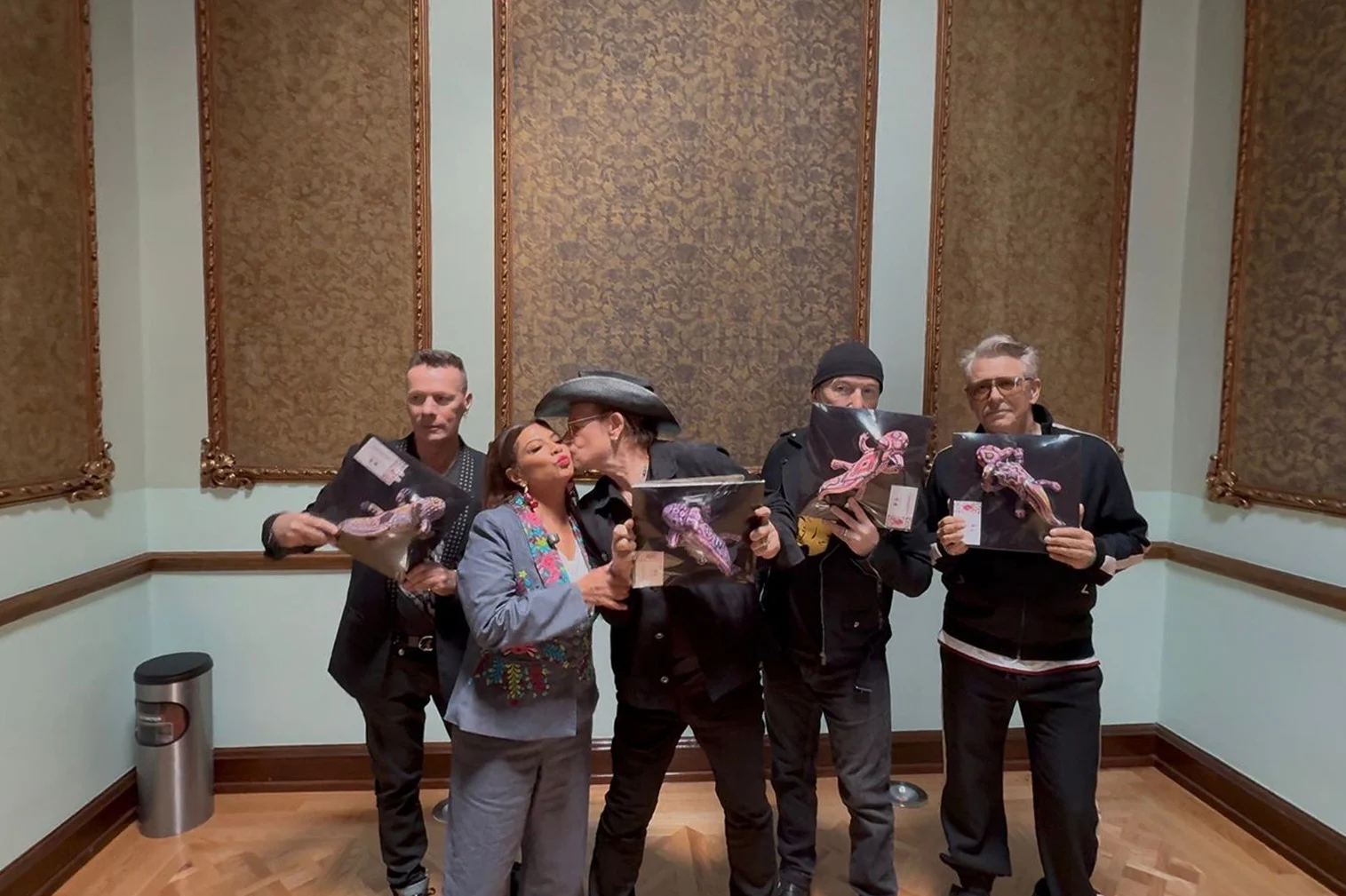
Irish rock band U2, which spent Tuesday and Wednesday filming a new music video for its song Street of Dreams in the Historic Center of Mexico City, received an invitation to perform at the capital’s iconic Zócalo square from Mayor Clara Brugada.
Brugada shared the invitation through social media posts accompanied by photos and a video showing her meeting with the band members.
“This is an invitation for you to perform in our wonderful public square, the Zócalo. You are welcome here, and we would love to have you,” Brugada said in the video while handing a document to Bono, the band’s lead singer.
Bono responded by saying that the group would like “to begin its new tour in Mexico City.”
Referencing one of the band’s most famous songs, In the Name of Love, Brugada said she was greeting Bono along with The Edge, Adam Clayton and Larry Mullen Jr..
“Welcoming U2 to our capital means celebrating music, connection and the emotion that can be felt in every corner of this city,” Brugada wrote in one of her messages. “We are a city open to the world, vibrant and full of stories shared from the stage to the streets.”
She also described the Zócalo as “the country’s most important public square” and a cultural landmark for Latin America.
Over the years, the Zócalo has hosted massive concerts by internationally renowned artists and bands including Roger Waters, Paul McCartney, Manu Chao, Café Tacvba, Los Fabulosos Cadillacs, Los Tigres del Norte, La Maldita Vecindad, Silvio Rodríguez, Joan Manuel Serrat, Rosalía and Shakira, drawing hundreds of thousands of fans.
International
Marco Rubio Urges China to Help Restrain Iran Amid Gulf Tensions
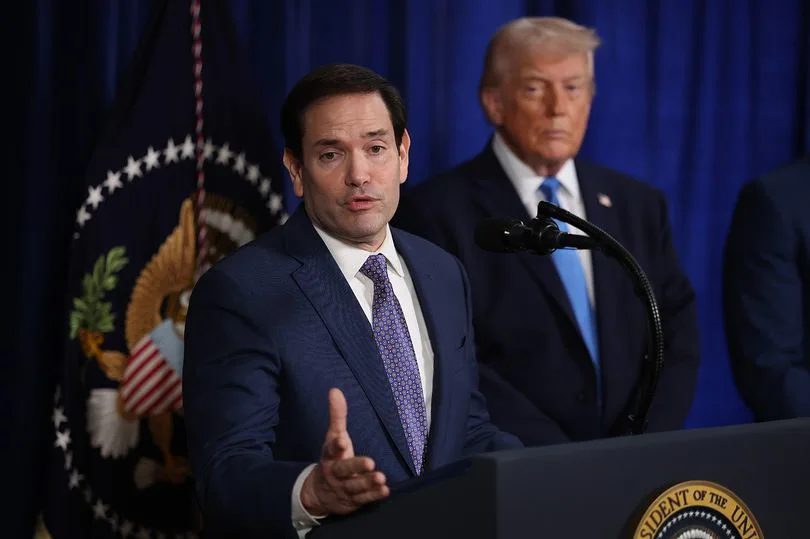
Marco Rubio said Wednesday that Washington hopes to persuade China to take a more active role in stopping Iran from escalating tensions in the Persian Gulf, arguing that the crisis directly threatens Asian commercial interests.
“It is in China’s interest to resolve this situation. We hope to convince them to play a more active role in getting Iran to stop what it is doing now and trying to do in the Persian Gulf,” Rubio said during an interview with journalist Sean Hannity on Fox News while traveling aboard Air Force One.
The top U.S. diplomat said the conflict and concerns over the possible disruption of the Strait of Hormuz have already affected China’s interests.
Rubio noted that “a Chinese cargo ship was struck over the weekend,” referring to the exchange of attacks reported last Friday between Iran and the United States.
The remarks come amid growing international concern over rising tensions in the region and the potential impact on global trade routes and energy supplies.
International
Trump floats Vance-Rubio potential Republican ticket for 2028 election
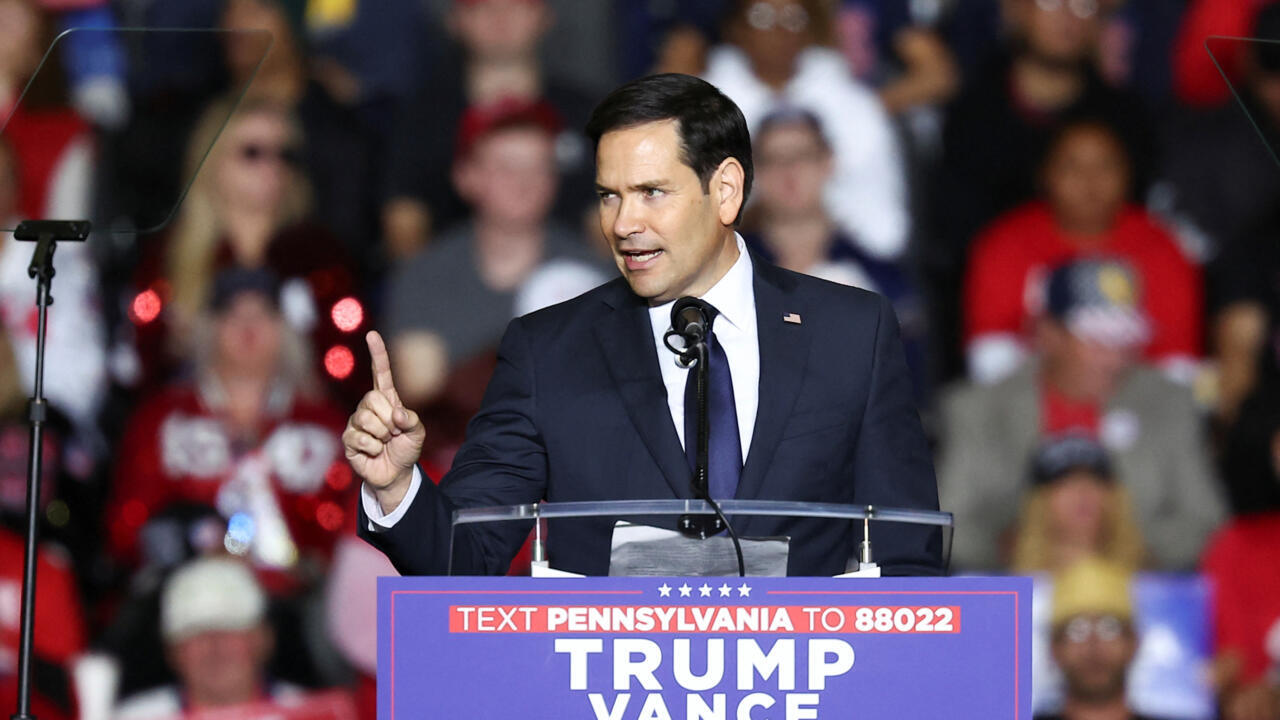
U.S. President Donald Trump suggested on Monday that Vice President JD Vance and Secretary of State Marco Rubiocould potentially form a Republican presidential ticket for the 2028 elections.
Speaking during a dinner with law enforcement officials as part of National Police Week, Trump publicly praised both officials and said they could make “an ideal team” for the next presidential race.
“Who likes JD Vance? Who likes Marco Rubio?” Trump asked attendees before adding that the pair “sound like a good combination.”
The president highlighted his vice president’s performance in office, stating that their current partnership has been highly effective. “JD is perfect, that has been a perfect formula,” Trump told reporters later.
He further suggested that a Vance-Rubio pairing could represent a strong presidential and vice-presidential ticket, although he stopped short of offering any formal endorsement.
“I think it sounds like a presidential candidate and a vice-presidential candidate,” he said, while clarifying that his remarks should not be interpreted as an official backing of any future campaign.
So far, neither Vance nor Rubio has publicly confirmed any intention to run in the 2028 presidential election.
Rubio previously sought the Republican nomination in 2016 but withdrew after losing the primary race to Trump. Later, in a December 2025 interview with Vanity Fair, he said he would be among the first to support Vance if he decided to run for the White House.
Vance, meanwhile, has recently dismissed speculation of any political rivalry with Rubio amid growing discussion about potential future GOP leadership.

Mexico City Mayor Invites U2 to Perform at Iconic Zócalo Plaza

Marco Rubio Urges China to Help Restrain Iran Amid Gulf Tensions

Panama confirms drug contamination of El Salvador coffee shipment occurred on its territory
Tec de Monterrey honors one of its students for his contribution to nanotechnology in medicine

Defense Minister commends salvadoran soldier for Central American Cross Country victory

Extension of the state of emergency approved in southern Chile
-
 International2 days ago
Trump floats Vance-Rubio potential Republican ticket for 2028 election
-
 International5 days ago
Russia Accuses Ukraine of Violating Victory Day Truce
-
 Central America2 days ago
Panama confirms drug contamination of El Salvador coffee shipment occurred on its territory
-
 International6 hours ago
Marco Rubio Urges China to Help Restrain Iran Amid Gulf Tensions
-
 International6 hours ago
Mexico City Mayor Invites U2 to Perform at Iconic Zócalo Plaza