
International
Lula has soldiers removed from presidential residence after riots
January 17 | By AFP |
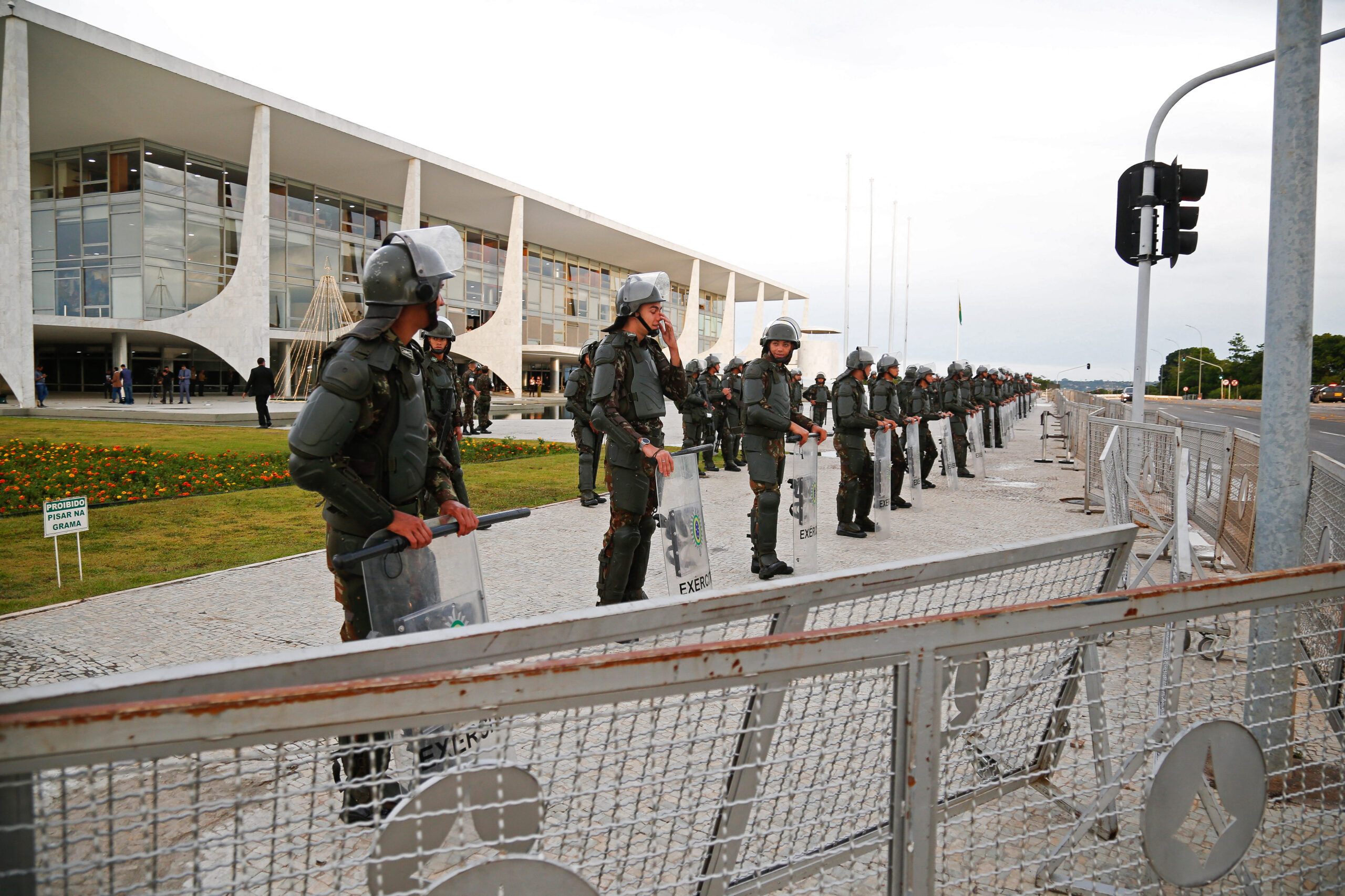
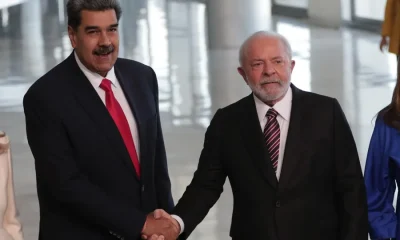
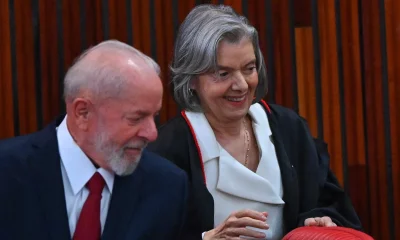
Brazil’s President Luiz Inacio Lula da Silva had 40 soldiers removed from the detail at his presidential residence after vowing a staffing cleanup following anti-government riots on January 8.
Just days after the attack on the presidential palace, Supreme Court and Congress by backers of far-right ex-president Jair Bolsonaro, Lula said the rioters likely had inside help.
He ordered a thorough staffing review, saying he was “convinced that the door of the Planalto (presidential) palace was opened for people to enter because there are no broken doors.”
In a notice published in the official gazette Tuesday, it was announced that 40 soldiers have been removed from the presidential detail at Alvorada palace, where Brazil’s presidents live.









Leftist Lula beat Bolsonaro by a razor-thin margin in October elections that followed a vitriolic and divisive campaign.
As he marked a week in office, thousands broke into the seats of power on January 8, smashing furniture, damaging priceless works of art and leaving behind graffiti messages calling for a military coup against Lula.
The president said last week that any “radical bolsonarista” found still working for the government would be dealt with, and cited media reports of alleged threats made by staffers inherited from the previous administration.
“How can I have a person outside my office who might shoot me?” asked Lula, who said members of the security services may have been involved in the uprising.
Bolsonaro, who left Brazil two days before Lula’s inauguration and is in the United States, is being investigated on suspicion of instigating the uprising.
He has denied any link to the riots.
In a video published Monday, Bolsonaro expressed “regret” over the events, which he described as “unbelievable.”



















































International
Artemis II crew prepares for Earth return and splashdown recovery
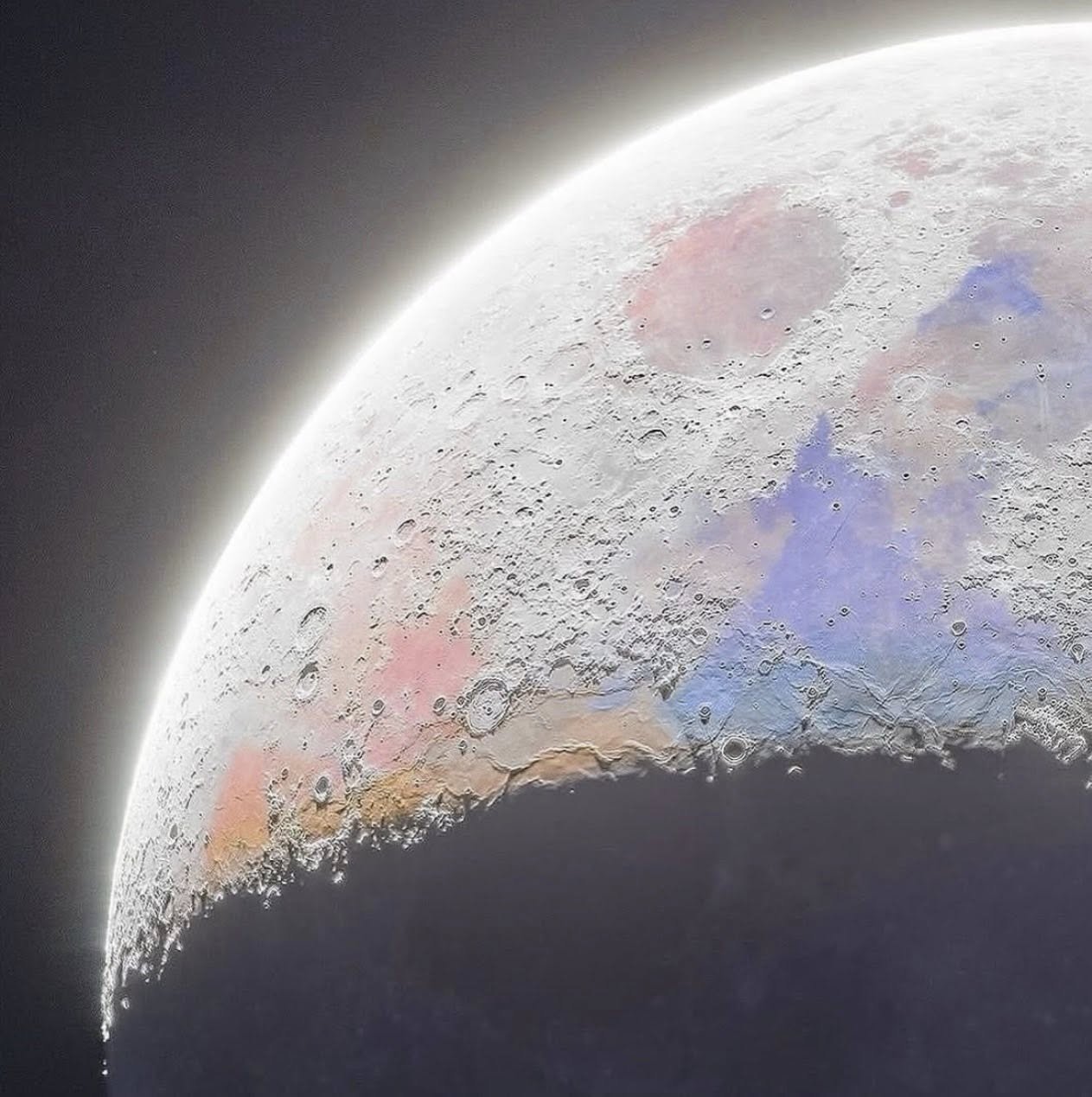
Astronauts from the Artemis II mission are expected to be extracted from the Orion spacecraft approximately two hours after splashdown, scheduled for 20:07 UTC this Friday (6:07 p.m. in San Salvador), according to NASA.
Following recovery, a rescue team will transport the crew by aircraft to the USS John P. Murtha. Once onboard, they will undergo medical evaluations before boarding another flight to the Johnson Space Center.
On Thursday, NASA astronauts Reid Wiseman, Victor Glover, and Christina Koch, along with Canadian astronaut Jeremy Hansen from the Canadian Space Agency, continued preparations for their return to Earth.
Their activities include stowing equipment used during the mission, securing cargo and storage compartments, and installing and adjusting crew seats to ensure all items are properly fastened. The crew will also review the latest weather updates, recovery operations status, and reentry timeline, while preparing for post-landing procedures.
At 21:53 UTC (9:53 p.m. in San Salvador), Orion’s thrusters are scheduled to perform a second trajectory correction maneuver, refining the spacecraft’s path back to Earth. During this operation, Hansen will monitor guidance, navigation, and propulsion systems.
NASA explained that during Friday’s reentry, the service module will separate about 20 minutes before Orion reaches the upper atmosphere southeast of Hawaii. If necessary, a final trajectory adjustment will fine-tune the flight path before the capsule begins a series of roll maneuvers to safely distance itself from jettisoned components.
Just before atmospheric interface, Orion will reach a peak speed of approximately 3,800 km/h. As it descends to about 400,000 feet (around 121.9 km), communications will be interrupted for approximately six minutes due to plasma formation around the capsule during peak heating.
NASA expects the crew to experience up to 3.9 G during a nominal reentry profile. After exiting the blackout phase, the capsule will jettison its forward bay cover. Drogue parachutes will deploy at around 22,000 feet (6.7 km), followed by the three main parachutes at approximately 6,000 feet (1.8 km).
Artemis II marks NASA’s first crewed flight test of the Space Launch System (SLS) rocket and Orion spacecraft around the Moon. The mission aims to validate capabilities for deep space human exploration and lay the groundwork for future long-term scientific missions on the lunar surface.
International
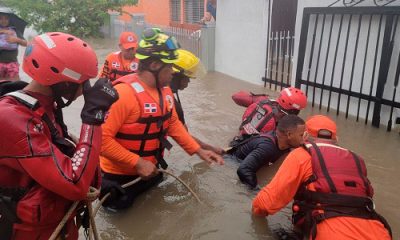
Flooding in Dominican Republic leaves child dead and thousands affected
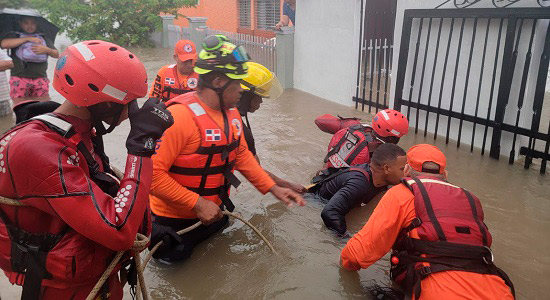
A two-year-old girl died after a wall of her home collapsed amid severe flooding that struck Dominican Republic on Wednesday. The heavy rains also caused power outages, school closures, and reduced working hours across affected areas.
Authorities issued preventive alerts in 15 of the country’s 31 provinces due to intense rainfall accompanied by thunderstorms that began Tuesday night.
Juan Méndez, director of the Center of Emergency Operations (COE), confirmed the child’s death to the press. The incident occurred in Santo Domingo Oeste, part of the capital region.
According to Red Cross officials, the girl died when a wall in her home collapsed following a landslide triggered by hours of heavy rain.
President Luis Abinader provided an update from the COE, stating that government agencies had been mobilized since early morning, particularly in Greater Santo Domingo, to protect lives and minimize material damage.
Floodwaters left several vehicles submerged, while others were swept away by strong currents. Authorities estimate that around 250,000 families have been affected by the flooding.
Earlier, Public Administration Minister Sigmund Freund announced reduced working hours, encouraging remote work for those facing transportation difficulties, while maintaining in-person operations for essential services.
International
Bill Gates to testify before Congress over Epstein connections

Bill Gates is set to testify on June 10 before a congressional committee in United States investigating links connected to the late sex offender Jeffrey Epstein, a source familiar with the matter told AFP on Tuesday.
The Microsoft co-founder is among several high-profile figures named in documents released by the Department of Justice, which detail alleged close associations, questionable financial dealings, and private photographs involving Epstein.
According to a spokesperson cited by Politico, Gates “welcomes” the opportunity to appear before the committee. The representative emphasized that Gates “never attended or participated in any illegal activities with Epstein” and is prepared to answer questions to support the investigation.
The Bill & Melinda Gates Foundation did not immediately respond to AFP’s request for comment.
In late February, Gates told members of his foundation’s board that his association with Epstein was a “huge mistake.” He has consistently denied any involvement in the financier’s criminal activities. Epstein died by suicide in prison in 2019 while awaiting trial on charges of sex trafficking minors.
“I did nothing illegal. I saw nothing illegal,” Gates said, according to a recording obtained by The Wall Street Journal.
Gates acknowledged that his relationship with Epstein began in 2011, three years after Epstein pleaded guilty to soliciting prostitution from a minor.
A draft email written by Epstein and released by the Department of Justice referenced alleged extramarital relationships involving Gates. The message, which was apparently never sent, claimed that Epstein had helped “Bill” obtain medication related to encounters with Russian women.
Gates admitted to having had two extramarital affairs but denied any involvement with Epstein’s victims.


Artemis II crew prepares for Earth return and splashdown recovery

Flooding in Dominican Republic leaves child dead and thousands affected

Seven arrested in Guatemala over disappearance of six near Mexico border
Tec de Monterrey honors one of its students for his contribution to nanotechnology in medicine

Defense Minister commends salvadoran soldier for Central American Cross Country victory

Extension of the state of emergency approved in southern Chile
-

 International2 days ago
Trump pauses strikes on Iran, extends ultimatum by two weeks
-

 International2 days ago
Former Trump allies call for removal, cite 25th Amendment amid Iran threats
-
 Central America4 days ago
Guatemala extends state of prevention and expands it to new regions
-
 International4 days ago
NASA’s Orion sets record as farthest crewed mission from Earth
-

 Central America4 days ago
Honduras coffee exports jump nearly 30% in March despite price drop
-
 International4 days ago
WHO worker killed as Israeli forces fire on Gaza medical convoy
-

 Central America2 days ago
Gunfire and protests mark controversial rector reelection at Guatemala’s USAC
-

 Central America5 days ago
Costa Rica urges China to halt actions against Panama-flagged vessels
-

 International2 days ago
Bill Gates to testify before Congress over Epstein connections
-
International6 hours ago
Artemis II crew prepares for Earth return and splashdown recovery
-
 International5 days ago
Petro accuses top guerrilla leader of bribing officers to evade military strikes
-
 International6 hours ago
Flooding in Dominican Republic leaves child dead and thousands affected
-
 Central America1 day ago
Seven arrested in Guatemala over disappearance of six near Mexico border