
International
Indigenous woman wins award for campaign against mining companies in the Amazon
May 25 |
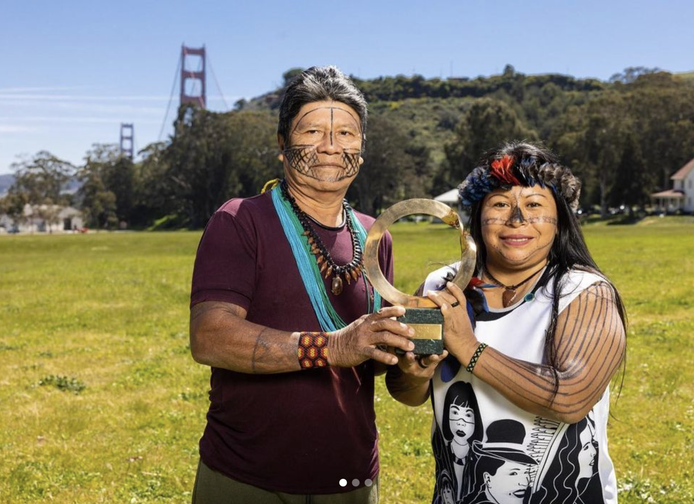
Alessandra Korap Munduruku, who spearheaded a campaign that forced large mining corporations to respect the indigenous territory of her people in Brazil’s Amazon rainforest, received the Goldman Environmental Prize.
The activist is among six 2023 winners from around the world in recognition of her achievements and on-the-ground environmental leadership awarded by the San Francisco-based Goldman Foundation.
In May 2021, Anglo American AAL.L agreed to withdraw 27 exploration applications for mining activity on indigenous lands, according to the foundation, including the territory of the Sawré Muybu – where Alessandra Munduruku is from – an area of 1,600 square kilometers in the Tapajós River rainforest.
“The award recognizes our struggle and tells the world ‘Here we are.’ Multinational companies cannot enter without consulting indigenous peoples,’” he told Reuters by phone.









Anglo American did not immediately respond to a request for comment.
The Goldman Foundation said the company told the Brazilian government at the time that it would abandon prospecting applications because of concerns raised by indigenous communities.
“Alessandra’s successful campaign represents a significant shift in private sector accountability around destructive mining in Brazil amid an intense government push for extraction in the Amazon,” the foundation said in a statement.
Following Anglo American’s decision, other major mining companies announced they would also withdraw prospecting permits on indigenous lands in Brazil, the foundation said, a fact corroborated by Brazilian lobby group Ibram.
The Sawré Muybu’s territory is still threatened by mining companies because it has not yet been formally recognized as an indigenous reserve. Alessandra called on the leftist government of President Luiz Inácio Lula da Silva to process the recognition urgently.
Alessandra, 38, said she will use the prize money to finish her university studies and become a lawyer.






International
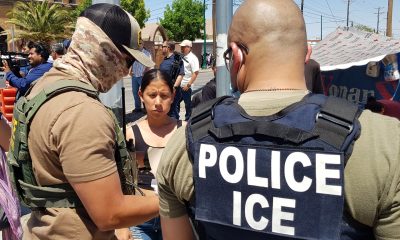
ICE agent arrested in Texas over shooting of Venezuelan migrant in Minnesota
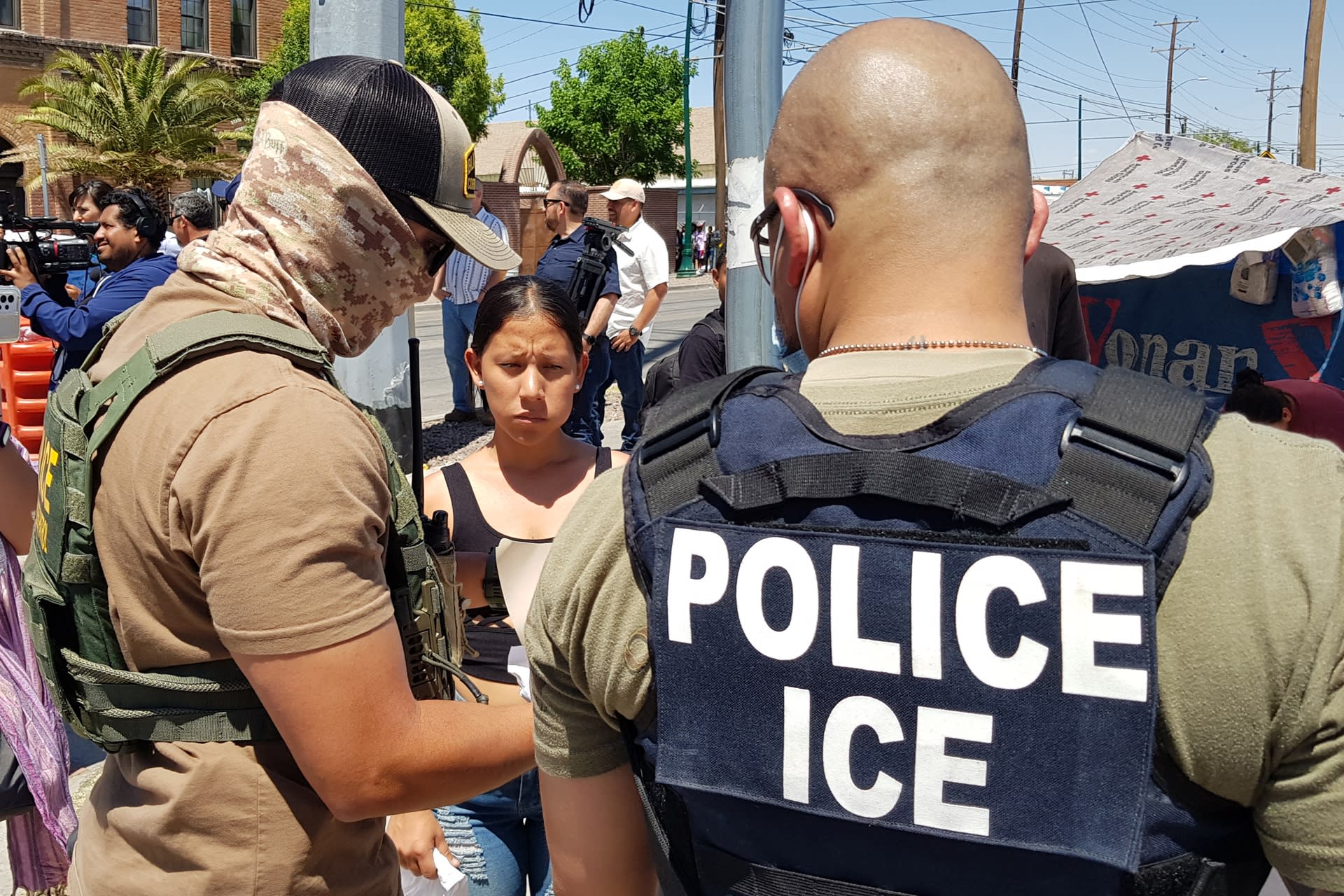
U.S. authorities arrested an Immigration and Customs Enforcement (ICE) agent on Friday in Texas after he was accused of shooting a Venezuelan migrant in Minnesota earlier this year and later providing false information about the incident.
The suspect, identified as Christian Castro, faces four counts of second-degree assault, along with an additional charge related to filing a false official report. He was taken into custody after investigators from the Minnesota Bureau of Criminal Apprehension located him, according to a statement from the Hennepin County Attorney’s Office.
The case stems from a January operation carried out by ICE during which Castro shot Julio César Sosa, a Venezuelan migrant, in the leg. Prosecutors allege that the agent later submitted a misleading account of the incident, claiming that Sosa and another migrant had attacked officers with a shovel and a broomstick.
However, investigators say that video evidence and further findings contradicted that version of events, leading to the dismissal of charges initially brought against the migrants by federal prosecutors.
ICE’s acting director, Todd Lyons, acknowledged in February that agents involved in the incident had given “false sworn testimony” about what occurred.
Hennepin County Attorney Mary Moriarty described Friday’s arrest as a “critical step forward” in the judicial process and reaffirmed that the investigation remains ongoing.
Internacionales
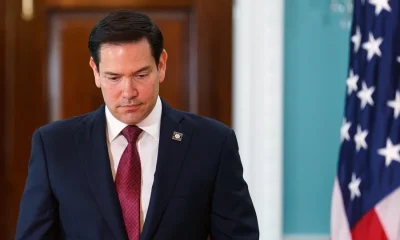
Rubén Gallego says U.S. policy may push for Cuba regime change under Trump administration
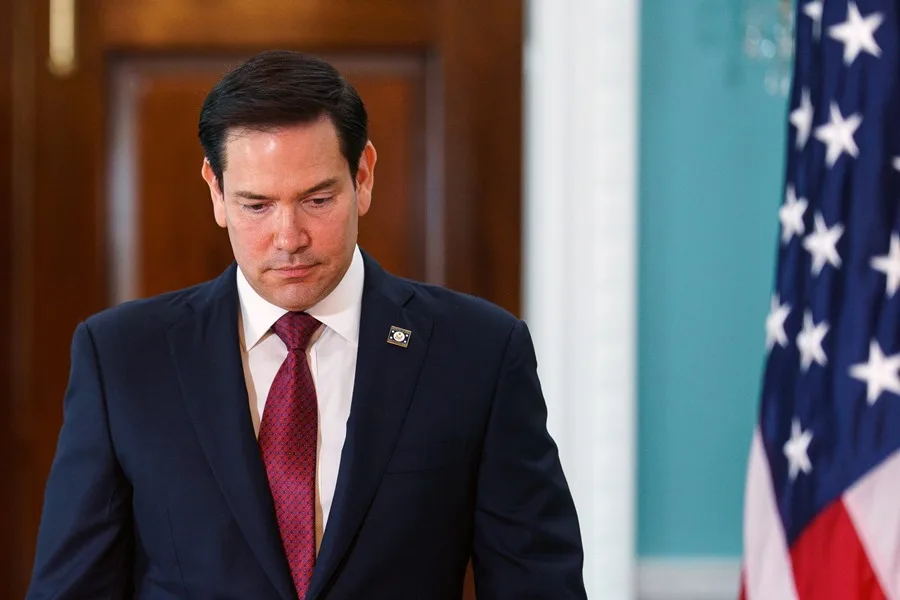
Democratic Senator Rubén Gallego said on Friday in Madrid that U.S. Secretary of State Marco Rubio has an “obsession” with Cuba and suggested that the administration of President Donald Trump is determined to change the Cuban government by any means necessary.
Speaking in Spanish during a meeting with journalists at the Elcano Royal Institute for International and Strategic Studies, Gallego said he believes there could be an attempt to alter the Cuban government, potentially through military or other non-democratic means.
“I think there will be an attempt to change the government of Cuba, it could be through the military or in another way,” said Gallego, who is of Mexican-Colombian origin.
The Arizona senator argued that Cuba does not represent a threat to the United States, describing it as “a very poor island of nine million people.” However, he acknowledged the significant political influence of Cuban-Americans and of Secretary of State Marco Rubio within the current Trump administration.
Gallego also expressed opposition to U.S. military interventions aimed at overthrowing foreign governments, stating that such actions are unacceptable, particularly when their objective is regime change.
He noted that “almost 99% of Democrats” oppose any military intervention in Cuba.
The senator also referred to the U.S. operation to capture Venezuelan President Nicolás Maduro on January 3, stating that although Maduro is “a horrible and very corrupt man,” this does not justify overthrowing governments through force.
“If we start arguing that a president is a criminal, what prevents China from saying the same about Taiwan or other nations?” he warned.
Gallego further described the political transition process in Venezuela as a “failure,” arguing that little has changed in terms of governance outcomes.
“We went from one dictator to another, so from a geopolitical and strategic point of view it has been a failure, until we see whether Venezuela achieves a real democratic transition,” he said, referring to Maduro’s replacement by Delcy Rodríguez.
International
U.S. classifies CV and PCC as terrorist groups in major policy shift
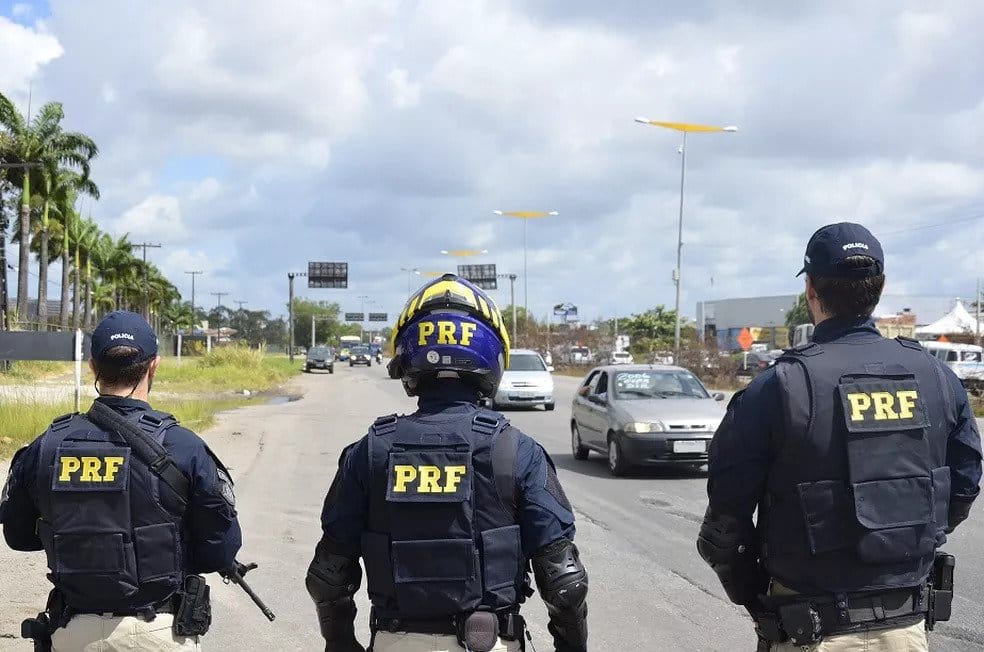
The United States government announced on Thursday that it will add the Brazilian criminal organizations Comando Vermelho (CV) and Primeiro Comando da Capital (PCC) to its list of Foreign Terrorist Organizations (FTO), a designation set to take effect on June 5, 2026.
The State Department justified the decision by stating that both groups are among the most powerful criminal organizations in Brazil and accused them of coordinating violent attacks against police officers, public officials, and civilians.
The designation comes just days after Brazilian senator and presidential hopeful Flávio Bolsonaro directly asked U.S. President Donald Trump to classify these groups as “narco-terrorist” organizations during a visit to the White House.
Bolsonaro, who is running in Brazil’s upcoming presidential election in October, has made tougher action against organized crime and prison-based gangs a central part of his campaign platform.
He is part of a political dispute with current Brazilian President Luiz Inácio Lula da Silva, who has opposed the U.S. classification, warning it could open the door to potential foreign military intervention in Brazilian territory.
The Comando Vermelho and Primeiro Comando da Capital emerged in Brazilian prisons during the 1970s and have since expanded their influence, now controlling extensive criminal activities including drug trafficking, extortion, smuggling, and other illicit operations.
According to security experts and Brazilian authorities, both organizations have tens of thousands of members and support networks spread across multiple states in the country.
The U.S. measure aims to increase financial and operational pressure on these groups by restricting funding sources, limiting international mobility, and expanding cooperation in security enforcement efforts.

Honduras Could Lose All Its Forests by 2045 if Current Deforestation Rate Continues, Study Warns

ICE agent arrested in Texas over shooting of Venezuelan migrant in Minnesota

Rubén Gallego says U.S. policy may push for Cuba regime change under Trump administration
Tec de Monterrey honors one of its students for his contribution to nanotechnology in medicine

Defense Minister commends salvadoran soldier for Central American Cross Country victory

Extension of the state of emergency approved in southern Chile
-
 International2 days ago
U.S. classifies CV and PCC as terrorist groups in major policy shift
-
 International4 days ago
Diplomatic Talks Continue as Iran Accuses U.S. of Ceasefire Violations
-
 International4 days ago
Omar García Harfuch Announces Arrest of “El Chapo’s” Nephew
-
 International3 days ago
Mexico Denies Interpol Red Notice Against Sinaloa Governor Rubén Rocha Moya
-
 Central America5 days ago
Opposition leader highlights migration crisis in Panama speech
-
 International4 days ago
Rubio and Lavrov Hold Talks After Large-Scale Russian Assault on Ukraine
-
 Central America3 days ago
Guatemala Dismantles Largest Cocaine Lab Found in 15 Years Near Mexico Border
-
 International2 days ago
U.S.–Iran pre-agreement aims to de-escalate tensions and secure key trade route
-
 Internacionales1 day ago
Rubén Gallego says U.S. policy may push for Cuba regime change under Trump administration
-
 International1 day ago
ICE agent arrested in Texas over shooting of Venezuelan migrant in Minnesota
-
 International5 days ago
Ecuador’s Noboa vows to continue “war” on criminal groups
-
 International3 days ago
Interpol Operation Leads to 8,700 Arrests and Massive Drug Seizures Across Latin America
-
 Central America1 hour ago
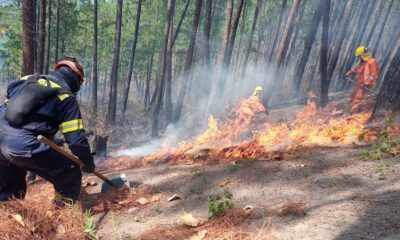
Honduras Could Lose All Its Forests by 2045 if Current Deforestation Rate Continues, Study Warns