
International
Brazil records hottest day in its history with 44.8 C
November 21 |
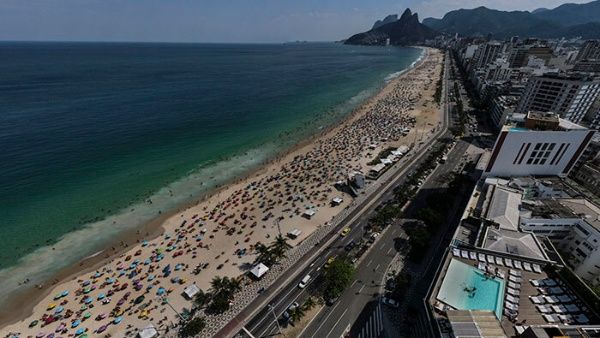
Brazil’s National Institute of Meteorology (Inmet) reported on Monday that the country recorded a new temperature record on Sunday by reporting 44.8 degrees Celsius, in the municipality of Araçuai, in the state of Minas Gerais.
Brazil has been hit in recent days by a wave of intense heat, causing several cities in the South American country to report the highest temperature in its history.
In the middle of the eighth heat wave of 2023, the municipality of Sao Romao, in the state of Minas Gerais, reached a record temperature of 43.4 degrees Celsius, the same record was reported in the municipalities of Porto Murtinho and Corumbá, both in the state of Mato Grosso.
Sunday was precisely the tenth day of intense heat affecting all of southeastern Brazil, which was only relieved by the rains of the last two days.









At the end of last week in Rio de Janeiro thermometers reached 42.6 degrees Celsius, although the thermal sensation reached 53.5 degrees Celsius in some neighborhoods, the highest record of the year.
The previous heat record in the South American country was recorded on November 24, 2005 in the municipality of Bom Jesus, in the state of Piauí, when the temperature was 44.7 degrees Celsius.
The latest heat wave in Brazil has been attributed to the El Niño phenomenon, which reduced rainfall mainly in the Amazon, and to the warming of the Atlantic Ocean.






International
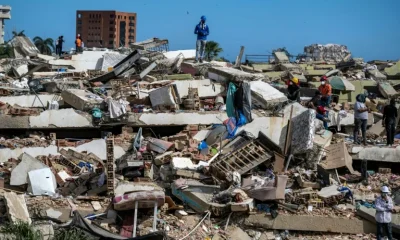
Looting Spreads in Venezuela’s Hardest-Hit Areas After Deadly Earthquakes
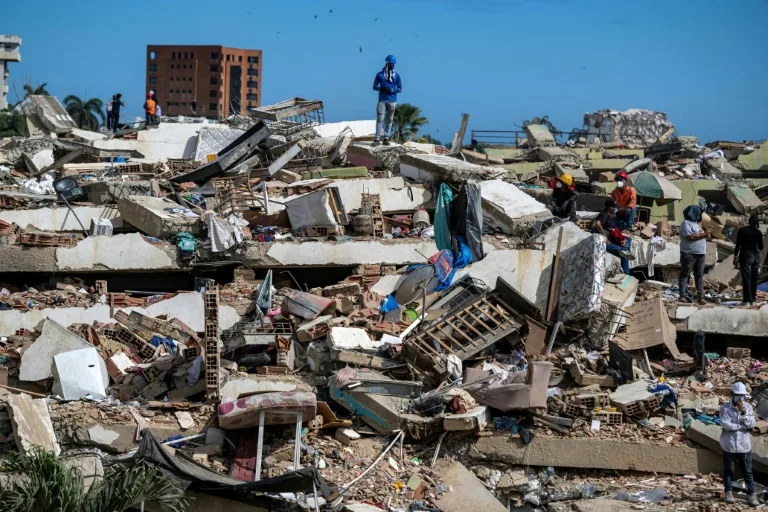
Not even the wires were left behind at a small grocery store. Before the ground had even stopped shaking, looting and theft began in the areas hardest hit by the double earthquake that struck Venezuela.
Reports of robberies have multiplied in the coastal state of La Guaira, located near Caracas and now transformed into a landscape of collapsed buildings and debris.
Videos circulating on social media show groups of people removing boxes of household appliances from a damaged store. Other images show similar boxes being carried on top of vehicles and motorcycles.
Social media platforms have also been filled with accusations against police officers and military personnel who allegedly stole from homes and even from victims who died during the disaster.
A branch of a major pharmacy chain was looted, along with supermarkets and other businesses. Some residents have described the situation as “disaster tourism,” while others say the looting reflects hunger and desperation among people who lost everything in a country already facing a prolonged economic crisis.
“Is it fair that our own people turn against our own people?” said María Esther Bernal, 71, who rented commercial spaces to Chinese merchants, all of which were looted. “They left nothing behind, not even the wallpaper. They even took the cables,” she said.
“Next door, a man died. He was Chinese. People walked over his body while they looted the place. It was a supermarket,” she added.
An AFP journalist witnessed looting in La Guaira since Thursday, following the earthquakes.
Jenifer Mayora, 34, defended some of the actions, saying that “the things people took were because the owners of the stores allowed us to take them.”
However, she criticized the limited response from authorities. “I have been waiting for a mattress so my children can sleep,” she said.
Residents have expressed anger over what they describe as a slow and insufficient response from authorities after the double earthquake, which has left around 1,450 people dead and tens of thousands missing.
Communities are demanding not only faster rescue operations in La Guaira, but also stronger security measures and urgent assistance with food, water, and medicine.
International
UN warns Venezuela earthquakes could affect up to 6.76 million people
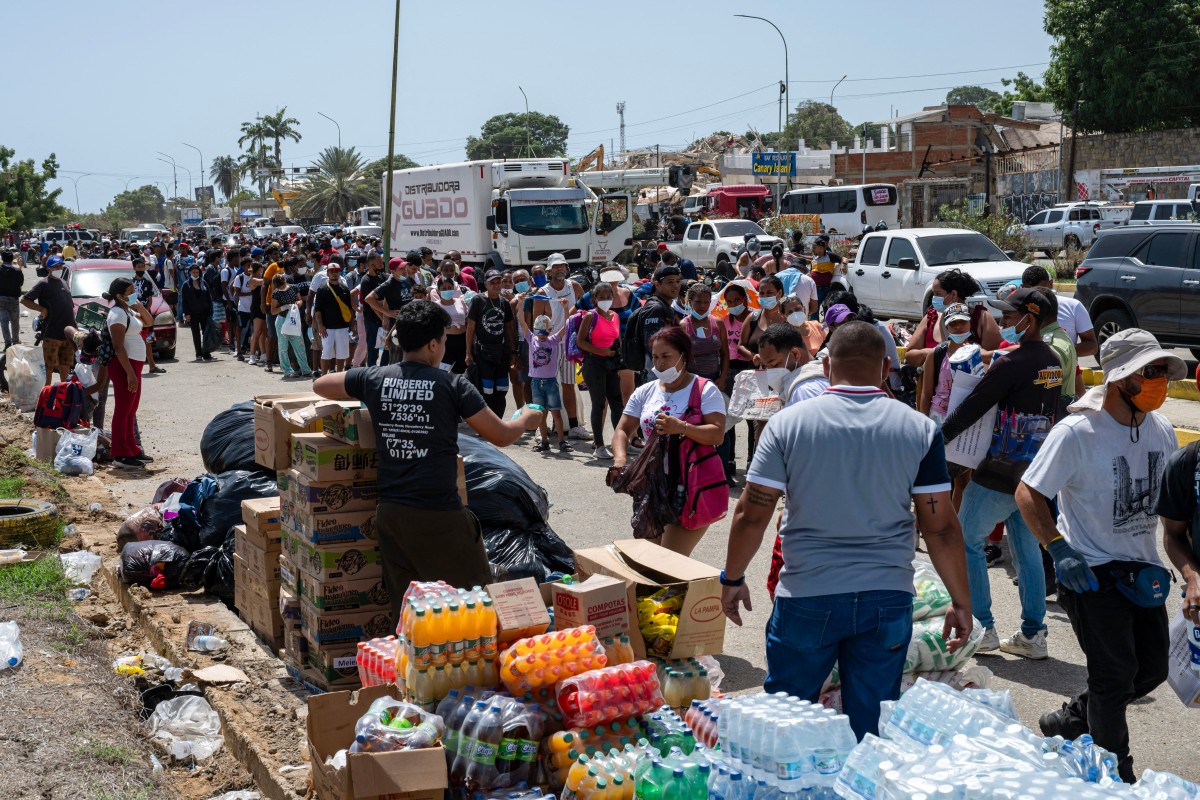
Up to 6.76 million people could be affected by the devastating earthquakes that struck Venezuela on June 24, according to an assessment released by the International Organization for Migration (IOM), a United Nations agency.
The organization said the projections are based on available population data and damage assessments, and include up to two million people living in Caracas, the country’s capital.
The estimates highlight the potentially massive humanitarian impact of the disaster, the IOM warned.
Entire buildings collapsed in La Guaira, a coastal area north of Caracas, following the powerful twin earthquakes that reached magnitudes of 7.2 and 7.5 on Wednesday.
The national death toll has risen to 920, while rescue teams continue searching for people trapped beneath the rubble in coastal regions and other affected areas.
UN humanitarian chief Tom Fletcher told AFP on Friday that more than 50,000 people were reported missing.
The IOM also revealed that it worked with Microsoft’s artificial intelligence laboratory on an initial satellite mapping analysis, which showed that 31.5% of buildings in the town of Catia La Mar had suffered damage.
Authorities and international rescue teams continue operations as Venezuela faces one of its largest humanitarian emergencies in recent years.
International
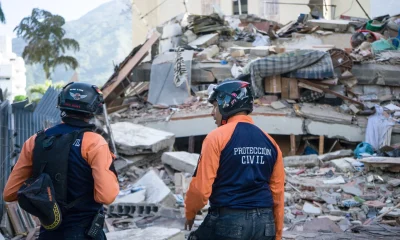
United Nations Coordinates Relief Efforts as Venezuela Death Toll Rises After Twin Quakes
United Nations Secretary-General António Guterres on Thursday expressed his condolences to the people of Venezuela following the two devastating earthquakes that struck the country and highlighted the ongoing coordination between UN humanitarian teams and interim President Delcy Rodríguez.
Speaking during the UN’s daily press briefing, spokesperson Stéphane Dujarric said Guterres was deeply saddened by the loss of life and widespread destruction caused by the disaster.
“The Secretary-General is deeply distressed by the loss of life and the widespread devastation caused by the earthquakes that struck Venezuela yesterday. He extends his heartfelt condolences to the families of the victims and wishes a speedy recovery to those injured,” Dujarric stated.
Venezuela was struck on Wednesday by two powerful earthquakes measuring 7.2 and 7.5 in magnitude. According to official figures, the disaster has left at least 164 people dead and 971 others injured.
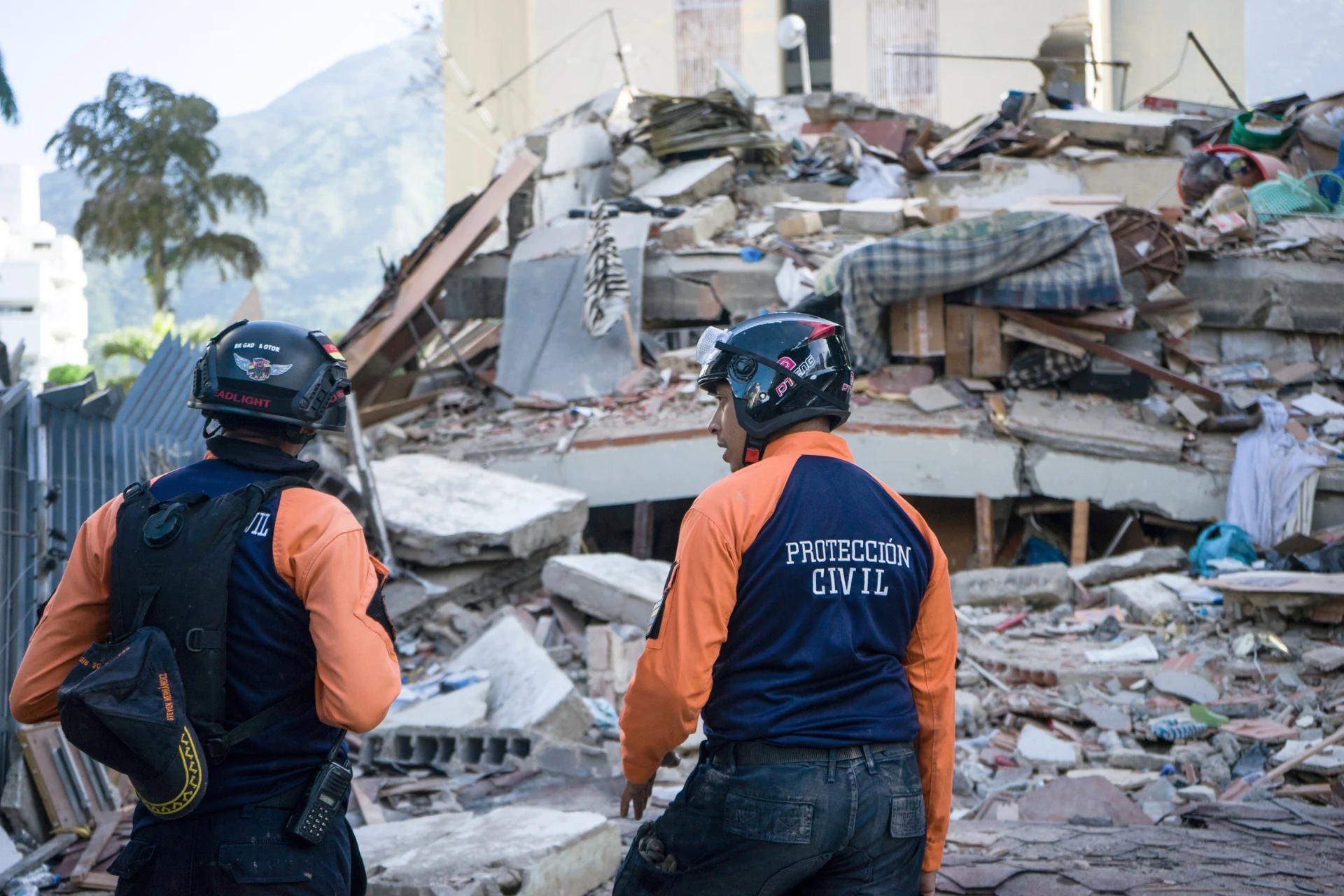
Dujarric noted that preliminary reports indicate significant damage across several states, including the capital, Caracas. Numerous casualties have been reported, while other individuals remain trapped beneath collapsed structures or are still missing.
“Critical infrastructure has been damaged and essential services have been disrupted,” the spokesperson said.
The United Nations confirmed that its humanitarian team remains in close contact with interim President Delcy Rodríguez and other relevant authorities as emergency operations continue.
To support relief efforts, the UN has established a coordination center in Caracas and is assisting local authorities to ensure that humanitarian aid reaches affected communities as quickly and efficiently as possible.
Guterres also welcomed the expressions of solidarity and offers of assistance from countries around the world that responded following news of the disaster, underscoring the importance of international cooperation in addressing the humanitarian emergency.

Looting Spreads in Venezuela’s Hardest-Hit Areas After Deadly Earthquakes

UN warns Venezuela earthquakes could affect up to 6.76 million people

United Nations Coordinates Relief Efforts as Venezuela Death Toll Rises After Twin Quakes
Tec de Monterrey honors one of its students for his contribution to nanotechnology in medicine

Defense Minister commends salvadoran soldier for Central American Cross Country victory

Extension of the state of emergency approved in southern Chile
-
 International7 hours ago
Looting Spreads in Venezuela’s Hardest-Hit Areas After Deadly Earthquakes
-
 Central America4 days ago
El Salvador and Chile Mark 150 Years of Relations With Expanded Bilateral Cooperation
-
 International4 days ago
OAS Secretary General Pledges Regional Assistance Following Venezuela Quake Disaster
-
 International4 days ago
United Nations Coordinates Relief Efforts as Venezuela Death Toll Rises After Twin Quakes
-
 International4 days ago
WHO Expects Deadly Hantavirus Outbreak on Cruise Ship to End by July 2
-

 International4 days ago
Bill Gates Says Jeffrey Epstein Made “Veiled” Threats Over Extramarital Affairs
-
 International1 day ago
UN warns Venezuela earthquakes could affect up to 6.76 million people