
International
Rio de Janeiro declares a “state of emergency” due to the skyrocketing cases of dengue
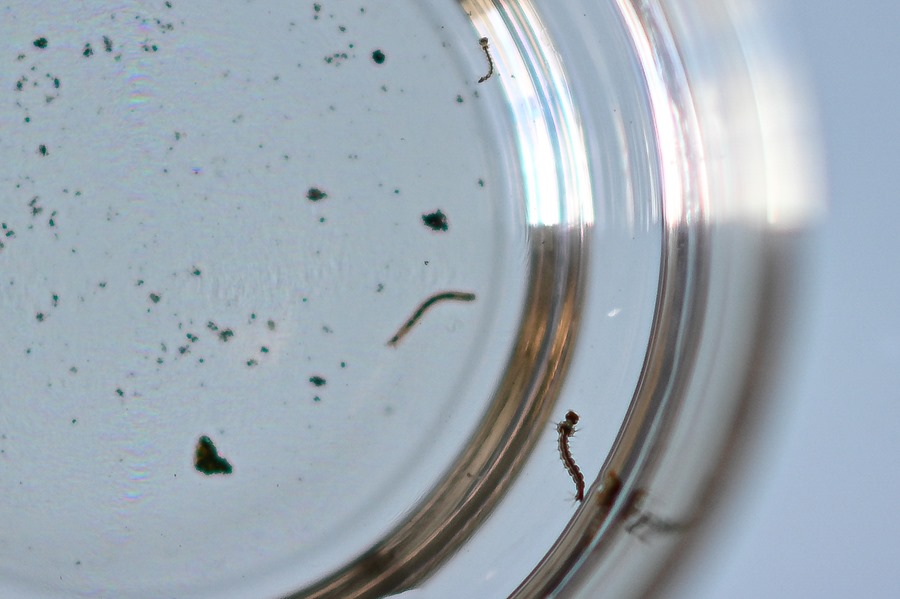
The city of Rio de Janeiro has declared a “state of public health emergency” due to the alarming increase in dengue cases, which exceed 10,000 since the beginning of the year, as published in the Official Gazette. The Rio Mayor’s Office presented a contingency plan to address what it described as a “dengue epidemic”, with measures aimed at preventing the proliferation of the Aedes aegypti mosquito, vector of the disease. Other regions of Brazil also face major dengue outbreaks, such as the Federal District of Brasilia, where a field hospital has been installed to care for infected patients.
At the gates of Carnival, Rio de Janeiro, which is preparing to receive hundreds of thousands of tourists, has recorded more than 10,000 cases of dengue so far this year, compared to the 22,959 reported in all of 2023. The rate Incidence in Rio is 160.68 cases per 100,000 inhabitants. The Rio Carnival, Brazil’s biggest festival, officially begins next Friday. Among the measures to be implemented are the creation of an emergency operations center, specific care points, reservation of hospital beds and fumigation in the areas with the highest incidence of cases.
Across Brazil, 262,247 cases of dengue have been recorded so far this year, with an increase of 160% in January compared to the same month in 2023. Brazil is the first country to offer the vaccine in its public health system. against dengue developed by the Japanese laboratory Takeda. The distribution of the vaccine begins while the country faces the growth of dengue cases, although it is expected that its application will not have an immediate impact due to the low availability of doses.






International
U.S. and Mexico Reach Deal to Address Water Deficit Under 1944 Treaty
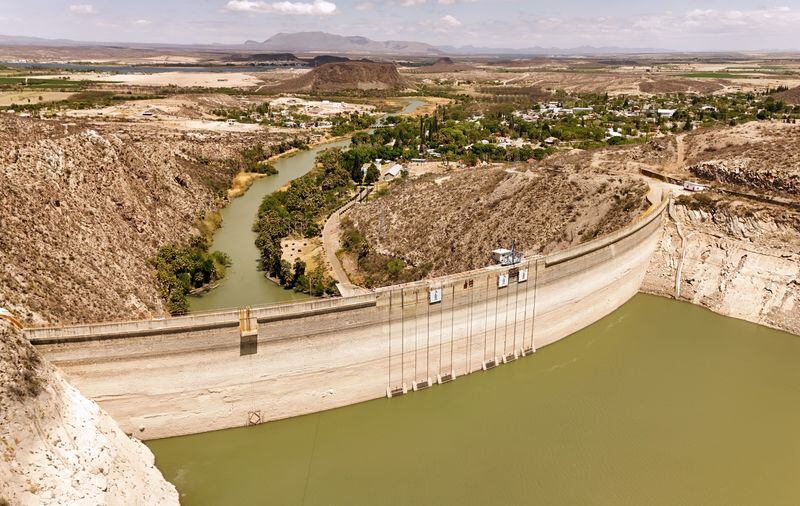
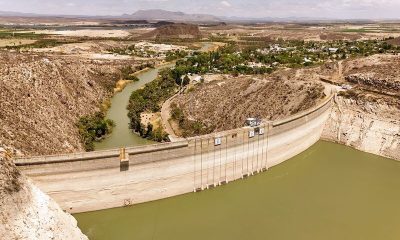
The United States and Mexico have reached an agreement to comply with current water obligations affecting U.S. farmers and ranchers and for Mexico to cover its water deficit to Texas under the 1944 Water Treaty, the U.S. Department of Agriculture said in a statement.
The department уточified that the agreement applies to both the current cycle and the water deficit from the previous cycle.
On Monday, U.S. President Donald Trump accused Mexico of failing to comply with the water-sharing treaty between the two countries, which requires the United States to deliver 1.85 billion cubic meters of water from the Colorado River, while Mexico must supply 432 million cubic meters from the Rio Grande.
Mexico is behind on its commitments. According to Washington, the country has accumulated a deficit of more than one billion cubic meters of water over the past five years.
“This violation is severely harming our beautiful crops and our livestock in Texas,” Trump wrote on Monday.









The Department of Agriculture said on Friday that Mexico had agreed to supply 250 million cubic meters of water starting next week and to work toward closing the shortfall.
Agriculture Secretary Brooke Rollins, quoted in the statement, said Mexico delivered more water in a single year than it had over the previous four years combined.
Trump has said that if Mexico continues to fall short of its obligations, the United States reserves the right to impose 5% tariffs on imported Mexican products.
Mexico’s Deputy Foreign Minister for North America, Roberto Velasco, said that a severe drought in 2022 and 2023prevented the country from meeting its commitments.
International
Several people shot in attack on Brown University campus

Several people were shot on Saturday in an attack on the campus of Brown University, in the northeastern United States, local police reported.
“Shelter in place and avoid the area until further notice,” the Providence Police Department urged in a post on X. Brown University is located in Providence, the capital of the state of Rhode Island.
U.S. President Donald Trump said on his social media platform Truth Social that he had been briefed on the situation and that the FBI was on the scene.
At 5:52 p.m. local time (11:52 p.m. GMT), Brown University said the situation was still “ongoing” and instructed students to remain sheltered until further notice.
After initially stating that the suspect had been taken into custody, Trump later posted a second message clarifying that local police had walked back that information. “The suspect has NOT been apprehended,” the U.S. president said.
International
Colombia says it would not reject Maduro asylum request as regional tensions escalate
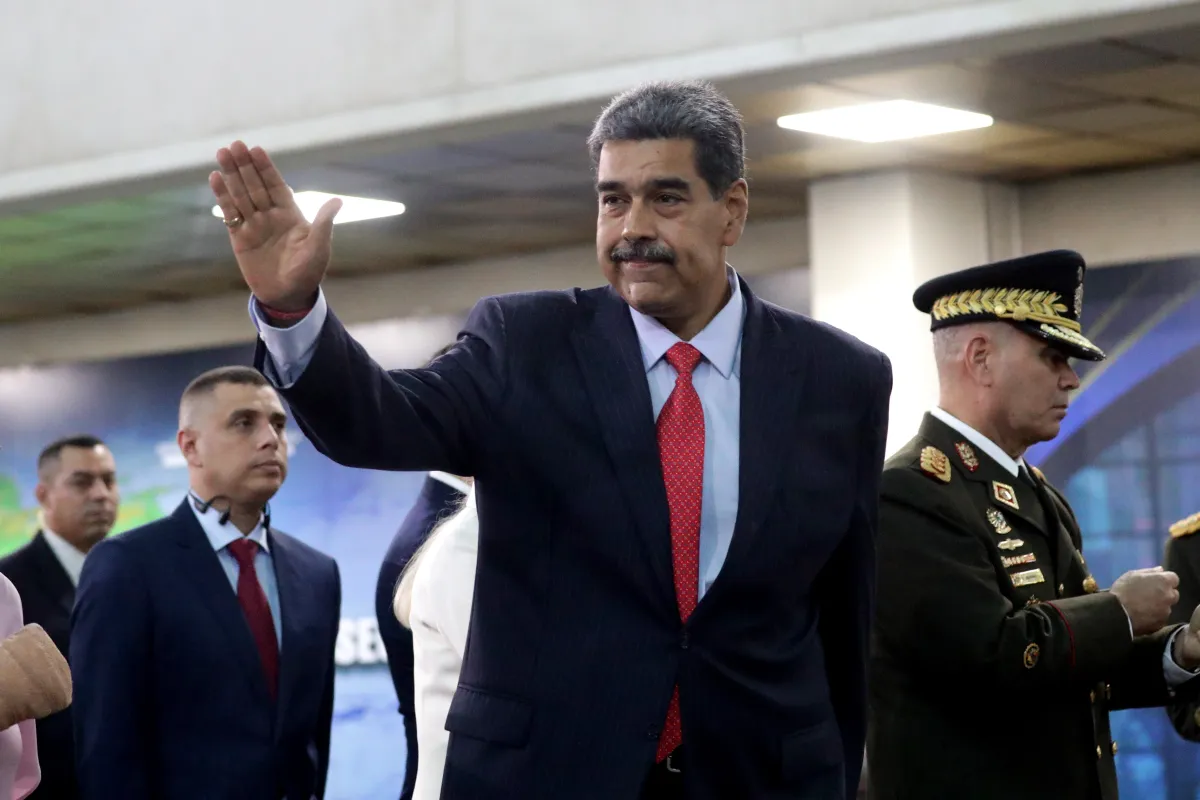
The Colombian government stated on Thursday that it would have no reason to reject a potential asylum request from Venezuelan President Nicolás Maduro should he leave office, as regional tensions persist over the deployment of U.S. military forces in the Caribbean since August.
“In the current climate of tension, negotiations are necessary, and if the United States demands a transition or political change, that is something to be assessed. If such a transition results in him (Maduro) needing to live elsewhere or seek protection, Colombia would have no reason to deny it,” said Colombian Foreign Minister Rosa Villavicencio in an interview with Caracol Radio.
However, Villavicencio noted that it is unlikely Maduro would choose Colombia as a refuge. “I believe he would opt for someplace more distant and calmer,” she added.
Colombian President Gustavo Petro also commented on Venezuela’s situation on Wednesday, arguing that the country needs a “democratic revolution” rather than “inefficient repression.” His remarks followed the recent detention and passport cancellation of Cardinal Baltazar Porras at the Caracas airport.
“The Maduro government must understand that responding to external aggression requires more than military preparations; it requires a democratic revolution. A country is defended with more democracy, not more inefficient repression,” Petro wrote on X (formerly Twitter), in a rare public criticism of the Venezuelan leader.
Petro also called for a general amnesty for political opponents and reiterated his call for forming a broad transitional government to address Venezuela’s prolonged crisis.
Since September, U.S. military forces have destroyed more than 20 vessels allegedly carrying drugs in Caribbean and Pacific waters near Venezuela and Colombia, resulting in over 80 deaths.
U.S. President Donald Trump has repeatedly warned that attacks “inside Venezuela” will begin “soon,” while Maduro has urged Venezuelans to prepare for what he describes as an impending external aggression.

Panama seizes over three tons of drugs hidden in Caribbean port container

U.S. and Mexico Reach Deal to Address Water Deficit Under 1944 Treaty

Several people shot in attack on Brown University campus
Tec de Monterrey honors one of its students for his contribution to nanotechnology in medicine

Defense Minister commends salvadoran soldier for Central American Cross Country victory

Extension of the state of emergency approved in southern Chile
-
 International4 days ago
Washington declares State of Emergency as atmospheric river brings severe flooding
-
 International4 days ago
U.S. to require five-year social media history from tourists under Visa Waiver Program
-
 International3 days ago
Cuba battles out-of-control dengue and chikungunya epidemic as death toll rises to 44
-
 Central America3 days ago
Honduras election crisis deepens as CNE president denounces intimidation attempts
-
Central America4 days ago
OAS and EU urge honduran political actors to respect vote results and avoid unrest
-
 International3 days ago
Colombia says it would not reject Maduro asylum request as regional tensions escalate
-
 International2 days ago
Several people shot in attack on Brown University campus
-
 International3 days ago
Ecuador on track for record violence as homicides hit highest level in Latin America again
-
 International4 days ago
Six ecuadorian soldiers jailed pending trial for alleged extrajudicial execution
-
 International2 days ago
U.S. and Mexico Reach Deal to Address Water Deficit Under 1944 Treaty
-
 Central America11 hours ago
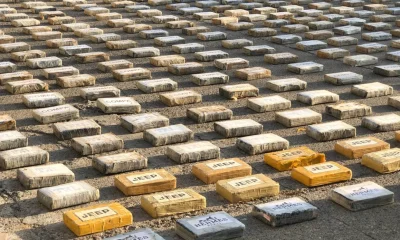
Panama seizes over three tons of drugs hidden in Caribbean port container