
International
The unstoppable crisis in Haiti breaks the traditions of Holy Week
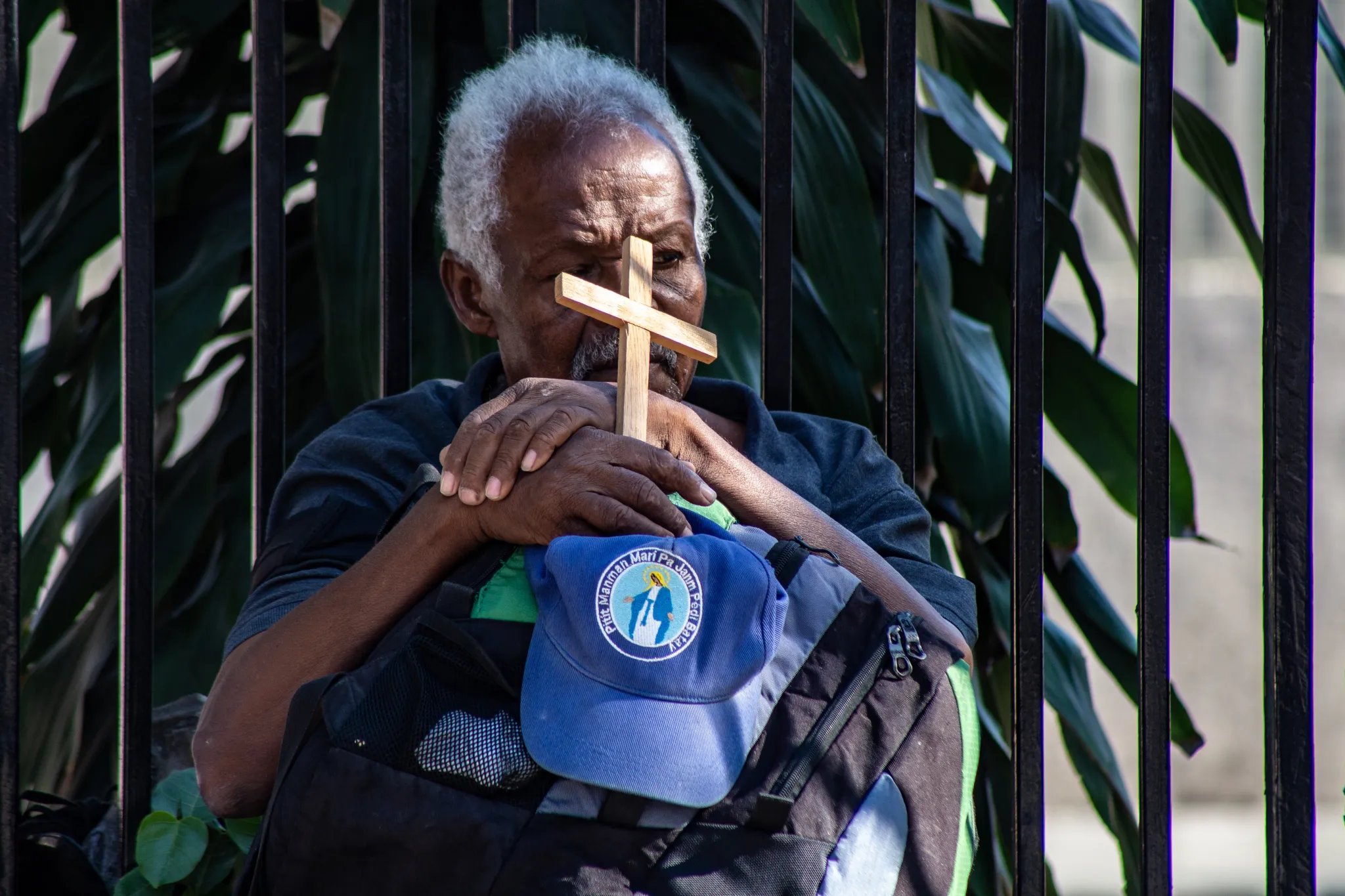
The unstoppable crisis in Haiti, exacerbated just a month ago, prevented this Good Friday that Haitians from complying with many of the Easter traditions, mainly in the capital, Port-au-au-Prince, where 90% of the territory is under the control of armed gangs.
This year, the crowded and colorful processions or Way of the Cross that, traditionally on the occasion of Holy Week, are carried out by parishioners of the Catholic Church of the impoverished Caribbean country were left behind.
Thus, in a context marked by a crisis in all orders, the religious lived this day in recollection, although many defied the current climate of insecurity and went to mass.
In churches such as Saint Pierre, in Petion-ville, and Our Lady of Altagrace, in Delmas, both in the capital, EFE observed dozens of people praying for peace in the country.
Young people, adults and the elderly, but mostly children, many of them with images of Jesus, crowded these churches, to remember the ordeal of Christ and the suffering of the Haitian people.









Priests and parishioners cried out for the end of the crisis, aggravated since February 29 when armed gangs united and sowed terror to ask for the resignation of the Prime Minister, Ariel Henry, currently in the United States and who has agreed to resign as soon as a transitional presidential council is formalized.
Many of them dared to take to the streets thanks to a police increase on some of the public roads, where EFE was able to see several patrols this Friday.
And it is that, the head of the National Police himself, Frantz Elbé, promised this week that the entity “will not stop fighting” for the safety of the population, to which he promised “better results.”
In a message addressed to the agents and the citizens, the official congratulated his subordinates for their daily dedication “to the fight against banditry” and for their presence on the ground “to continue protecting the life and well-being of the population.”
However, in the face of the cataclysm that Haiti is experiencing, as described on Thursday by the UN, organizations such as Human Rights Watch, cry out for urgent actions to help mitigate the situation.
In a statement, Human Rights Watch recommended measures to enable democratic governance, the protection of human rights and access to essential goods and services.
“It is essential that Haitian, regional and international leaders act to prevent the situation from getting even more out of control and truly support Haitians on the path to democratic governance, basic security, the rule of law and access to basic needs,” said Nathalye Cotrino, the organization’s crisis and conflict researcher.
Likewise, Human Rights Watch considered urgent the installation of a transitional government composed of “high-line Haitians who are not tarnished by credible accusations of corruption, support for criminal groups, human rights violations or other serious crimes.”
The Presidential Council in charge of carrying out the transition is finalizing its official inauguration, which will be followed by the appointment of a prime minister, with whom it will form a Government of National Unity.
Once this institution is implemented, the current Prime Minister, Ariel Henry, will leave power, as he himself announced in a message to the nation from Puerto Rico, where he was stared earlier this month after a trip to Kenya to discuss the sending of the multinational security support mission that Haiti expects.













International
U.S. and Mexico Reach Deal to Address Water Deficit Under 1944 Treaty
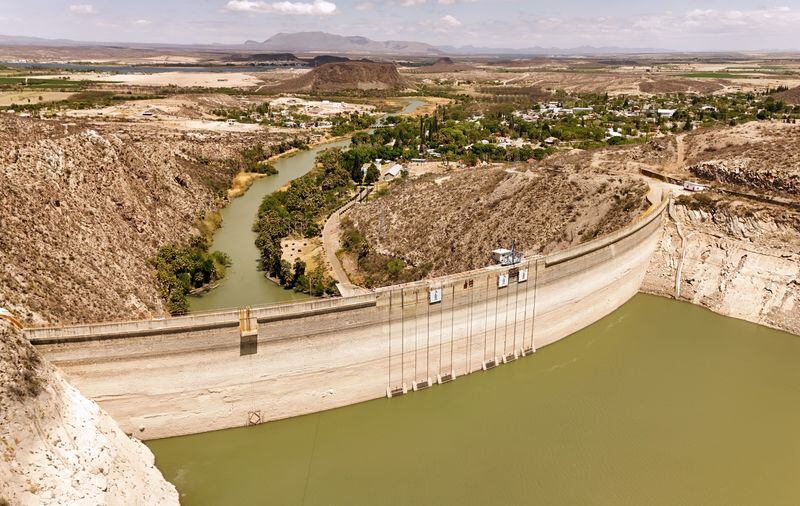
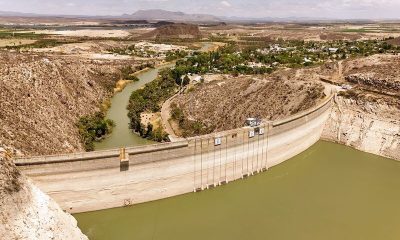
The United States and Mexico have reached an agreement to comply with current water obligations affecting U.S. farmers and ranchers and for Mexico to cover its water deficit to Texas under the 1944 Water Treaty, the U.S. Department of Agriculture said in a statement.
The department уточified that the agreement applies to both the current cycle and the water deficit from the previous cycle.
On Monday, U.S. President Donald Trump accused Mexico of failing to comply with the water-sharing treaty between the two countries, which requires the United States to deliver 1.85 billion cubic meters of water from the Colorado River, while Mexico must supply 432 million cubic meters from the Rio Grande.
Mexico is behind on its commitments. According to Washington, the country has accumulated a deficit of more than one billion cubic meters of water over the past five years.
“This violation is severely harming our beautiful crops and our livestock in Texas,” Trump wrote on Monday.
The Department of Agriculture said on Friday that Mexico had agreed to supply 250 million cubic meters of water starting next week and to work toward closing the shortfall.
Agriculture Secretary Brooke Rollins, quoted in the statement, said Mexico delivered more water in a single year than it had over the previous four years combined.
Trump has said that if Mexico continues to fall short of its obligations, the United States reserves the right to impose 5% tariffs on imported Mexican products.
Mexico’s Deputy Foreign Minister for North America, Roberto Velasco, said that a severe drought in 2022 and 2023prevented the country from meeting its commitments.
International
Several people shot in attack on Brown University campus

Several people were shot on Saturday in an attack on the campus of Brown University, in the northeastern United States, local police reported.
“Shelter in place and avoid the area until further notice,” the Providence Police Department urged in a post on X. Brown University is located in Providence, the capital of the state of Rhode Island.
U.S. President Donald Trump said on his social media platform Truth Social that he had been briefed on the situation and that the FBI was on the scene.
At 5:52 p.m. local time (11:52 p.m. GMT), Brown University said the situation was still “ongoing” and instructed students to remain sheltered until further notice.
After initially stating that the suspect had been taken into custody, Trump later posted a second message clarifying that local police had walked back that information. “The suspect has NOT been apprehended,” the U.S. president said.
International
Colombia says it would not reject Maduro asylum request as regional tensions escalate
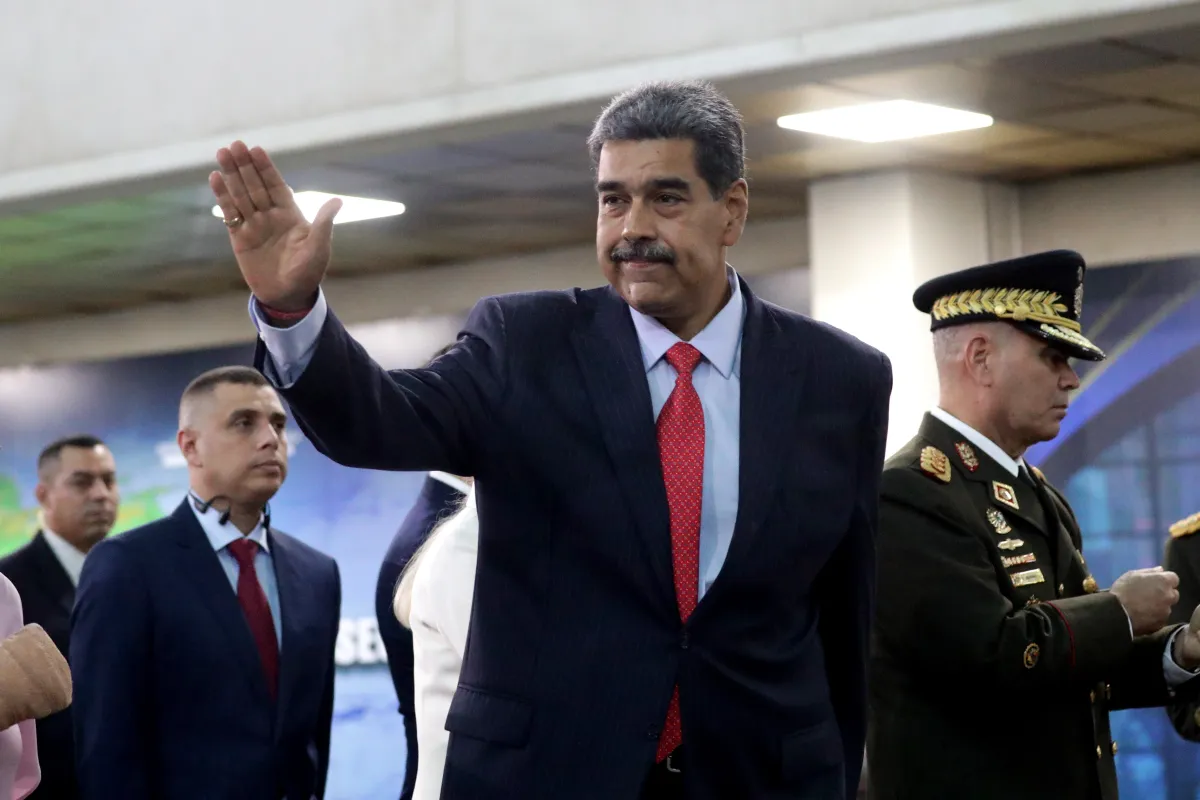
The Colombian government stated on Thursday that it would have no reason to reject a potential asylum request from Venezuelan President Nicolás Maduro should he leave office, as regional tensions persist over the deployment of U.S. military forces in the Caribbean since August.
“In the current climate of tension, negotiations are necessary, and if the United States demands a transition or political change, that is something to be assessed. If such a transition results in him (Maduro) needing to live elsewhere or seek protection, Colombia would have no reason to deny it,” said Colombian Foreign Minister Rosa Villavicencio in an interview with Caracol Radio.
However, Villavicencio noted that it is unlikely Maduro would choose Colombia as a refuge. “I believe he would opt for someplace more distant and calmer,” she added.
Colombian President Gustavo Petro also commented on Venezuela’s situation on Wednesday, arguing that the country needs a “democratic revolution” rather than “inefficient repression.” His remarks followed the recent detention and passport cancellation of Cardinal Baltazar Porras at the Caracas airport.
“The Maduro government must understand that responding to external aggression requires more than military preparations; it requires a democratic revolution. A country is defended with more democracy, not more inefficient repression,” Petro wrote on X (formerly Twitter), in a rare public criticism of the Venezuelan leader.
Petro also called for a general amnesty for political opponents and reiterated his call for forming a broad transitional government to address Venezuela’s prolonged crisis.
Since September, U.S. military forces have destroyed more than 20 vessels allegedly carrying drugs in Caribbean and Pacific waters near Venezuela and Colombia, resulting in over 80 deaths.
U.S. President Donald Trump has repeatedly warned that attacks “inside Venezuela” will begin “soon,” while Maduro has urged Venezuelans to prepare for what he describes as an impending external aggression.


Panama seizes over three tons of drugs hidden in Caribbean port container

U.S. and Mexico Reach Deal to Address Water Deficit Under 1944 Treaty

Several people shot in attack on Brown University campus
Tec de Monterrey honors one of its students for his contribution to nanotechnology in medicine

Defense Minister commends salvadoran soldier for Central American Cross Country victory

Extension of the state of emergency approved in southern Chile
-
 International4 days ago
Washington declares State of Emergency as atmospheric river brings severe flooding
-
 International4 days ago
U.S. to require five-year social media history from tourists under Visa Waiver Program
-
 International3 days ago
Cuba battles out-of-control dengue and chikungunya epidemic as death toll rises to 44
-
 Central America3 days ago
Honduras election crisis deepens as CNE president denounces intimidation attempts
-
Central America4 days ago
OAS and EU urge honduran political actors to respect vote results and avoid unrest
-
 International3 days ago
Colombia says it would not reject Maduro asylum request as regional tensions escalate
-
 International2 days ago
Several people shot in attack on Brown University campus
-
 International3 days ago
Ecuador on track for record violence as homicides hit highest level in Latin America again
-
 International4 days ago
Six ecuadorian soldiers jailed pending trial for alleged extrajudicial execution
-
 International2 days ago
U.S. and Mexico Reach Deal to Address Water Deficit Under 1944 Treaty
-
 Central America11 hours ago
Panama seizes over three tons of drugs hidden in Caribbean port container