
International
Leslie Voltaire assumes the presidency of the Council of Haiti and promises transparency
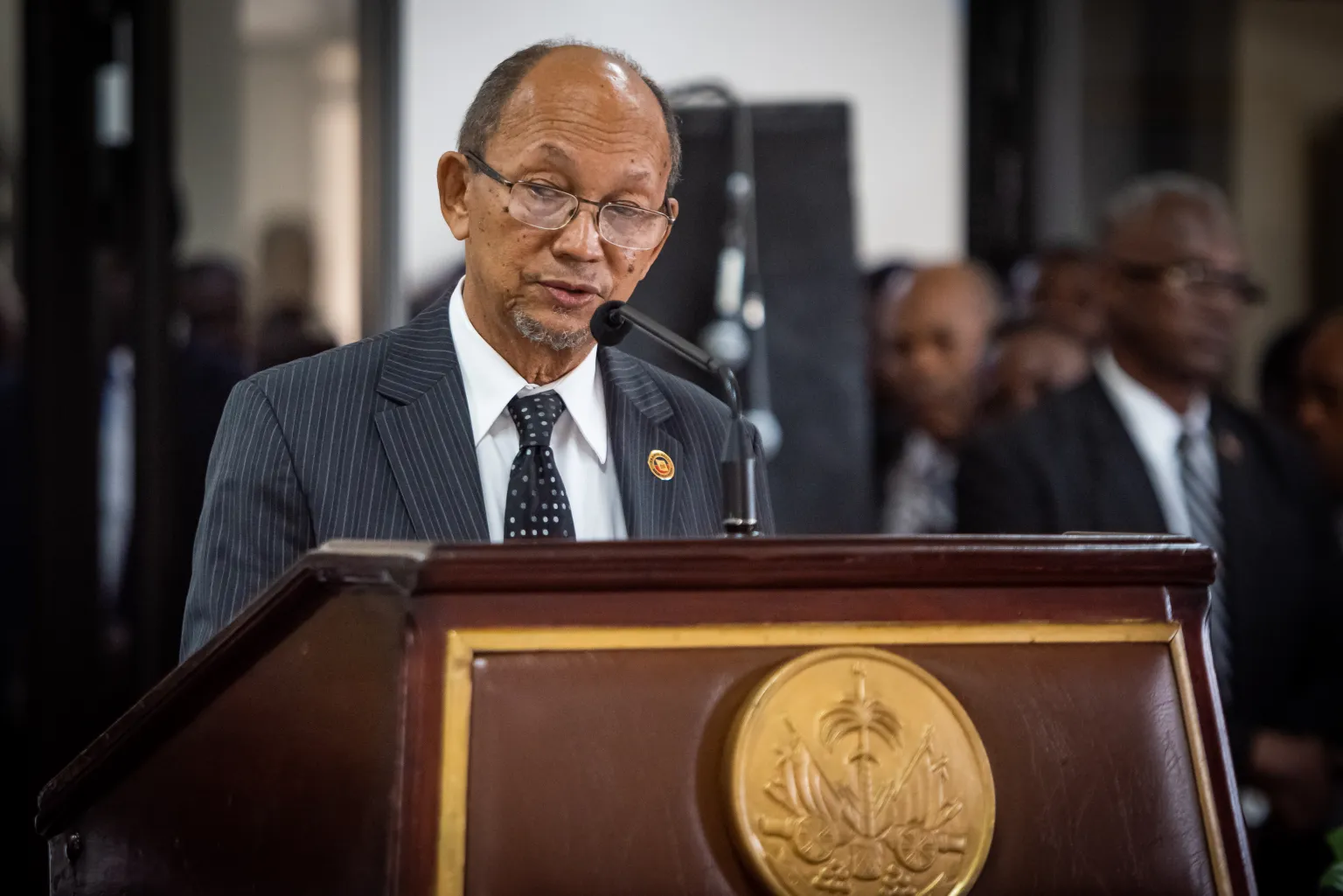
Leslie Voltaire took office as president of the Transitional Council (CPT) of Haiti and will succeed Edgard Leblanc Fils, in a ceremony held in Port-au-Prince in which the new leader promised to work with transparency, dedication and efficiency to change the living conditions of the Haitian people.
“The moment is serious. The time has come to reconcile the great nation of Haiti with itself so that future generations can escape the horrors of this inconceivable brutality, the time has come to unite. We have to govern in another way. The Haitian people are fed up with violence, lies and corruption,” Voltaire said at the act of transfer of power in the Villa d’Accueil.
The ceremony took place in the absence of Leblanc Fils, who left the Villa d’Accueil hours before the inauguration of Voltaire, appointed to be part of the Presidential Council of Transition (CPT) by the Fanmi Lavalas party.
Call to solve the challenges of Haiti
In his speech, Voltaire pledged to work in common agreement with the other members of the CPT and called for the unity of all to solve the challenges that the country has, especially the restoration of security because the “great change” that Haiti needs “cannot be achieved through violence and conflict.”
“We are mobilizing to ensure the success of the transition. We will move forward to restore security, strengthen the police and the prison system, create the conditions for (the holding of) elections, organize the national conference and the referendum on constitutional reform,” he added.











Modification of the rotating presidency
On that date, the official newspaper Le Moniteur published a resolution on the changes in the rotating presidency of the CPT that modifies the document of last May 7 in this regard.
This resolution is released days after the official Anti-Corruption Unit (ULCC) asked for action to be taken against three members of the Council – Louis Gérald Gilles, Emmanuel Vertilaire and Smith Augustin – for abuse of functions, payment of bribes and passive corruption.
In principle, it was Smith Augustin who was to succeed Leblanc Fils, but the three defendants have been removed from the rotating presidency of the Council, although they remain in the institution.
Under the new agreement, from October 7 to March 7, 2025 the presidency of the CPT will be occupied by Voltaire, from March 7 to August 7, 2025 it will be exercised by Fritz Alphonse Jean and from then to February 7, 2026 (date on which a president of Haiti elected at the polls should take office) it will be Laurent Saint-Cyr’s turn.
Haiti has not had a president since on July 7, 2021, he was murdered in his Jovenel Moise residence by a group of mercenaries, mostly Colombians.
Crisis in the Council
In his last speech to the nation published a few hours ago, Leblanc Fils said that he hoped that the three involved in the alleged corruption would agree to move away from the CPT until justice clarified the matter, but this did not occur: “unfortunately they did not understand that it was the right decision, this scandal affects the image of the entire Presidential Transition Council.”
“I cannot accept to participate in any process that weakens and further devalues the country’s justice system,” Leblanc said, explaining why he was the only one of the nine members of the CPT who did not sign the new resolution on the rotating presidency.
In his opinion, “the majority of the Council is taking the wrong path. He runs the risk of plunding the country into instability. It will worsen the situation and prolong the transition period.”
The change in the presidency of the CPT occurs when Haiti is still shocked by the massacre last week at the hands of the armed group Gran Grif in Pont Sondé (artibonite department) of more than 70 people, despite the fact that part of the Multinational Security Support Mission led by Kenya is on the ground to try to curb the violence.
In 2023, the violence caused, between deaths and injuries, 8,000 victims in Haiti and in the first half of this year alone it already rose to about 3,900, according to UN data.










International
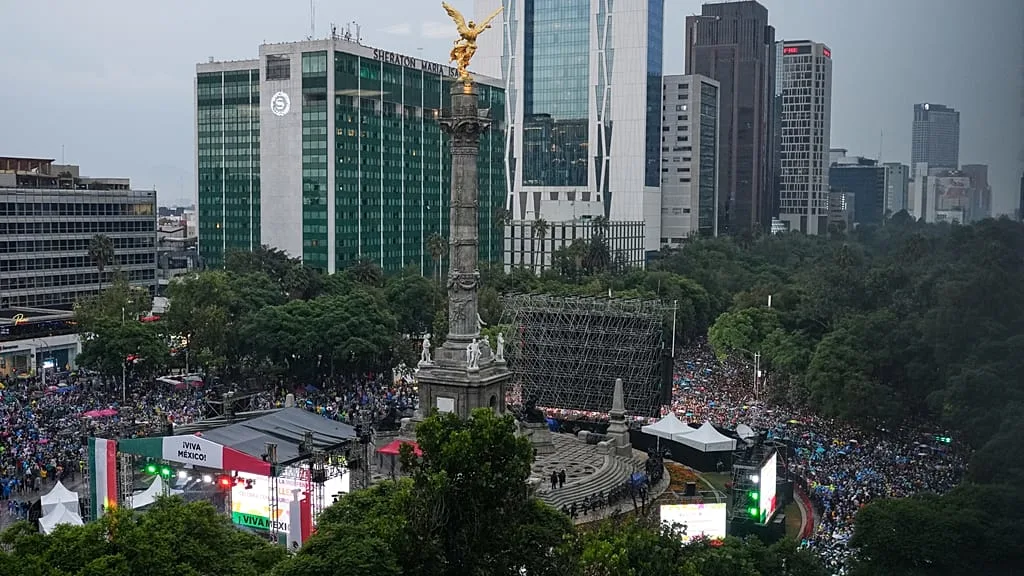
Three Die During World Cup Celebrations in Mexico City After Mexico’s Victory
International
Families Sue Nicolás Maduro in U.S. Over Alleged Extrajudicial Killings
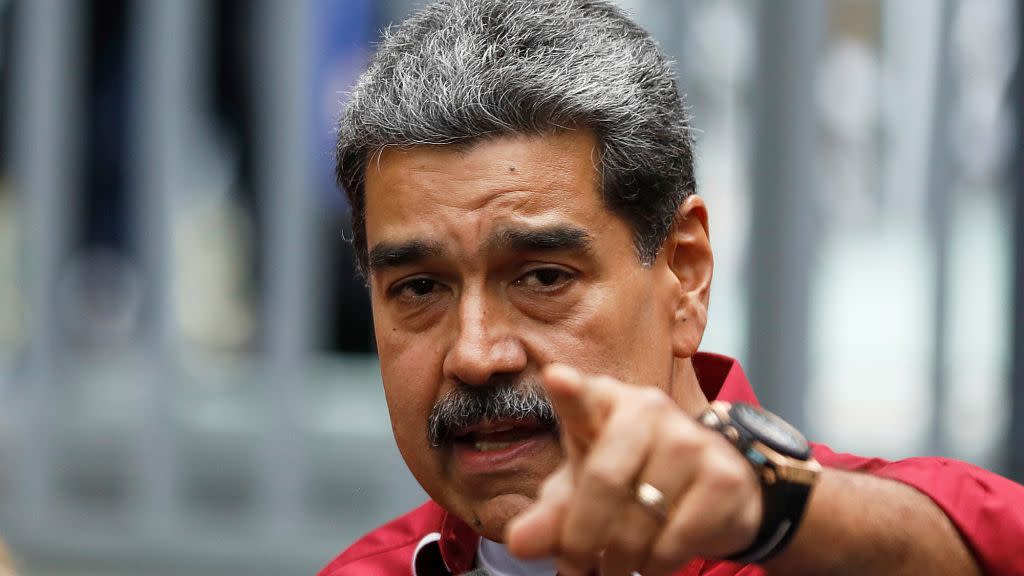
The families of five young Venezuelan men have filed a 44-page civil lawsuit in a U.S. federal court, accusing former Venezuelan President Nicolás Maduro of ordering extrajudicial executions carried out by the country’s former Special Action Forces (FAES) between 2017 and 2020.
The lawsuit, filed Tuesday in the U.S. District Court for the Eastern District of New York in Brooklyn, alleges that the victims were among thousands of people killed under Maduro’s administration by security units, including the FAES, which were dissolved in 2021 following widespread allegations of human rights abuses, including criticism from the United Nations.
Maduro is currently being held in a New York detention facility awaiting trial on U.S. drug trafficking charges after he was removed from power during a U.S. military operation in Venezuela in January.
The complaint argues that the killings followed a well-documented pattern of extrajudicial executions allegedly carried out during Maduro’s presidency, which lasted from 2013 to 2026. Throughout his time in office, Maduro faced repeated accusations from international organizations of using state repression to maintain power.
According to the lawsuit, FAES officers arrived at the victims’ neighborhoods before dawn, dressed entirely in black and wearing face coverings. The agents allegedly separated the men from their families before fatally shooting them.
The complaint further alleges that authorities later fabricated official reports claiming the victims had “resisted arrest” in an effort to justify the killings.
“Maduro used the FAES as a political instrument and a mechanism of social control to violently suppress dissent, terrorize low-income communities, and eliminate political opposition,” the lawsuit states.
It also describes the FAES as being “widely regarded as a death squad or extermination group.”
The plaintiffs argue that Venezuela’s judicial system has failed to provide accountability for the killings, preventing the victims’ families from obtaining justice.
For security reasons, the identities of the families remain confidential. They are seeking financial compensation from Maduro under the U.S. Torture Victim Protection Act.
According to The New York Times, Maduro is expected to argue that he is entitled to head-of-state immunity in the civil proceedings.
In the separate criminal case pending against him in the United States, in which he is charged alongside his wife, Cilia Flores, Maduro has described himself as a “prisoner of war.”
He has pleaded not guilty to multiple charges, including conspiracy to import cocaine into the United States and weapons-related offenses.
International
Salvadoran National Arrested in New Jersey with Over 70 Machine Gun Conversion Devices
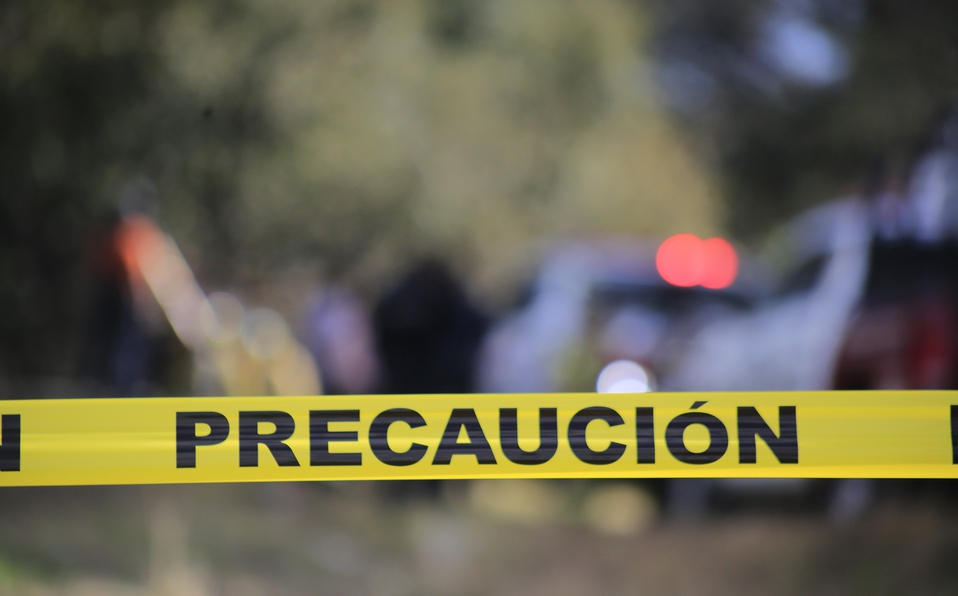
The U.S. Department of Justice announced the arrest of 21-year-old Salvadoran national Erick Márquez Cruz after authorities allegedly discovered more than 70 machine gun conversion devices and other firearm-related components during a search of his residence in North Bergen, New Jersey.
According to the Justice Department, law enforcement officers executed a search warrant on June 25 at Cruz’s home, where they recovered a 3D printer that was allegedly being used to manufacture firearm components. Investigators also seized 17 3D-printed firearm frames, magazines, and more than 70 machine gun conversion devices (MCDs).
Federal authorities explained that the conversion devices, which are classified as machine guns under U.S. law, are designed to convert semiautomatic firearms into fully automatic weapons capable of firing multiple rounds with a single pull of the trigger.
Cruz has been charged with unlawful possession of a machine gun. If convicted, he faces a maximum sentence of 10 years in federal prison and a fine of up to $250,000, or twice the gross financial gain resulting from the offense, whichever is greater.

Three Die During World Cup Celebrations in Mexico City After Mexico’s Victory

Families Sue Nicolás Maduro in U.S. Over Alleged Extrajudicial Killings

Salvadoran National Arrested in New Jersey with Over 70 Machine Gun Conversion Devices
Tec de Monterrey honors one of its students for his contribution to nanotechnology in medicine

Defense Minister commends salvadoran soldier for Central American Cross Country victory

Extension of the state of emergency approved in southern Chile
-
 International3 days ago
Looting Spreads in Venezuela’s Hardest-Hit Areas After Deadly Earthquakes
-
 International1 day ago
Salvadoran National Arrested in New Jersey with Over 70 Machine Gun Conversion Devices
-
 International2 days ago
Venezuela Earthquake Death Toll Surpasses 1,700 as Search for Survivors Continues
-

 International5 days ago
UN warns Venezuela earthquakes could affect up to 6.76 million people
-
 International2 days ago
Venezuela Earthquakes Spark Diplomatic Thaw With Former Critics
-
 International8 hours ago
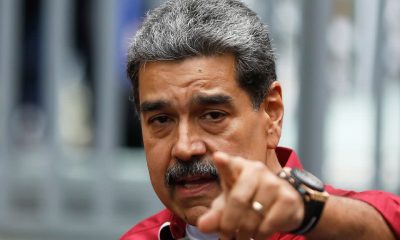
Families Sue Nicolás Maduro in U.S. Over Alleged Extrajudicial Killings
-
 International8 hours ago
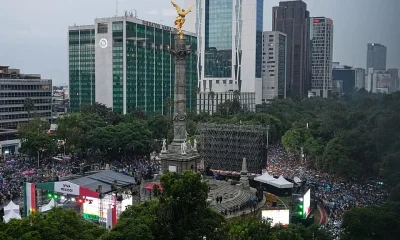
Three Die During World Cup Celebrations in Mexico City After Mexico’s Victory