
International
Venezuelan opposition leader urges oil companies to cut ties with “Corrupt and Criminal Regime”
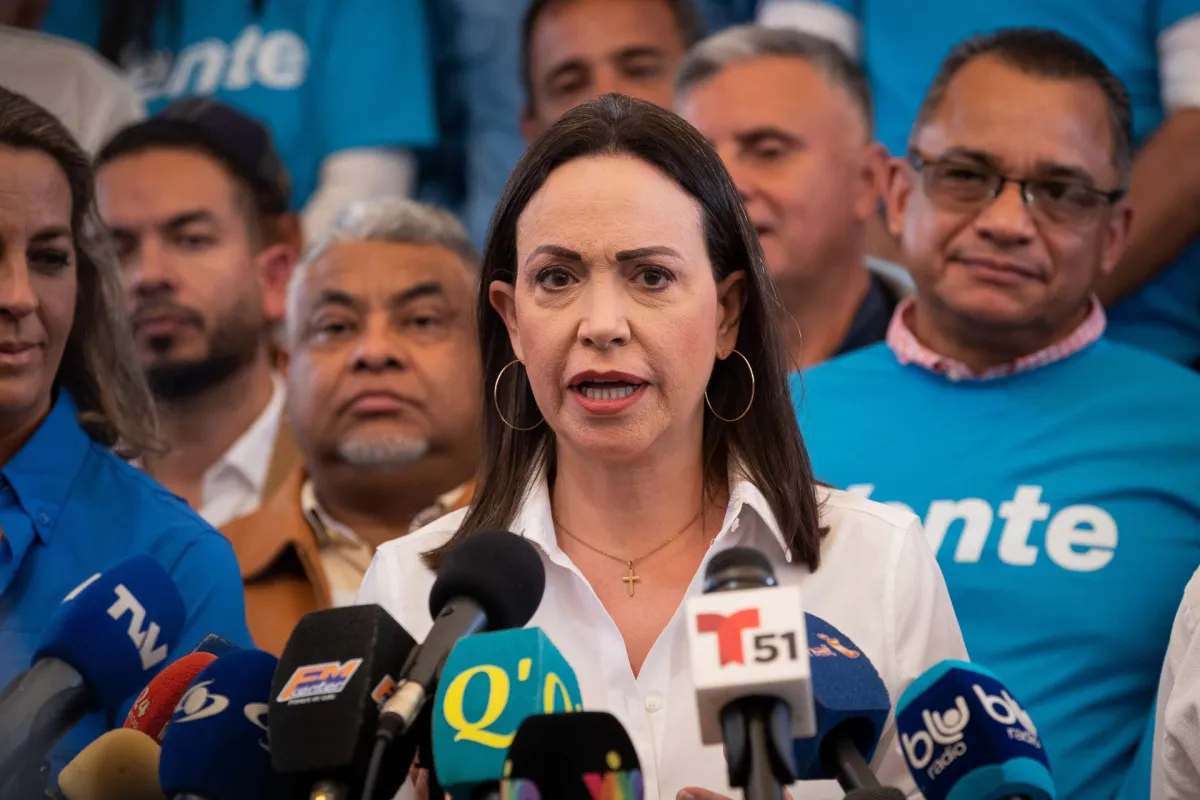
Venezuelan opposition leader María Corina Machado called on multinational oil companies this Tuesday to stop operating “under a corrupt and criminal regime.”
Venezuela’s oil industry has been under sanctions since 2019, but Washington grants individual licenses for several companies to operate in the country, including the U.S. company Chevron, Spain’s Repsol, and France’s Maurel & Prom.
“These energy companies need to realize that they are partnering with the most corrupt company in the energy sector worldwide, which has been accused of money laundering and even drug trafficking, PDVSA,” Machado said, referring to Venezuela’s state-owned oil company, Petróleos de Venezuela, during a panel organized by the Georgetown Americas Institute in Washington.
“No one knows the nature of the contracts that have been signed, which violates our Constitution. No one knows how much they are paying the regime or how much the government is making from their operations,” Machado added in a virtual connection, just hours after Venezuelan President Nicolás Maduro joked that she had fled the country.
“It’s not only a matter of the international community understanding how these resources are being used, but I wonder what the shareholders and stakeholders of these companies think about the goodwill and reputation of these firms,” Machado commented.









“Our message to them is that we want them here. We want them to invest and generate many resources, a lot of money, and many jobs for Venezuela, but not like this — not under a corrupt and criminal regime that violates and is violating Venezuela’s laws,” she stressed.






International
Salvadoran National Arrested in New Jersey with Over 70 Machine Gun Conversion Devices
The U.S. Department of Justice announced the arrest of 21-year-old Salvadoran national Erick Márquez Cruz after authorities allegedly discovered more than 70 machine gun conversion devices and other firearm-related components during a search of his residence in North Bergen, New Jersey.
According to the Justice Department, law enforcement officers executed a search warrant on June 25 at Cruz’s home, where they recovered a 3D printer that was allegedly being used to manufacture firearm components. Investigators also seized 17 3D-printed firearm frames, magazines, and more than 70 machine gun conversion devices (MCDs).
Federal authorities explained that the conversion devices, which are classified as machine guns under U.S. law, are designed to convert semiautomatic firearms into fully automatic weapons capable of firing multiple rounds with a single pull of the trigger.
Cruz has been charged with unlawful possession of a machine gun. If convicted, he faces a maximum sentence of 10 years in federal prison and a fine of up to $250,000, or twice the gross financial gain resulting from the offense, whichever is greater.
International
Venezuela Earthquakes Spark Diplomatic Thaw With Former Critics
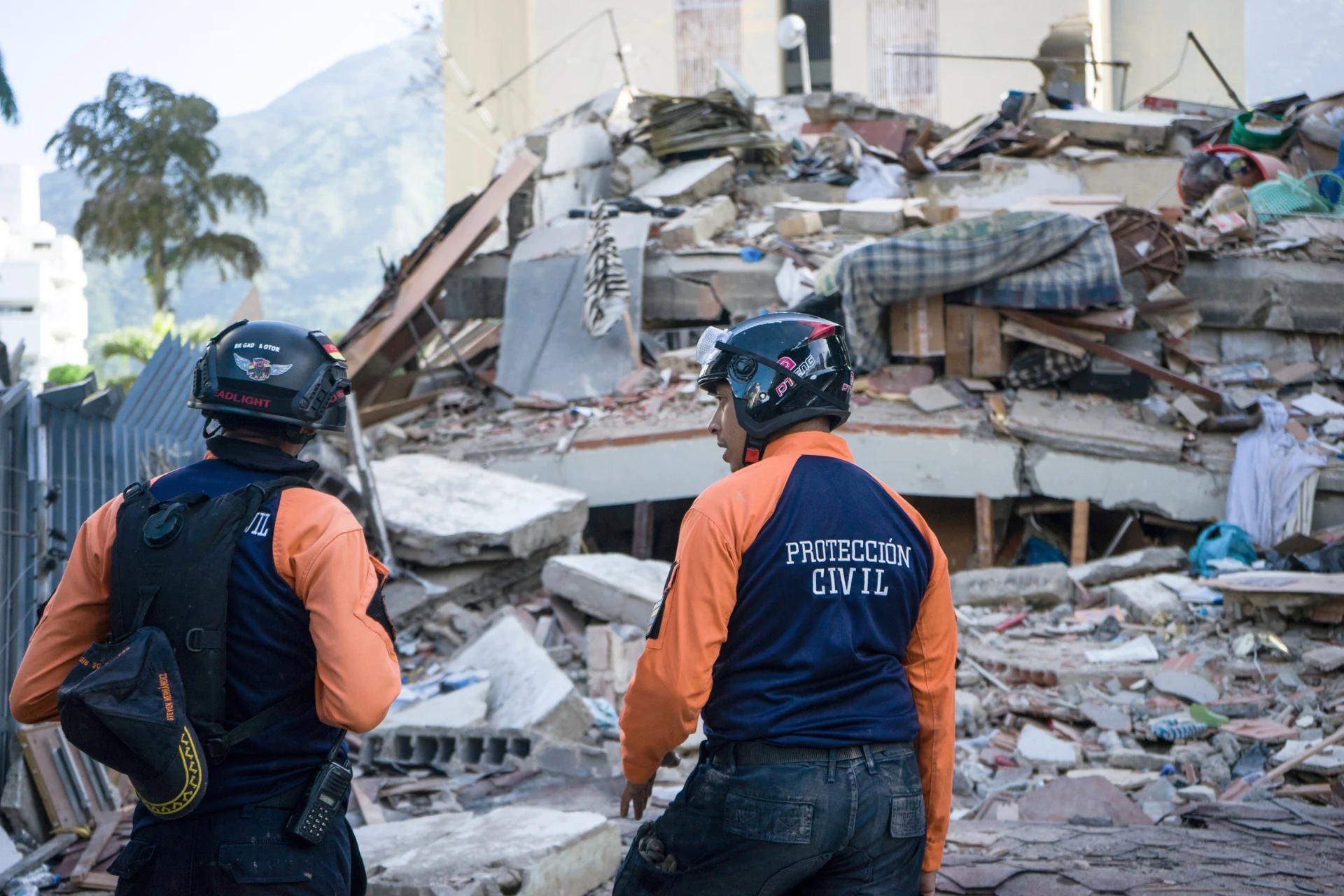
The devastating earthquakes that struck Venezuela have triggered an unprecedented diplomatic thaw between Caracas and several governments that had maintained strained relations with the country, raising hopes that the humanitarian response could pave the way for broader international engagement under the administration of U.S. President Donald Trump.
The United States, Chile, Argentina, El Salvador and Israel were among the first countries to announce humanitarian assistance, deploy search-and-rescue teams or establish direct contact with acting President Delcy Rodríguez to coordinate relief efforts in the hardest-hit areas.
Canada also joined the international response by announcing humanitarian aid while opening a domestic debate over the importance of maintaining diplomatic representation in countries such as Venezuela to better respond to emergencies and assist its citizens abroad.
The wave of international cooperation marks a sharp contrast to the diplomatic tensions that followed Venezuela’s disputed presidential election on July 28, 2024, in which Nicolás Maduro was declared the winner.
In the aftermath of that vote, the governments of Argentina, Chile, Costa Rica, Panama, Peru, the Dominican Republic and Uruguay publicly questioned the official election results, triggering one of the region’s most significant diplomatic crises in recent years.
The Venezuelan government responded by withdrawing its diplomatic personnel from several of those countries and demanding the departure of their representatives, further deepening the country’s international isolation.
The humanitarian emergency created by the twin earthquakes has now prompted renewed communication between Caracas and governments that had previously suspended or significantly reduced diplomatic engagement, underscoring how major natural disasters can temporarily reshape international relations despite longstanding political disagreements.
International
Venezuela Earthquake Death Toll Surpasses 1,700 as Search for Survivors Continues
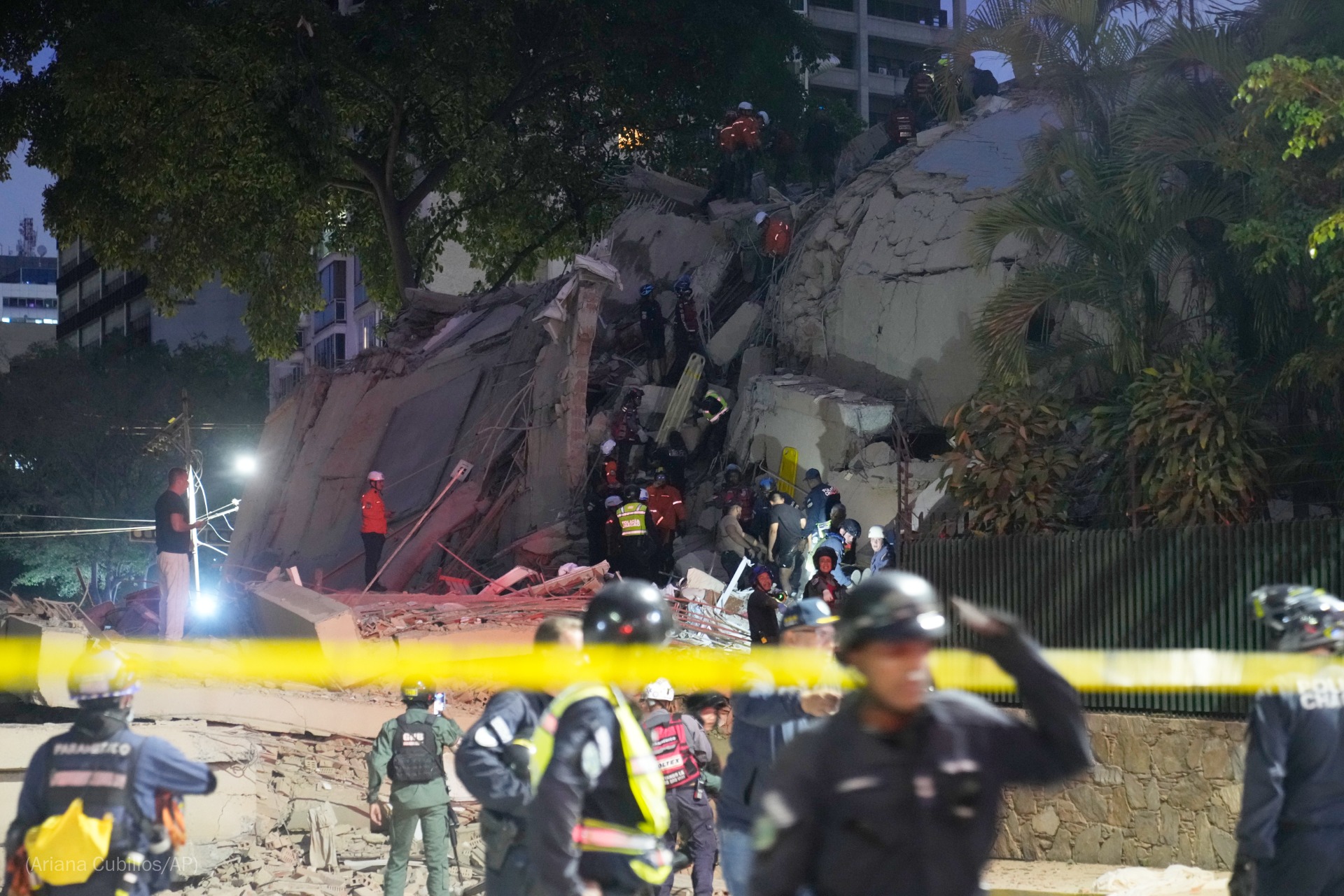
Venezuelan authorities have raised the death toll from last week’s twin earthquakes to more than 1,700, as rescue teams continue searching for survivors in the country’s hardest-hit coastal region.
According to the latest official report released on Sunday, the powerful earthquakes, measuring magnitudes 7.2 and 7.5, have claimed at least 1,719 lives. National Assembly President Jorge Rodríguez also reported that 5,034 people were injured, while 15,866 have been displaced and another 22,619 are receiving medical care.
The United Nations has expressed growing concern over the scale of the disaster, estimating that as many as 68,000 people could still be missing.
La Guaira bears the brunt of the disaster
The coastal state of La Guaira has suffered the greatest loss of life and the most extensive damage. The Venezuelan government has declared the area a disaster zone and placed it under military control as emergency operations continue.
Five days after the earthquakes struck, search-and-rescue teams remain on the ground, supported by additional heavy equipment and international rescue crews. However, hopes of finding more survivors beneath the rubble continue to diminish with each passing day.
One of the most dramatic rescue operations unfolded Monday in Catia La Mar, where emergency teams from El Salvador, Mexico, and Venezuela worked together to reach a 21-year-old man who has remained trapped inside a collapsed building since the earthquakes struck.
The twin earthquakes hit Venezuela on June 24, with the epicenter located between San Felipe and Yumare in the country’s northern region. The first quake, measuring magnitude 7.2, struck at 6:04 p.m. local time. Just 39 seconds later, a second and stronger magnitude 7.5 earthquake occurred farther to the southeast. Combined, the seismic activity lasted nearly three minutes, causing widespread devastation across several regions of the country.

Salvadoran National Arrested in New Jersey with Over 70 Machine Gun Conversion Devices

Venezuela Earthquakes Spark Diplomatic Thaw With Former Critics

Venezuela Earthquake Death Toll Surpasses 1,700 as Search for Survivors Continues
Tec de Monterrey honors one of its students for his contribution to nanotechnology in medicine

Defense Minister commends salvadoran soldier for Central American Cross Country victory

Extension of the state of emergency approved in southern Chile
-
 International3 days ago
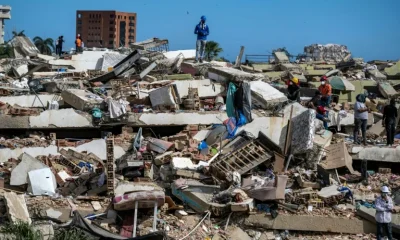
Looting Spreads in Venezuela’s Hardest-Hit Areas After Deadly Earthquakes
-
 International21 hours ago
Salvadoran National Arrested in New Jersey with Over 70 Machine Gun Conversion Devices
-
 International2 days ago
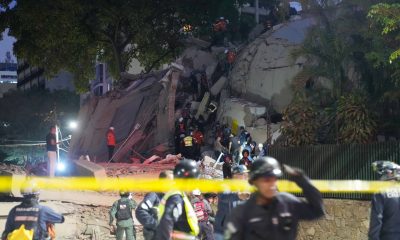
Venezuela Earthquake Death Toll Surpasses 1,700 as Search for Survivors Continues
-
 International2 days ago
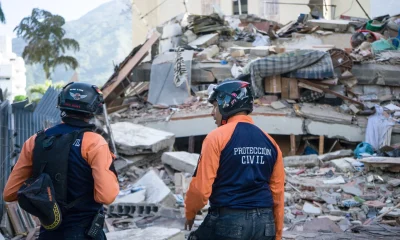
Venezuela Earthquakes Spark Diplomatic Thaw With Former Critics
-
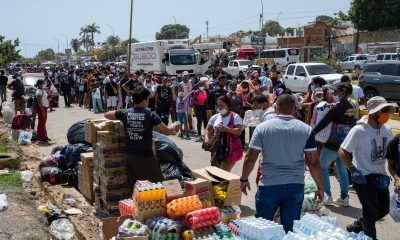
 International4 days ago
UN warns Venezuela earthquakes could affect up to 6.76 million people