
International
Xi congratulates Trump and calls for a “stable, healthy and sustainable” relationship between China and the United States
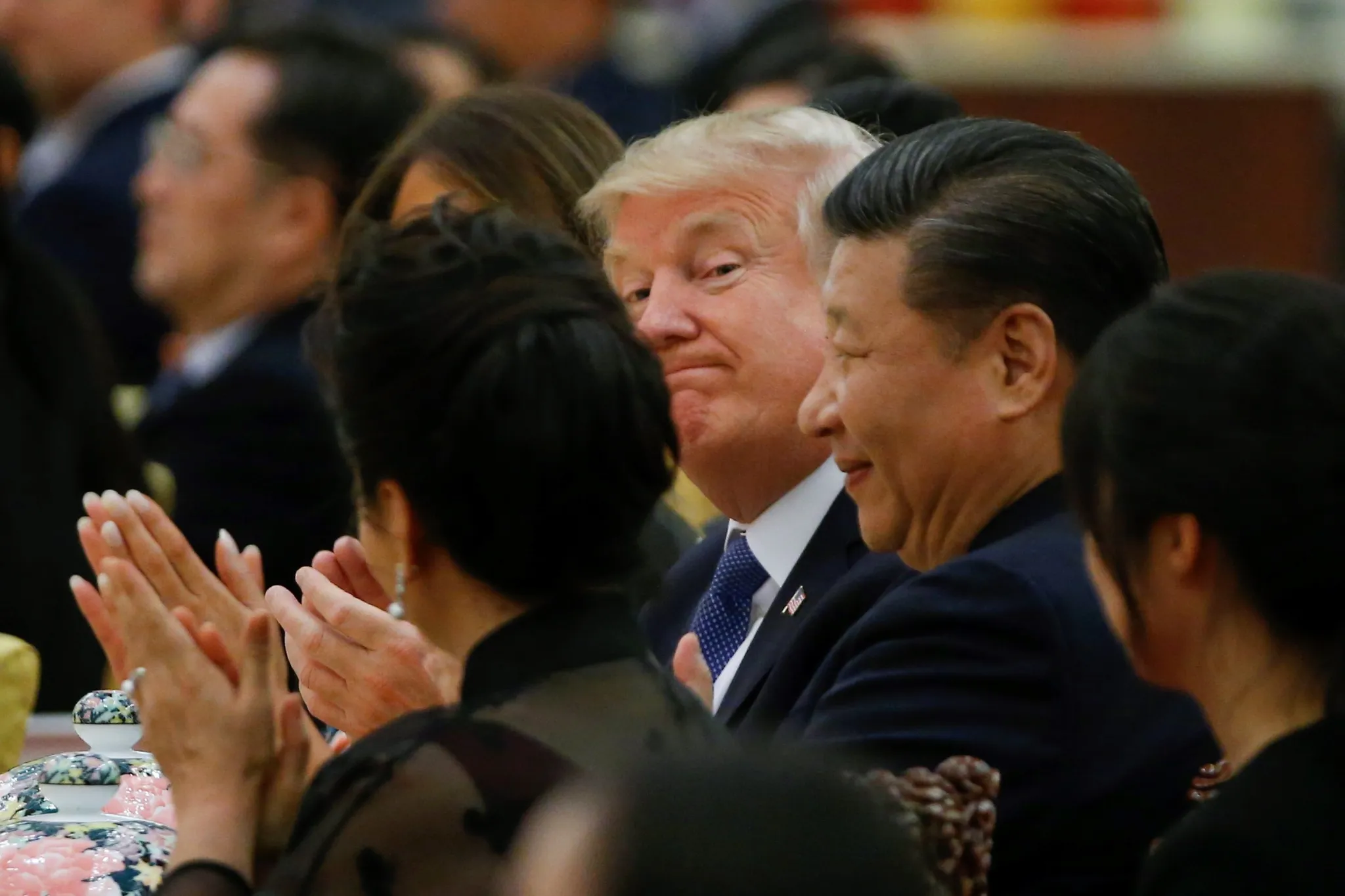
The President of China, Xi Jinping, called the winner of the elections in the United States, former president and Republican candidate Donald Trump, to congratulate him and ask him that the relationship between the two powers be “stable, healthy and sustainable.”
“Xi Jinping pointed out that history teaches us that China and the US. The US will benefit from cooperation and suffer from confrontation. A stable, healthy and sustainable relationship (…) meets the mutual interests of both countries and the expectations of the international community,” says a brief dispatch from the official Xinhua news agency.
Xi: The US and China must “strengthen dialogue”
In the call, Xi asked that both parties “reinforce dialogue and communication” and that “manage their differences appropriately.”
“We hope that both parties defend the principles of mutual respect, peaceful coexistence and mutually beneficial cooperation,” said the Chinese president, who called for “finding the right way for China and the United States to get along in this new era.”
A good relationship between Beijing and Washington, Xi stressed, “will benefit both countries and the world.”









In the same information, Xinhua also points out that Chinese Vice President Han Zheng also called the elected Vice President of the United States, J.D. Vance, although he does not offer details about the conversation between the two.
This morning, the Chinese Ministry of Foreign Affairs had issued a brief statement that read: “We respect the decision of the American people and congratulate Mr. Trump on his election as president of the United States.”
On Wednesday, before the Republican candidate’s victory over Democrat Kamala Harris was certain, Beijing had reaffirmed its position of respect for the US electoral process. USA, which he described as an “internal matter” of the North American country.
China’s policy towards the US is “consistent”
“Our policy towards the United States is consistent. We advocate managing our relationship according to our common interests and cooperation that benefits both parties,” stressed Foreign Ministry spokeswoman Mao Ning, who added that China would act “accordingly” once the results were known.
China and the USA. The US, as the main economies of the world, maintain broad commercial and diplomatic ties, and Beijing has pointed out on several occasions the importance of a constructive dialogue and of avoiding confrontations that affect its citizens, although the tensions between the two powers have been constant for years.
Even so, Chinese analysts believe that the bilateral relationship, regardless of whether Trump or Harris won, would continue to be marked by protectionist tensions and tariff measures.
Relations between the two countries deteriorated drastically during Trump’s first presidency (2017-2021) with collisions in plans such as commercial, diplomatic or technological and, already with Joe Biden in the White House, the tension was rekindled with rifirrafes on behalf of Taiwan or by restrictions on exports to China of semiconductors and other key technology.
In 2018, after coming to power for the first time, Trump imposed several batches of tariffs on Chinese products worth about 370 billion dollars a year, about three quarters of the Asian giant’s exports, to which Beijing responded with reprisals against US exports.
During this campaign, the Republican said he will apply rates of up to 60% to Chinese goods, which augurs more trade tensions between the world’s two largest economies.






International
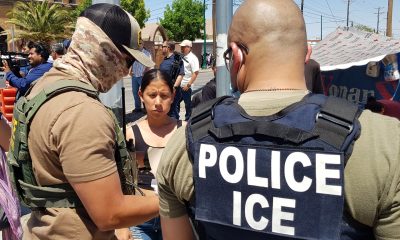
ICE agent arrested in Texas over shooting of Venezuelan migrant in Minnesota
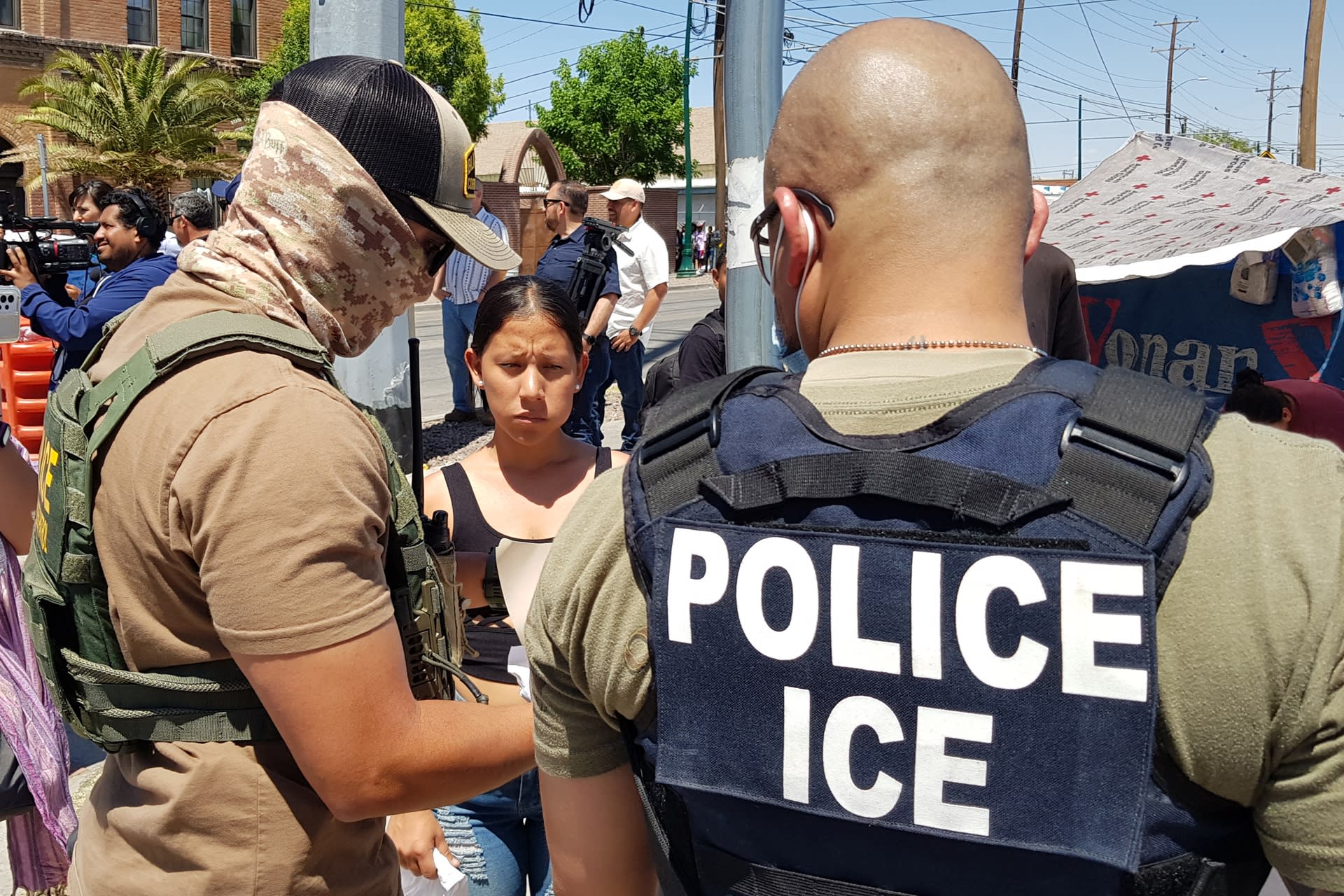
U.S. authorities arrested an Immigration and Customs Enforcement (ICE) agent on Friday in Texas after he was accused of shooting a Venezuelan migrant in Minnesota earlier this year and later providing false information about the incident.
The suspect, identified as Christian Castro, faces four counts of second-degree assault, along with an additional charge related to filing a false official report. He was taken into custody after investigators from the Minnesota Bureau of Criminal Apprehension located him, according to a statement from the Hennepin County Attorney’s Office.
The case stems from a January operation carried out by ICE during which Castro shot Julio César Sosa, a Venezuelan migrant, in the leg. Prosecutors allege that the agent later submitted a misleading account of the incident, claiming that Sosa and another migrant had attacked officers with a shovel and a broomstick.
However, investigators say that video evidence and further findings contradicted that version of events, leading to the dismissal of charges initially brought against the migrants by federal prosecutors.
ICE’s acting director, Todd Lyons, acknowledged in February that agents involved in the incident had given “false sworn testimony” about what occurred.
Hennepin County Attorney Mary Moriarty described Friday’s arrest as a “critical step forward” in the judicial process and reaffirmed that the investigation remains ongoing.
International
U.S. classifies CV and PCC as terrorist groups in major policy shift
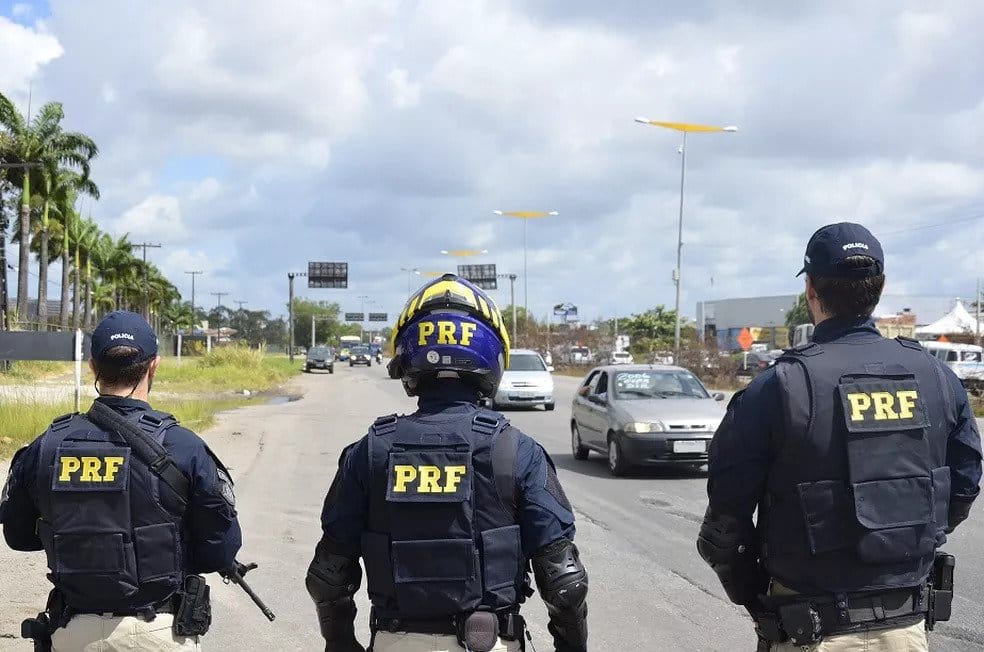
The United States government announced on Thursday that it will add the Brazilian criminal organizations Comando Vermelho (CV) and Primeiro Comando da Capital (PCC) to its list of Foreign Terrorist Organizations (FTO), a designation set to take effect on June 5, 2026.
The State Department justified the decision by stating that both groups are among the most powerful criminal organizations in Brazil and accused them of coordinating violent attacks against police officers, public officials, and civilians.
The designation comes just days after Brazilian senator and presidential hopeful Flávio Bolsonaro directly asked U.S. President Donald Trump to classify these groups as “narco-terrorist” organizations during a visit to the White House.
Bolsonaro, who is running in Brazil’s upcoming presidential election in October, has made tougher action against organized crime and prison-based gangs a central part of his campaign platform.
He is part of a political dispute with current Brazilian President Luiz Inácio Lula da Silva, who has opposed the U.S. classification, warning it could open the door to potential foreign military intervention in Brazilian territory.
The Comando Vermelho and Primeiro Comando da Capital emerged in Brazilian prisons during the 1970s and have since expanded their influence, now controlling extensive criminal activities including drug trafficking, extortion, smuggling, and other illicit operations.
According to security experts and Brazilian authorities, both organizations have tens of thousands of members and support networks spread across multiple states in the country.
The U.S. measure aims to increase financial and operational pressure on these groups by restricting funding sources, limiting international mobility, and expanding cooperation in security enforcement efforts.
International
U.S.–Iran pre-agreement aims to de-escalate tensions and secure key trade route
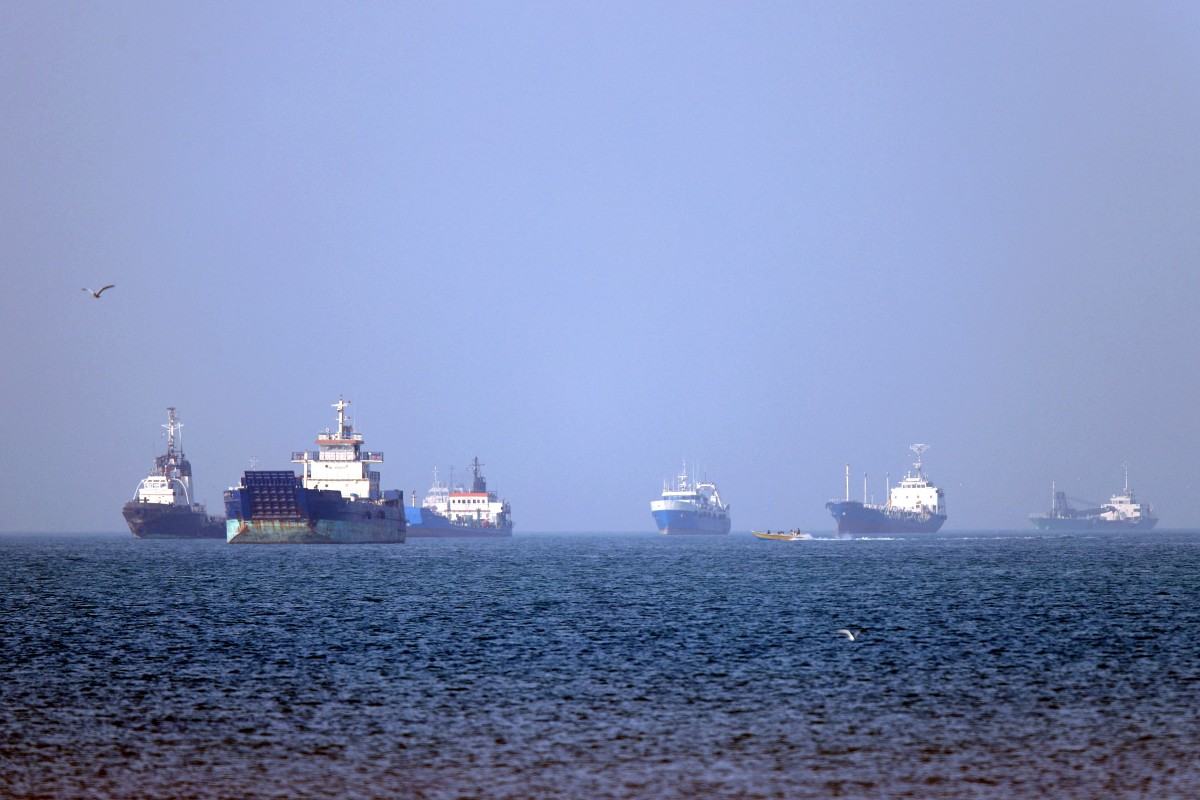
The United States confirmed on Thursday that its negotiators have reached a preliminary agreement with Iran aimed at reopening the Strait of Hormuz and extending the current ceasefire, though the understanding still requires final approval from U.S. President Donald Trump.
U.S. government sources confirmed information first reported exclusively by Axios, stating that the deal now only awaits the president’s endorsement.
According to Axios, citing two senior U.S. officials, the draft agreement stipulates that navigation through the Strait of Hormuz—previously blocked by Iran in response to U.S. and Israeli military actions—would be “unrestricted.”
The agreement reportedly includes provisions under which Iran would not impose transit fees in the strategic waterway, a critical route for global oil shipments. In parallel, the United States would lift maritime restrictions on vessels entering and leaving Iranian ports.
The memorandum of understanding also contains a commitment from Iran not to develop nuclear weapons, a key red line for President Trump. However, discussions on limiting Iran’s uranium enrichment would be postponed to later negotiations.
These issues are expected to be addressed during a 60-day extension of the ceasefire, which has been in place since April.
In addition, the United States would consider easing sanctions on Iran and releasing frozen Iranian assets as part of the broader diplomatic framework.
Negotiations between Washington and Tehran have intensified over the past week with mediation from Pakistan, as both sides seek to formally end the conflict that began on February 28 involving the United States and Israel.
The White House has recently stated that a deal was “a matter of days away,” while Tehran has tempered expectations, suggesting that an agreement is not yet imminent.

ICE agent arrested in Texas over shooting of Venezuelan migrant in Minnesota

Rubén Gallego says U.S. policy may push for Cuba regime change under Trump administration

U.S. classifies CV and PCC as terrorist groups in major policy shift
Tec de Monterrey honors one of its students for his contribution to nanotechnology in medicine

Defense Minister commends salvadoran soldier for Central American Cross Country victory

Extension of the state of emergency approved in southern Chile
-
 International2 days ago
U.S. classifies CV and PCC as terrorist groups in major policy shift
-
 International4 days ago
Diplomatic Talks Continue as Iran Accuses U.S. of Ceasefire Violations
-
 International4 days ago
Omar García Harfuch Announces Arrest of “El Chapo’s” Nephew
-
 International3 days ago
Mexico Denies Interpol Red Notice Against Sinaloa Governor Rubén Rocha Moya
-
 Central America4 days ago
Opposition leader highlights migration crisis in Panama speech
-
 International4 days ago
Rubio and Lavrov Hold Talks After Large-Scale Russian Assault on Ukraine
-
 Central America3 days ago
Guatemala Dismantles Largest Cocaine Lab Found in 15 Years Near Mexico Border
-

 International2 days ago
U.S.–Iran pre-agreement aims to de-escalate tensions and secure key trade route
-
 Sin categoría15 hours ago
Rubén Gallego says U.S. policy may push for Cuba regime change under Trump administration
-
 International4 days ago
Ecuador’s Noboa vows to continue “war” on criminal groups
-
 International15 hours ago
ICE agent arrested in Texas over shooting of Venezuelan migrant in Minnesota
-
 International3 days ago
Interpol Operation Leads to 8,700 Arrests and Massive Drug Seizures Across Latin America